AAM Advocacy Coordinator Ken Poweski Retires After 25 Years of Fighting for America’s Workers
Years in a steel mill forged a leader who guided workers through some of their greatest struggles and policymakers to legislation that defended American manufacturing.
 machineryasia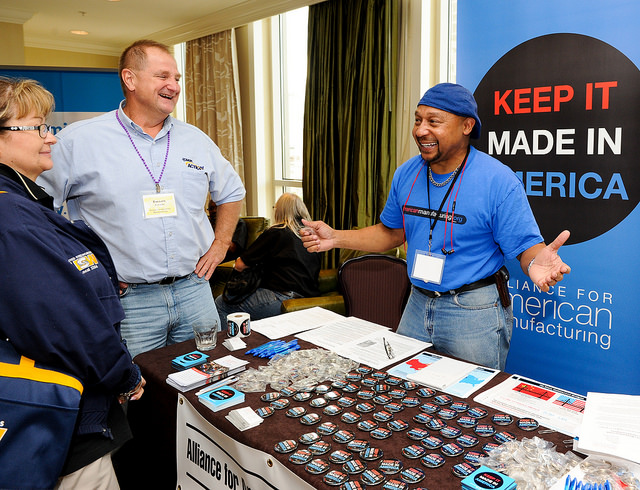
Years in a steel mill forged a leader who guided workers through some of their greatest struggles and policymakers to legislation that defended American manufacturing.
When Ken Poweski walked out of the steel mill for what would be his final shift there, he was almost the last one out. Only a handful of people remained, holding onto the hope that a buyer might arrive, reopen the gates, and bring J&L Steel’s Cleveland Works back to life.
“We all thought that somebody was going to buy it and start it all over again,” Ken said. “You were leaving, and it’s like, ‘Man, this could be the last time I come in here. This might be the last time that I see you.’”
At its peak in the early 1970s, not long before Ken joined its workforce, J&L’s Cleveland Works had employed 4,000 workers and produced 3 million tons of steel a year. When it shuttered in 2001, hundreds were left with deep uncertainty about their futures. That held true for Ken, too. But then his United Steelworkers (USW) brothers and sisters called for help, and he answered.
Over the next 25 years, Ken aided steelworkers in rebuilding their lives after shutdowns and guided policymakers to legislation that would keep unfair trade from ravaging communities like his own. His mission as an Alliance for American Manufacturing Advocacy Coordinator would take Ken from the scorching heat of the steel mill to the hallowed halls of the nation’s capital.
On Oct. 2, when he retired from his position as the Alliance for American Manufacturing’s advocacy coordinator for Ohio, Ken left behind a legacy built on work, trust and service.
Manufacturing was deeply ingrained in Ken’s life from its very beginning. His father worked at Republic Steel as a tool and die maker before leaving after roughly 17 years to found his own shop, Powers Machine and Tool.
“I started cleaning machines and helping them probably back in eighth grade, not working on any, just helping them clean up,” Ken said. “I got into it… Even though I wasn’t working, I was sitting there watching them doing everything.”
Though his father urged him to pursue higher education, Ken couldn’t bear the idea of going to college and not being on the football field. Ken had played defensive tackle for his high school team, but an injury kept him out of the game. So, when he graduated high school in 1973, Ken started his career as a machinist in his dad’s shop.
He was well prepared to earn a good living. His high school’s vocational training program had him machining from 7:30 a.m. until noon every school day, from eleventh to twelfth grade.
“That’s one reason I would love to see vocational training come back into the schools… I think that’s a big plus for people to see how they would really work or would they rather go to college,” he said.
For Ken and his brother, who joined him at Powers Machine and Tool, manufacturing afforded a steady salary.
“I think it was a big plus for us because you’d be able to take your paycheck and be able to buy gifts for everybody, and so it paid off,” Ken said. “It was like, ‘Hey, this is working out pretty good, and I think I’m gonna stay here,’ and you know, it wasn’t elaborate living, but it was a good living.”
But Ken’s dad did things “the old way.” When CNC machining became the norm, he had to close, as did many of his friends’ tool and die businesses.
After three years at Powers Tool and Die, Ken went looking for a new job. His brother did the same and moved on to General Motors.
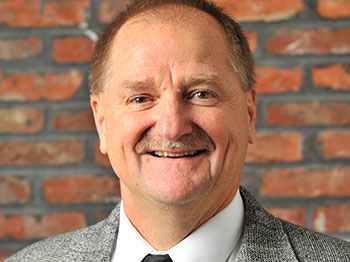
Ken had two options to weigh: a job at Ford that would have him working nights for three to five years, or a job at J&L Steel that would flip between day and night work.
“Now mind you, being single, I’m thinking working midnights all the time, that’s gonna really interrupt my social life,” Ken said. “So I said after I took the physical and everything, and [J&L Steel’s human resources representative] says, ‘Well, what would you know? You could start work tomorrow afternoon if you want to.’ So I did. I said, ‘Well, you know, for this, at least I’ll have a little social life.’ And that’s why I went there.”
That decision led to a 25-year career at the mill in Cleveland, where Ken started as a material handler moving alloys, like nickel and vanadium, into the furnace, all while withstanding the heat. It was hard, fast-paced work.
Steel mill furnaces can run as hot as 2,800 degrees Fahrenheit — hotter than volcanic lava. Even if you’re covered in flame-retardant clothing that was “really stiff like cardboard,” along with steel-toe boots and a face mask, that kind of heat is suffocating, and the gear “made you sweat pretty good but protected you, too.”
Over the two years that Ken worked as a materials handler he picked up a few tricks to mitigate some of that sear.
“I remember the first day I was there, I saw a guy, and he had thermal underwear on,” Ken said. “It was like 95 degrees out in Cleveland. I say, ‘Why in the hell do you have thermal underwear? He says, ‘Believe it or not, it keeps the heat out.’ And I’m thinking I never even thought of that. And it did. So we used to wear thermals even though you would sweat, but it would keep the heat out.”
Two years later, Ken transferred to the mill’s finishing department, where he first worked as a burner, taking a torch to anything that needed to be welded, cut or trimmed. Fifteen years later, Ken became a roller and oversaw a crew of eight workers as the mill’s steel was rolled into a coil and readied to be sent out the door to customers like General Motors, who used the steel for all of their car bumpers.
As Ken’s responsibilities grew, so did the pressure.
“You have a crew, and all these guys participate in a single event and getting that coil going, and your job is to make sure it’s flat, and that it’s cut to length, that the width is okay, that the gauge is okay. And it has to be rolled perfectly, no telescope coils or anything. So it’s gotta be perfect,” he said.
Being a roller wasn’t just a matter of quality control. It required leadership.
“You had a crew, and you were you were like the leader of the crew, so everybody depended on you,” he said. “And a lot of times it comes to screaming matches at each other, and you had to iron it out.”
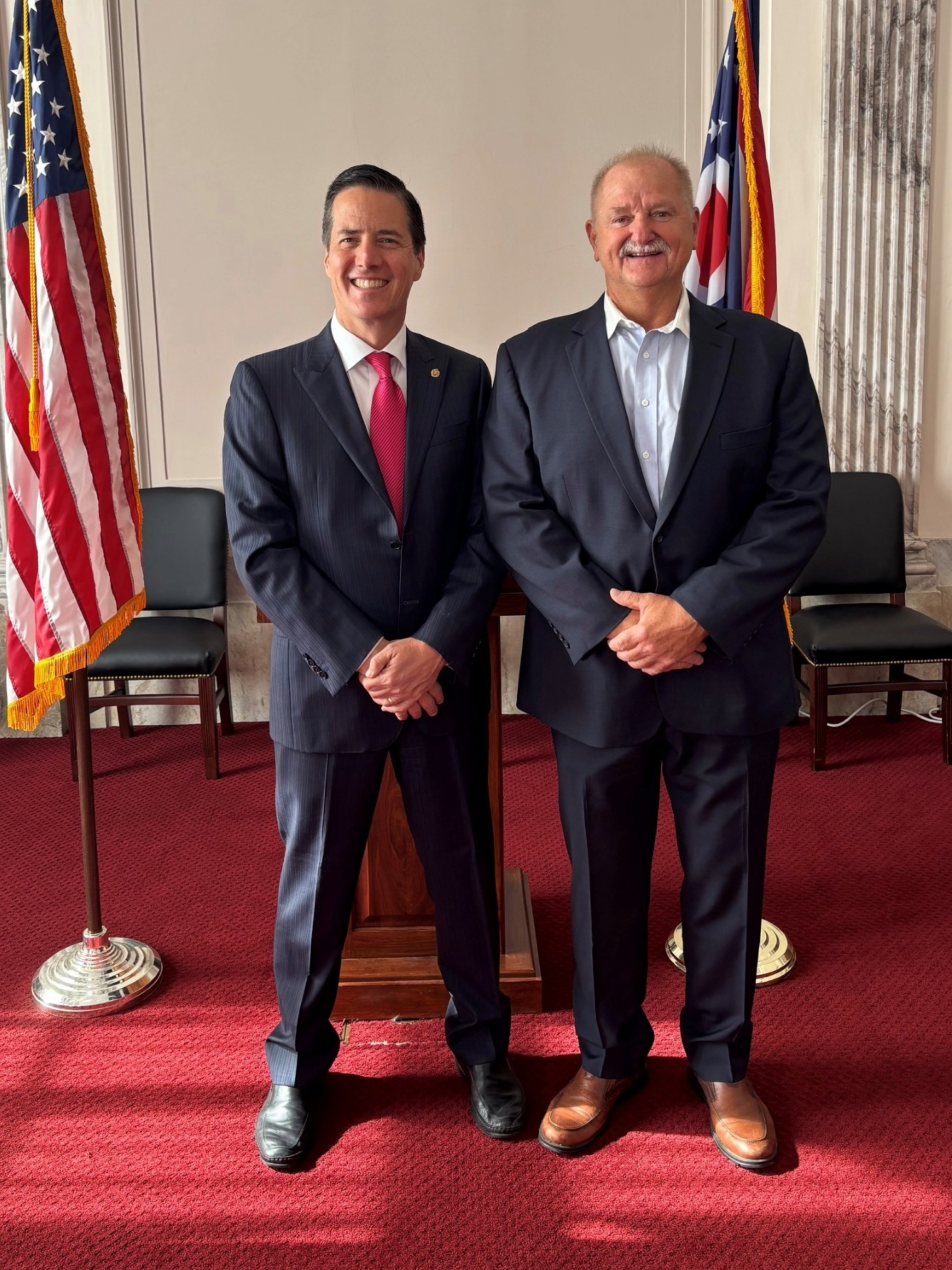
Seeing Ken navigate these conflicts, his fellow United Steelworker members encouraged him to put his leadership skills to use for the union. He campaigned to become the local’s grievance committee representative and won, then helping the other Steelworkers at the mill resolve workplace disputes with the mill’s management.
“That was a big challenge because you’d run into every kind of scenario that you can imagine that people can, from being late to missing time and getting time off. Then they have to go before the arbitrator and see if you might be fired or any of that,” Ken said.
The challenge was about to get even bigger. In 2001, when Ken was 41 years old and had two kids in school, the mill shut down.
“It was devastating. It really was. It was a hard thing to swallow. I mean, I never thought at that age I’d be laid off. I never thought I’d be, you know, looking for a job, and everybody was worried about the same thing,” Ken said.
What Ken did next established the pattern for the rest of his career. Rather than focus on his own uncertainty, he helped his community.
Alongside three other USW members, Ken sought and won a $2.4 million grant from Ohio to create a transition center for displaced steelworkers in Cleveland. There, Ken and his colleagues coached former mill workers in writing resumes, preparing for interviews, and identifying the skills they could bring with them to other jobs.
The Cleveland program proved to be so successful that USW asked Ken to replicate it in Lorain, Ohio, for members affected by layoffs there. The days were long, but it was work that Ken and his family were proud of. He soon had the opportunity to help even more people.
One of Ken’s old friends from J&L asked if he could assist with USW’s Stand Up for Steel campaign, an effort to raise awareness of foreign steel dumping and unfair trade practices. Ken, of course, said yes. That advocacy led to his participation in USW’s retiree outreach program, ReUnion, and then to his work at AAM, where he often served as a connector, carrying the experiences and insights of Ohio’s manufacturing communities to Capitol Hill.
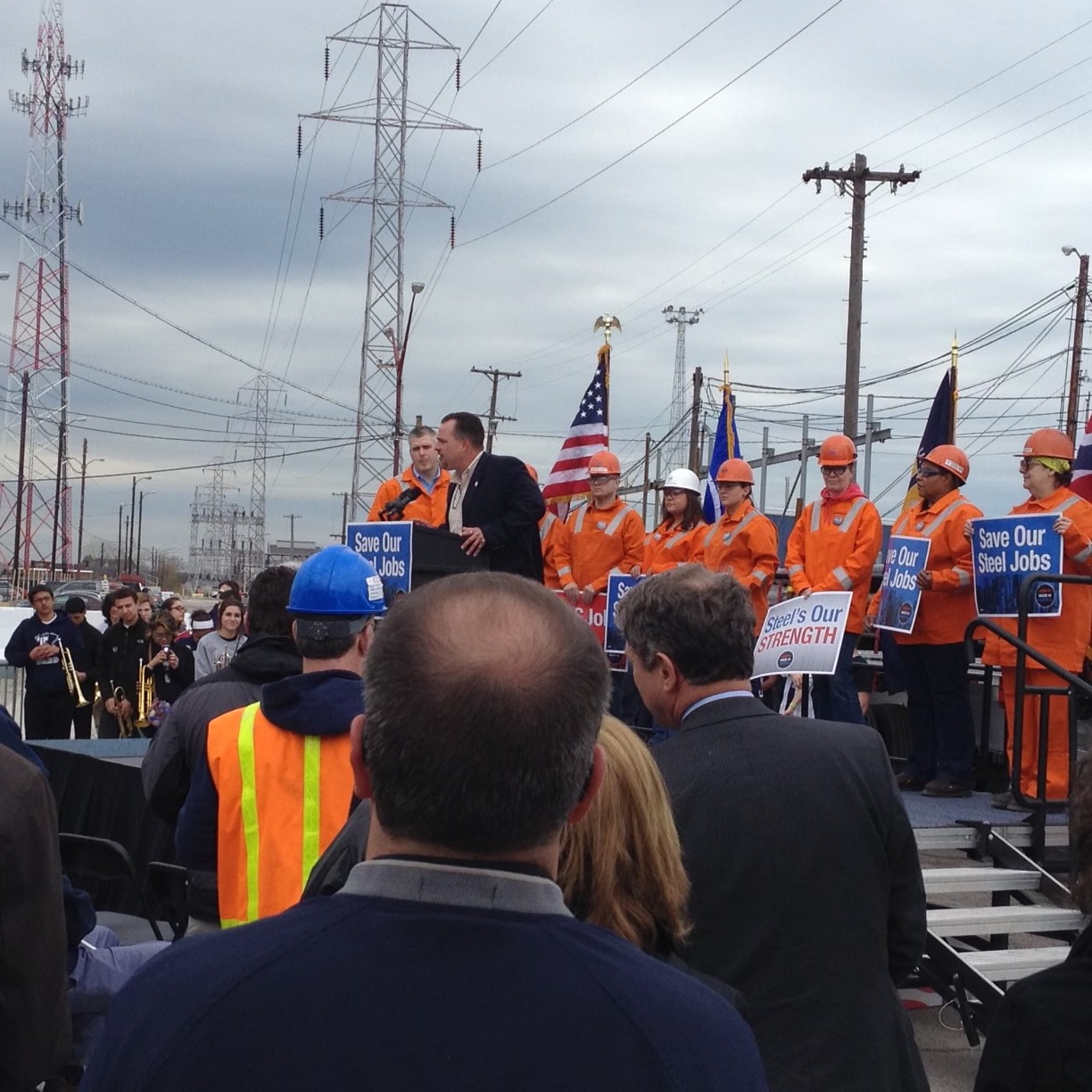
Making the transition to advocacy was initially daunting, but Ken saw that legislators valued his real-world manufacturing experience. He and the workers he advocated for had been through the “blood and guts” of deindustrialization. “We know because we were there,” Ken said.
His first meeting with a member of Congress was with Betty Sutton, who served as Ohio’s representative at the time. Ken has met with countless policymakers since then, and, though the process has become familiar, he still gets nervous. However, he’s learned that there’s a simple way to make that first ask productive.
“I think the first thing that you should do when you do go in there, whether you like the person or not, is thank him. Thanking him for being a congressman or thanking him for being a senator. You know, they don’t get that too often,” Ken said. “I always do a little homework first, no matter if it was something we’re working on. I would say, ‘Hey, thanks for signing this for the lawnmower service in your area [for example], you know, for all the people.’ But I always thought that was a good starting point. And, to this day, I still do that.”
Ken’s work at AAM also called him to continue growing connections in his Ohio community via town halls and participation in organizations like the Cleveland Council on World Affairs and the Cleveland Port Council, and the Steelworkers Organization of Active Retirees.
This outreach became one of Ken’s favorite AAM assignments, but it could also be taxing. Over the span of two weeks, Ken once helped organize seven town halls, bringing him from one side of Ohio to the other.
Another event in 2008 was organized with John Ratzenberger, of “Cheers” fame, to encourage voters to make manufacturing a priority in their ballots for the presidential election. Ken recruited 1,200 activists to join the event — one of the biggest audiences AAM has hosted.
Out of all these memorable experiences, however, Ken is proudest of his work on “Relighting the Flame,” AAM’s first documentary. Ken spent weeks tracking down interview subjects for the film, which profiles the future of American steelmaking through the lens of workers at several Cleveland-Cliffs facilities. Ken was instrumental to the film’s success and was recognized with an associate producer credit.
“Ken was one of our ‘OG’ advocates,” AAM President Scott Paul said. “While it’s true that Ken was an impressive steelworker and athlete back in the day, it’s equally true that he was and continues to be a gentle man in every way. He loves his family and community. Utterly reliable. Ceaselessly compassionate. He was asked to do some difficult work at AAM and accomplished it with dignity and grace. Ken has earned a beautiful retirement 1,000 times over,” Scott said.
When he retired from AAM this past week, Ken was ready to devote more time to another constituency: his grandchildren, Ruby and Noah. After years of traveling throughout the country on behalf of America’s workers, he’s looking forward to being home for his grandkids’ school, sports, and all the ordinary moments that years of travel sometimes made difficult to catch.
“That’s going to be the key thing,” he said. “Spending more time with them.”
After more than 50 years in and around American manufacturing, Ken’s work has brought him through a wide array of experiences, but the constant through it all was Ken’s dedication to his community.
We’ll miss working alongside Ken every day, but we know that whenever we’re in Ohio, we’ve got a great friend to visit.