Why equipment dealers are your secret weapon for controlling TCO
The moment you turn the key on a new piece of heavy equipment it starts wearing out. That comes with a price tag, from wear and tear on components grinding against hard rock to increasing repair costs over time. Fleet managers face a constant challenge: how to accurately predict, control, and minimize the total cost of ownership (TCO) of their machines. That's why equipment dealers are moving beyond simply selling machines to offering comprehensive solutions that transform how companies manage their fleets. Today's technology allows fleet managers to see individual machine performance, fuel consumption, and advance warnings of potential failures for their entire fleet, whether it's a single excavator or hundreds of machines across multiple job sites. This evolution in fleet management is transforming how businesses can control costs, improve uptime, and make data-driven decisions that impact their bottom line. The tools and strategies available today are making the unpredictable nature of heavy equipment operations increasingly manageable. How your dealer can help reduce TCO "When I think about fleet management from a customer standpoint, one of the biggest expenditures is the hourly cost to run their equipment. It's like with a car. At some kilometre rating, your car is breaking down more, and the cost of repairs are higher than a new monthly payment. That's a reality in heavy equipment as well. Over time, the cost of repairs and maintenance starts to increase at a quicker rate," says Ryan Blades, vice president of product support at Brandt. Dealers have a variety of tools to help customers manage TCO. "The first step is doing regular maintenance and following the manufacturer's intervals for completing planned maintenance, such as changing oil and oil sampling at prescribed intervals," Blades explains. Dealers can also offer preventive maintenance programs where technicians will come out and perform maintenance on site, giving complete reports to the equipment manager of the work that has been done. For contractors bidding on projects, understanding equipment costs is a good business practice that can mean the difference between a profitable job and a money-losing one. Yet traditional approaches to fleet management can leave operations guessing, reacting to breakdowns rather than preventing them, and struggling to provide accurate cost estimates. That's why some dealers have started offering guaranteed cost-per-hour preventive maintenance and repair packages to contractors. "Fleet managers are always looking to keep costs down, but there's an equal benefit to knowing what your costs are going to be. When you're bidding on a job, you estimate for materials, labour, and machine cost — which is everything from fuel to asset depreciation. By putting together a total maintenance and repair contract with your dealer, there's a set cost per hour for a certain period, so you know how to price your jobs," says Blades.
 machineryasia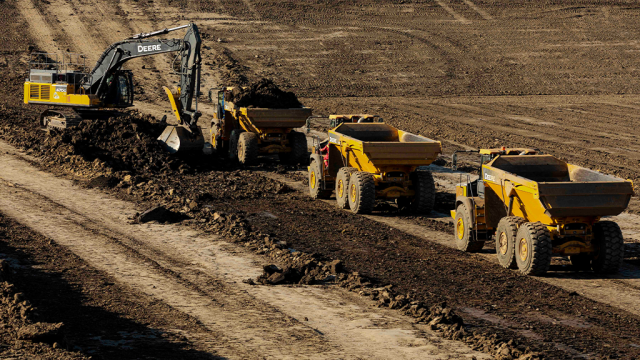
The moment you turn the key on a new piece of heavy equipment it starts wearing out. That comes with a price tag, from wear and tear on components grinding against hard rock to increasing repair costs over time. Fleet managers face a constant challenge: how to accurately predict, control, and minimize the total cost of ownership (TCO) of their machines.
That's why equipment dealers are moving beyond simply selling machines to offering comprehensive solutions that transform how companies manage their fleets. Today's technology allows fleet managers to see individual machine performance, fuel consumption, and advance warnings of potential failures for their entire fleet, whether it's a single excavator or hundreds of machines across multiple job sites.
This evolution in fleet management is transforming how businesses can control costs, improve uptime, and make data-driven decisions that impact their bottom line. The tools and strategies available today are making the unpredictable nature of heavy equipment operations increasingly manageable.
How your dealer can help reduce TCO
"When I think about fleet management from a customer standpoint, one of the biggest expenditures is the hourly cost to run their equipment. It's like with a car. At some kilometre rating, your car is breaking down more, and the cost of repairs are higher than a new monthly payment. That's a reality in heavy equipment as well. Over time, the cost of repairs and maintenance starts to increase at a quicker rate," says Ryan Blades, vice president of product support at Brandt.
Dealers have a variety of tools to help customers manage TCO. "The first step is doing regular maintenance and following the manufacturer's intervals for completing planned maintenance, such as changing oil and oil sampling at prescribed intervals," Blades explains. Dealers can also offer preventive maintenance programs where technicians will come out and perform maintenance on site, giving complete reports to the equipment manager of the work that has been done.
For contractors bidding on projects, understanding equipment costs is a good business practice that can mean the difference between a profitable job and a money-losing one. Yet traditional approaches to fleet management can leave operations guessing, reacting to breakdowns rather than preventing them, and struggling to provide accurate cost estimates.
That's why some dealers have started offering guaranteed cost-per-hour preventive maintenance and repair packages to contractors. "Fleet managers are always looking to keep costs down, but there's an equal benefit to knowing what your costs are going to be. When you're bidding on a job, you estimate for materials, labour, and machine cost — which is everything from fuel to asset depreciation. By putting together a total maintenance and repair contract with your dealer, there's a set cost per hour for a certain period, so you know how to price your jobs," says Blades.