How the connected job site is evolving
The connected job site brings together data from people, surveying equipment, and machines to improve productivity, efficiency, and decision-making across construction operations. As equipment and processes have become increasingly digital, the focus has shifted from collecting siloed data to connecting it and turning it into actionable information for all stakeholders. For Komatsu, that means expanding its Smart Construction ecosystem with tools that make job site information easier to access and understand, so it can be acted on more quickly. Smart Construction encompasses hardware, software, and services spanning machine guidance and control, drone surveying, project visualization, remote file transfer, remote operator support, reporting, and workforce management. Over the last several years, Komatsu has continued to add capabilities, and Ron Schwieters, senior manager of customer solutions at Komatsu, says an important part of that evolution has been making the technologies easier to implement without requiring specialized expertise, easing adoption for small- and medium-sized contractors. How Smart Construction creates a connected view of the job site Central to Komatsu's connected job site ecosystem is Smart Construction Dashboard, which combines data from machines, drones, and 3D design files to create a visualization of a project's progress, commonly described as a digital twin: a 3D representation of the physical job site. A drone flight can establish an initial representation of existing conditions, and subsequent flights can document changes over time. How frequently contractors update the digital twin can vary with the needs of the project. Schwieters says drone flights may occur weekly or monthly, with twice a month being a common frequency. But a job site continues to change between those flights. On a site with ten, 30, or 50 machines digging and moving material, the surface captured by a drone becomes dated as soon as the survey is complete. Komatsu supplements drone data with as-built data, a digital record of the surfaces machines have actually created as they work. Factory-integrated Intelligent Machine Control (IMC) equipment can automatically provide that data, as can non-Komatsu machines equipped with Komatsu's 3D Smart Construction Machine Guidance system. The result is a digital representation that continues to accumulate data as work progresses rather than relying exclusively on periodic surveys. "We feel like that is a smart way. Automated data collection just makes it a really easy, simple workflow," Schwieters says. Dashboard presents the information in an updated 3D view of the job site — including a comparison of current status against the design file — that contractors can use to assess overall production or drill down to individual machines. They can also move through a timeline to see how the project has changed and generate measurement reports for specific areas or stockpiles. That creates both an operational tool and a record of progress. Contractors can use the information internally and document completed work for subcontractors, general contractors, and other project stakeholders.
 machineryasia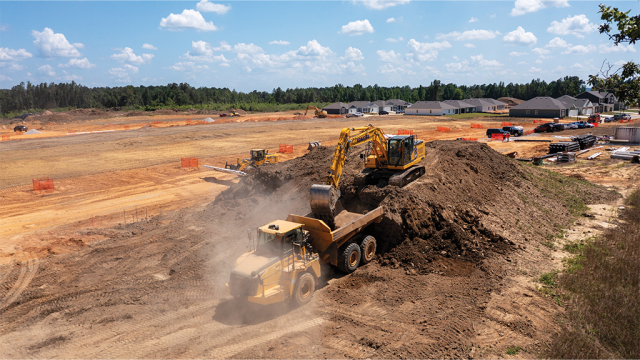
The connected job site brings together data from people, surveying equipment, and machines to improve productivity, efficiency, and decision-making across construction operations. As equipment and processes have become increasingly digital, the focus has shifted from collecting siloed data to connecting it and turning it into actionable information for all stakeholders.
For Komatsu, that means expanding its Smart Construction ecosystem with tools that make job site information easier to access and understand, so it can be acted on more quickly.
Smart Construction encompasses hardware, software, and services spanning machine guidance and control, drone surveying, project visualization, remote file transfer, remote operator support, reporting, and workforce management. Over the last several years, Komatsu has continued to add capabilities, and Ron Schwieters, senior manager of customer solutions at Komatsu, says an important part of that evolution has been making the technologies easier to implement without requiring specialized expertise, easing adoption for small- and medium-sized contractors.
How Smart Construction creates a connected view of the job site
Central to Komatsu's connected job site ecosystem is Smart Construction Dashboard, which combines data from machines, drones, and 3D design files to create a visualization of a project's progress, commonly described as a digital twin: a 3D representation of the physical job site.
A drone flight can establish an initial representation of existing conditions, and subsequent flights can document changes over time. How frequently contractors update the digital twin can vary with the needs of the project. Schwieters says drone flights may occur weekly or monthly, with twice a month being a common frequency.
But a job site continues to change between those flights. On a site with ten, 30, or 50 machines digging and moving material, the surface captured by a drone becomes dated as soon as the survey is complete.
Komatsu supplements drone data with as-built data, a digital record of the surfaces machines have actually created as they work. Factory-integrated Intelligent Machine Control (IMC) equipment can automatically provide that data, as can non-Komatsu machines equipped with Komatsu's 3D Smart Construction Machine Guidance system.
The result is a digital representation that continues to accumulate data as work progresses rather than relying exclusively on periodic surveys.
"We feel like that is a smart way. Automated data collection just makes it a really easy, simple workflow," Schwieters says.
Dashboard presents the information in an updated 3D view of the job site — including a comparison of current status against the design file — that contractors can use to assess overall production or drill down to individual machines. They can also move through a timeline to see how the project has changed and generate measurement reports for specific areas or stockpiles.
That creates both an operational tool and a record of progress. Contractors can use the information internally and document completed work for subcontractors, general contractors, and other project stakeholders.