Designing compact equipment for a changing workforce
When experienced operators leave the construction workforce, decades of accumulated knowledge leaves with them. The growing experience gap on job sites is changing what contractors need from compact equipment and, in turn, how OEMs approach machine design. According to Jonathan Gardner, construction product manager at Kubota Canada, the fundamental issue is not a change in the skills contractors need, but a shortage of experienced operators and the time required to develop that expertise in new recruits. "The people that have been doing it for years are slowly going away, and the skill is not ramped up to replace them quickly," Gardner says. Grade control and automated functions can help operators complete complex tasks more accurately, while intuitive controls, improved visibility, and ergonomic cab design can make machines easier and less physically demanding to operate. The goal is to give newer operators the assistance they need to become productive sooner while giving experienced operators tools to work more efficiently. Machine-assist technology helps close the operator experience gap Experienced operators often rely on knowledge developed over years in the cab. Gardner recalls speaking with a contractor who described being able to feel through his hips whether he was achieving the correct slope. This intuition is difficult to quickly develop in someone new to the industry. Machine-assist technologies can help bridge part of that experience gap by automating some of the adjustments skilled operators traditionally make themselves. Grade control, for example, allows an operator to enter job parameters so the system automatically controls the blade. "As long as someone knows how to put in what depth they need or what slope they need, they don't necessarily need the skill to operate the machine and operate that blade," Gardner says. "The blade will automatically move." Automation can also supplement operator knowledge. Experienced operators are also adopting these technologies because reducing manual inputs allows them to work faster and more consistently. Grade control may also eliminate the need to manually check grade. This reduces interruptions in the workflow and allows contractors to make better use of limited labour. "You're letting the machine think, not having the operator have to think," Gardner says. As grade control has become more accessible and affordable, and its productivity benefits better established, Gardner says Kubota is seeing growing demand for it to be integrated directly into compact equipment. Compact equipment technology simplifies attachment use As OEMs look for ways to help contractors accomplish more with fewer people, attachment versatility is playing an important role in compact equipment design. In 2026, Kubota introduced a tiltrotator for its excavators. For applications such as retaining wall construction, the ability to tilt and rotate the attachment allows an operator to precisely position material without relying on a worker outside the cab to guide placement. It makes the operator more efficient and reduces the number of people around active machines, improving job site safety. More capable attachments may allow a contractor to complete multiple tasks with fewer workers, but as attachments become more capable, they can also become more complex to set up and operate. OEMs are responding by automating parts of the attachment set-up process and bringing more operating information directly into the cab. Systems such as Kubota's Intell-Attach allow a machine to recognize compatible attachments and automatically apply the appropriate hydraulic flow, reducing complexity for less-experienced operators.
 machineryasia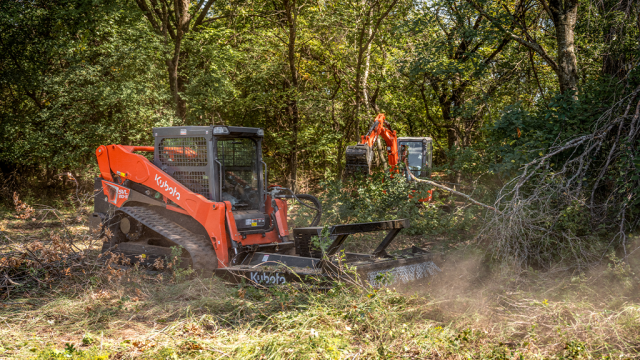
When experienced operators leave the construction workforce, decades of accumulated knowledge leaves with them. The growing experience gap on job sites is changing what contractors need from compact equipment and, in turn, how OEMs approach machine design.
According to Jonathan Gardner, construction product manager at Kubota Canada, the fundamental issue is not a change in the skills contractors need, but a shortage of experienced operators and the time required to develop that expertise in new recruits.
"The people that have been doing it for years are slowly going away, and the skill is not ramped up to replace them quickly," Gardner says.
Grade control and automated functions can help operators complete complex tasks more accurately, while intuitive controls, improved visibility, and ergonomic cab design can make machines easier and less physically demanding to operate. The goal is to give newer operators the assistance they need to become productive sooner while giving experienced operators tools to work more efficiently.
Machine-assist technology helps close the operator experience gap
Experienced operators often rely on knowledge developed over years in the cab. Gardner recalls speaking with a contractor who described being able to feel through his hips whether he was achieving the correct slope. This intuition is difficult to quickly develop in someone new to the industry.
Machine-assist technologies can help bridge part of that experience gap by automating some of the adjustments skilled operators traditionally make themselves. Grade control, for example, allows an operator to enter job parameters so the system automatically controls the blade.
"As long as someone knows how to put in what depth they need or what slope they need, they don't necessarily need the skill to operate the machine and operate that blade," Gardner says. "The blade will automatically move."
Automation can also supplement operator knowledge. Experienced operators are also adopting these technologies because reducing manual inputs allows them to work faster and more consistently. Grade control may also eliminate the need to manually check grade. This reduces interruptions in the workflow and allows contractors to make better use of limited labour.
"You're letting the machine think, not having the operator have to think," Gardner says.
As grade control has become more accessible and affordable, and its productivity benefits better established, Gardner says Kubota is seeing growing demand for it to be integrated directly into compact equipment.
Compact equipment technology simplifies attachment use
As OEMs look for ways to help contractors accomplish more with fewer people, attachment versatility is playing an important role in compact equipment design.
In 2026, Kubota introduced a tiltrotator for its excavators. For applications such as retaining wall construction, the ability to tilt and rotate the attachment allows an operator to precisely position material without relying on a worker outside the cab to guide placement. It makes the operator more efficient and reduces the number of people around active machines, improving job site safety.
More capable attachments may allow a contractor to complete multiple tasks with fewer workers, but as attachments become more capable, they can also become more complex to set up and operate. OEMs are responding by automating parts of the attachment set-up process and bringing more operating information directly into the cab.
Systems such as Kubota's Intell-Attach allow a machine to recognize compatible attachments and automatically apply the appropriate hydraulic flow, reducing complexity for less-experienced operators.