Wheel loader buying tips
Wheel loaders are often put to work on complex job sites where they must routinely back up, travel, and interact with other pieces of equipment while moving heavy loads. Selecting the right wheel loader that will meet your productivity targets while carrying out that work safely is no small task. I asked industry experts to provide their advice for selecting a wheel loader, and here are their tips. 1. Right-size your machine Choosing the correct wheel loader size to meet your productivity requirements is not as simple as picking the biggest machine or the one with the most horsepower. William Zak, DEVELON's wheel loader product manager, says to consider four important factors when selecting a machine: the type of material being handled, the working environment, safe operating capacity, and cycle times. A wheel loader's operating weight will influence stability, tipping load, and how it handles dense or abrasive materials. Rashad Abdul Rasheed, marketing specialist with XCMG Canada, says that "buyers should begin by identifying the heaviest material the machine will encounter and the cycle type: short-cycle truck loading, continuous stockpiling, or heavy quarry digging. A loader with insufficient operating weight may lift the required volume but lack stability at full turn, reducing productivity and increasing risk. Conversely, oversizing the machine can lead to higher fuel use and unnecessary cost. Always compare operating weights and tipping loads across similar configurations to ensure the loader's base platform aligns with the site's daily demands." Consider your material flow and production targets. Todd James, sales representative from Liebherr-Canada, notes that factors like average bucket load, travel distance per cycle, and daily operating hours will inform your decision. "The best value comes from choosing a machine that matches your expected output," he says. 2. Select the right attachments Selecting the right bucket is vital, and adding a quick coupler can make your wheel loader even more efficient if your application requires attachment changes. Common wheel loader buckets include general purpose, light-material, multi-purpose, and grapple. Zak from DEVELON suggests you consider the following: material density, bucket weight, quick coupler weight (if equipped), centre of gravity, and standard lift versus high-lift design. Zak adds, "Hydraulic quick couplers enable you to change non-hydraulic attachments safely within seconds without leaving the cab." John Deere's product manager for loaders, Colton Kreber, says that the selection of cutting edges and ground engaging tools doesn't always get the attention it deserves, but is extremely important when configuring a wheel loader. "The addition of edges or teeth to the front of the bucket helps ensure that the loader can efficiently handle the material it will be most commonly handling on a job site. Choosing the correct ground engaging tool for a bucket will allow for increased productivity of the loader while also offering additional protection to the bucket itself." 3. Choose a cab that will keep your operators comfortable A large wheel loader is often a full-time office for the operator, and Brady Lewis, product manager for CASE Construction Equipment notes that the smallest things can make a big difference toward keeping them comfortable. "Look at the seat suspension and support and consider heated or ventilated options. The ergonomics of the controls and customization options can also impact comfort," he recommends. Look for features like low internal noise, effective vibration protection, and intuitive, ergonomic controls, suggests Eric Yeomans, Volvo Construction Equipment's product manager for large wheel loaders. "Volvo loaders, for example, have an optional Comfort Drive Control system that allows the operator to steer the machine using a small lever instead of the steering wheel, which significantly reduces fatigue during repetitive loading cycles." Finally, check in with your operators. "Operator feedback is often the most reliable indicator of real job site performance, so it is valuable to gather input from the people who will use the machine daily," says James from Liebherr-Canada. 4. Plan for efficient maintenance Daily inspections and routine service activities are designed to identify and prevent issues before they result in downtime. Chris Trampush, Hitachi's wheel loader product manager, says that service support accessibility is a critical factor to consider. "Evaluate whether your dealer can provide mobile service support or if equipment must be transported to their facility for routine maintenance or repairs. Transporting a wheel loader for two or more hours can create additional costs, logistical challenges, and unnecessary disruptions to your operation." When comparing brands, ask about parts lead times, field service response, and availability of wear components, recommends James from Liebherr-Canada. That su
 machineryasia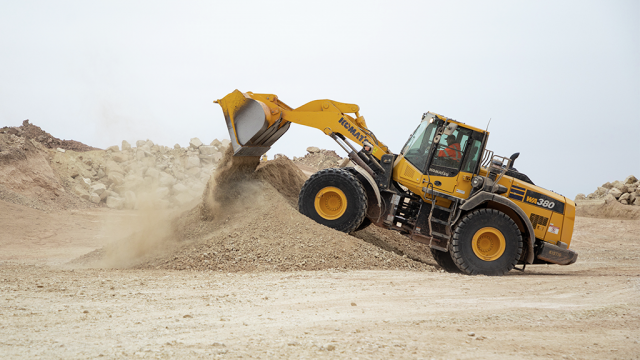
Wheel loaders are often put to work on complex job sites where they must routinely back up, travel, and interact with other pieces of equipment while moving heavy loads. Selecting the right wheel loader that will meet your productivity targets while carrying out that work safely is no small task. I asked industry experts to provide their advice for selecting a wheel loader, and here are their tips.
1. Right-size your machine
Choosing the correct wheel loader size to meet your productivity requirements is not as simple as picking the biggest machine or the one with the most horsepower. William Zak, DEVELON's wheel loader product manager, says to consider four important factors when selecting a machine: the type of material being handled, the working environment, safe operating capacity, and cycle times.
A wheel loader's operating weight will influence stability, tipping load, and how it handles dense or abrasive materials. Rashad Abdul Rasheed, marketing specialist with XCMG Canada, says that "buyers should begin by identifying the heaviest material the machine will encounter and the cycle type: short-cycle truck loading, continuous stockpiling, or heavy quarry digging. A loader with insufficient operating weight may lift the required volume but lack stability at full turn, reducing productivity and increasing risk. Conversely, oversizing the machine can lead to higher fuel use and unnecessary cost. Always compare operating weights and tipping loads across similar configurations to ensure the loader's base platform aligns with the site's daily demands."
Consider your material flow and production targets. Todd James, sales representative from Liebherr-Canada, notes that factors like average bucket load, travel distance per cycle, and daily operating hours will inform your decision. "The best value comes from choosing a machine that matches your expected output," he says.
2. Select the right attachments
Selecting the right bucket is vital, and adding a quick coupler can make your wheel loader even more efficient if your application requires attachment changes. Common wheel loader buckets include general purpose, light-material, multi-purpose, and grapple. Zak from DEVELON suggests you consider the following: material density, bucket weight, quick coupler weight (if equipped), centre of gravity, and standard lift versus high-lift design.
Zak adds, "Hydraulic quick couplers enable you to change non-hydraulic attachments safely within seconds without leaving the cab."
John Deere's product manager for loaders, Colton Kreber, says that the selection of cutting edges and ground engaging tools doesn't always get the attention it deserves, but is extremely important when configuring a wheel loader. "The addition of edges or teeth to the front of the bucket helps ensure that the loader can efficiently handle the material it will be most commonly handling on a job site. Choosing the correct ground engaging tool for a bucket will allow for increased productivity of the loader while also offering additional protection to the bucket itself."
3. Choose a cab that will keep your operators comfortable
A large wheel loader is often a full-time office for the operator, and Brady Lewis, product manager for CASE Construction Equipment notes that the smallest things can make a big difference toward keeping them comfortable. "Look at the seat suspension and support and consider heated or ventilated options. The ergonomics of the controls and customization options can also impact comfort," he recommends.
Look for features like low internal noise, effective vibration protection, and intuitive, ergonomic controls, suggests Eric Yeomans, Volvo Construction Equipment's product manager for large wheel loaders. "Volvo loaders, for example, have an optional Comfort Drive Control system that allows the operator to steer the machine using a small lever instead of the steering wheel, which significantly reduces fatigue during repetitive loading cycles."
Finally, check in with your operators. "Operator feedback is often the most reliable indicator of real job site performance, so it is valuable to gather input from the people who will use the machine daily," says James from Liebherr-Canada.
4. Plan for efficient maintenance
Daily inspections and routine service activities are designed to identify and prevent issues before they result in downtime. Chris Trampush, Hitachi's wheel loader product manager, says that service support accessibility is a critical factor to consider. "Evaluate whether your dealer can provide mobile service support or if equipment must be transported to their facility for routine maintenance or repairs. Transporting a wheel loader for two or more hours can create additional costs, logistical challenges, and unnecessary disruptions to your operation."
When comparing brands, ask about parts lead times, field service response, and availability of wear components, recommends James from Liebherr-Canada. That support can prevent costly service delays and is as important as machine performance.
To minimize downtime, you need a machine designed for quick, easy, and safe maintenance, says Yeomans from Volvo. "Look for ground-level access to service points, grouped greasing points and extended service intervals so your loader spends less time in the shop and more time on the job site."
5. Prioritize safety
Wheel loaders spend a lot of time backing up on job sites that are often busy and complex, and are operated for long hours, so it is vital to evaluate the safety features that will protect your operators, bystanders, and property. Trampush from Hitachi recommends selecting a machine with the appropriate camera systems, proximity detection, and improved lighting features.
Operator fatigue is a significant concern for these job sites, and Kreber says that John Deere offers solutions that will help reduce operator fatigue and keep them alert. These include John Deere's Advanced Vision System, which offers 270 degrees of visibility, and Advanced Object Detection, which provides audible alerts when objects are detected at the rear of the machine. SmartDetect identifies objects and people around the machine and provides audible alerts to the operator and bystanders.
Kwanju Cho, Komatsu North America's product marketing manager, says, "Prioritizing safety above all else is critical within the construction and mining industries. When evaluating which wheel loader to purchase, reviewing key safety indicators can help guide the buying decision. Features such as backup alarms, backup cameras, enhanced visibility and minimized blind spots are just a few important elements to consider."
This article originally appeared in the January 2026 issue of Heavy Equipment Guide.