Unsung Heroes of Manufacturing: Margaret E. Knight, the Inventor Behind the Flat-Bottomed Paper Bag
Paper bags might not seem like a groundbreaking invention, but Margaret E. Knight’s ingenuity transformed how they were made. Yet her path to recognition was anything but simple.
 machineryasia
Paper bags might not seem like a groundbreaking invention, but Margaret E. Knight’s ingenuity transformed how they were made. Yet her path to recognition was anything but simple.
America has a long history of manufacturing – almost 250 years of it. We began milling cotton in Rhode Island in 1790 and continued to innovate beyond what was thought possible.
Of course, with that history came the manufacturers and inventors that worked tirelessly behind the scenes. Hundreds, maybe thousands of Americans helped create, invent or patent ideas that helped move our country forward. This new series, Unsung Heroes of American Manufacturing, seeks to highlight the more underrepresented of those individuals, telling their stories even centuries after their impact began.
You might know some of these names – for example, Alexander Hamilton is no longer an ‘unsung hero’ (thanks, Lin-Manuel Miranda). But did you know that he has been credited as the Founding Father of American Manufacturing? No? Then this series is for you.
We’ve got a hefty list of subjects to cover, and manufacturing stories from the ironing board to the Phillips-head screw. Keep an eye out for an invention that you use regularly and let us know if there’s someone you want us to highlight!
Margaret E. Knight (1838-1914)
We’ve all carried groceries, packed lunch or picked up a takeout order in a flat-bottomed paper bag. But have you ever wondered how those bags are made? Or who figured out how to manufacture them on a large scale?
Meet Margaret E. Knight, an American inventor whose machinery transformed paper bag production. Her invention turned a time-consuming, labor-intensive process into an automated one, making a familiar, everyday item much easier and more practical to produce.
Born in York, Maine, in 1838, Knight showed an early interest in building things, often building toys for her brothers and becoming known around town for constructing kites and sleds. At age 12, her family moved to Manchester, New Hampshire, after her father’s death, and she began working in the cotton mills alongside her mother and two brothers.
It was there that Knight created her first invention. After watching a steel-tipped shuttle fly out of a loom and seriously injure a worker, she invented a shuttle-restraining device. Soon, her safety device became standard on looms across the country. However, at such a young age, Knight was unaware of the patent system and received no compensation for her invention.
Knight left the mills in her late teens because of health issues, but gained experience in a variety of trades, including upholstery, photography and engraving. Each job gave her new opportunities to observe how things worked – and, more importantly, how they could work better.
In 1867, Knight began working at the Columbia Paper Bag Company in Springfield, Massachusetts. There, she noticed another manufacturing challenge that could use a little ingenuity.
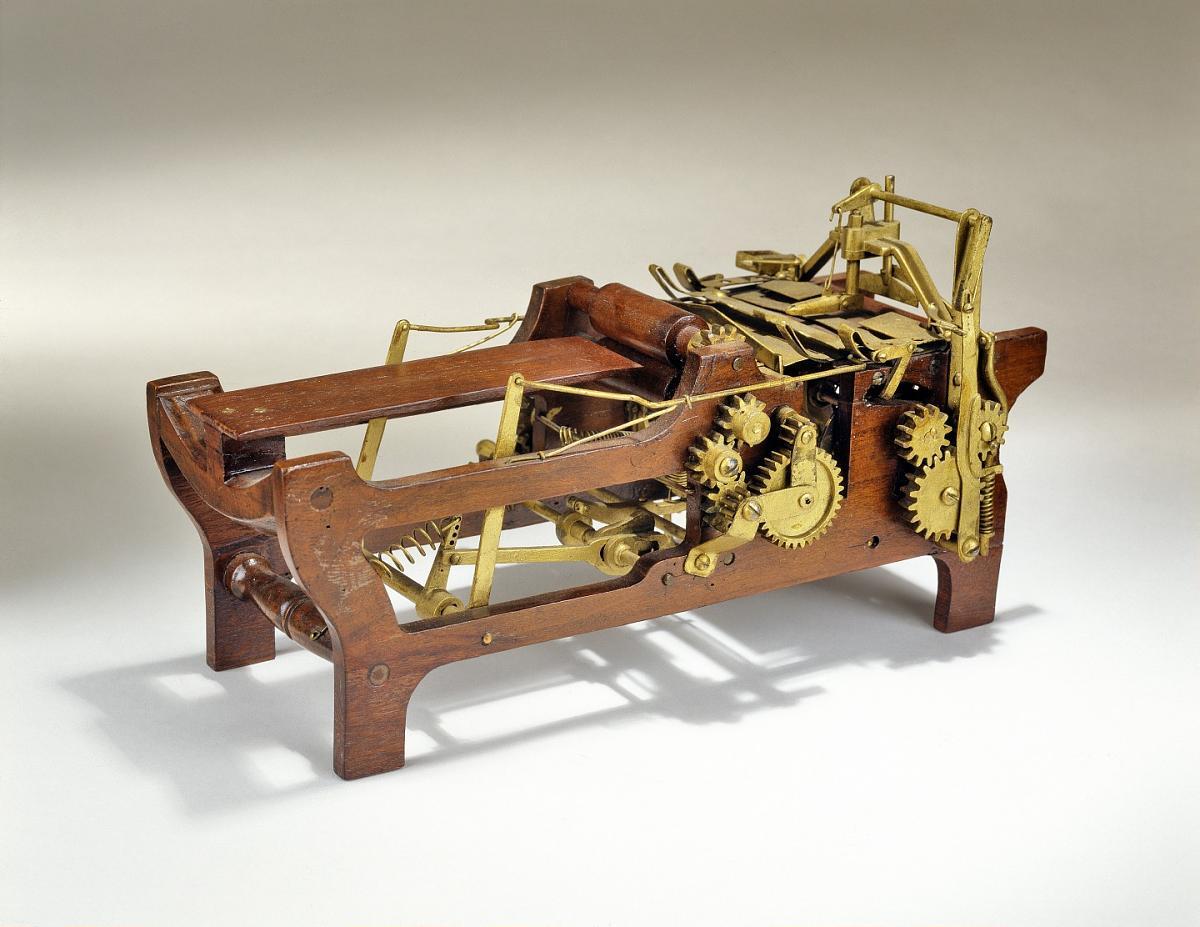
At the time, paper bags were often made in a V-shape, similar to an envelope, which wasn’t very convenient for carrying groceries and other goods. Flat-bottomed bags offered a more practical alternative, but making them by hand was expensive and labor-intensive. Knight saw an opportunity to improve the process. She began developing a machine that could automatically cut, fold and glue flat-bottomed paper bags together, which made producing them much more efficient.
The machine took over two years to develop, starting with a wooden prototype before Knight hired a machinist to fabricate the working model she needed to apply for a patent. But she ran into a challenge.

While her machine’s working model was being developed, a man named Charles Annan, who worked in the machine shop manufacturing Knight’s design, tried to steal it and submit it to the U.S. Patent Office as his own. Upon hearing this, Knight filed a patent interference lawsuit in the fall of 1870 and took Annan to court.
In court, Annan made the sexist claim that Knight, as a woman, “could not possibly understand the mechanical complexities of the machine.” Knight swiftly disproved his argument with substantial evidence, including drawings, notes, diary entries and testimony from her landlady, former employer and machinist. She also described the machine’s components and their functions in extensive detail.
In 1871, Knight won the case and received a patent on her invention.
With her patent secured, Knight co-founded the Eastern Paper Bag Company in Hartford, Connecticut, and licensed her invention to the company. She became a full-time inventor, claiming 89 inventions and holding more than 20 patents across several fields. Her last patent was awarded posthumously in 1915, and she was inducted into the National Inventors Hall of Fame in 2006.
As a female inventor, Knight faced many challenges and limitations. When she patented her paper bag machine, women held a tiny fraction of patents, and as of 2022, only 17% of inventors with international patents were women. Knight is recognized as a leader among women, never hiding her gender from her inventions and patents, an example held in high regard by women’s rights activists and suffragettes.
Although Knight passed away in 1914 at age 76, her impact lives on in an object most of us use every day. So, the next time you grab a paper bag at the grocery store, remember Margaret E. Knight: the inventor whose creativity and persistence literally shaped the way we live. Because not all innovation comes with fanfare. Sometimes, it comes folded into the bottom of a paper bag.