Tower Crane Deployment Supports Expressway Bridge Construction
Manitowoc supports high-elevation bridge construction in India, where lifting reliability and sustained uptime are critical to infrastructure delivery. www.manitowoc.com Bridge construction and transport infrastructure projects require lifting systems capable of sustained heavy-duty operation, high-altitude precision, and minimal operational disruption. Afcons Infrastructure deployed tower crane technology from Manitowoc for the construction of the Lonavala Bridge, a cable-stayed structure forming part of India’s Mumbai–Pune Expressway Missing Link project. High-Elevation Lifting for Cable-Stayed Bridge Construction Afcons Infrastructure deployed tower crane technology from Manitowoc for the construction of the Lonavala Bridge, a cable-stayed structure forming part of India’s Mumbai–Pune Expressway Missing Link project. The engineering challenge involved constructing four bridge pylons for a cable-stayed bridge, requiring continuous heavy lifting at significant working heights under demanding site conditions. Such infrastructure projects require lifting systems capable of handling structural components, formwork systems, concrete placement, and cable installation while maintaining operational continuity over multi-year construction schedules. Tower Crane Selection and Technical Deployment Afcons Infrastructure selected four Potain MCT 385 tower cranes, assigning one crane to each bridge pylon. The cranes were chosen for their ability to combine heavy lifting capacity with positioning precision required in high-rise infrastructure construction. Each crane has a 20-tonne lifting capacity and was configured with 50-metre jibs. Hook heights ranged from 175 metres to 190 metres, reflecting the vertical demands of pylon construction. The cranes were deployed for multiple operational tasks including lifting hanging brackets, positioning cable-stay pipes, pouring concrete, and handling structural construction materials. This multi-role deployment reduced the need for repeated equipment changes, improving workflow continuity on site. Operational Support and Maintenance Strategy Long-duration infrastructure projects place significant demands on crane availability. Since commissioning in 2022, the four cranes have reportedly maintained an average uptime of 98 percent. This operational continuity was supported through local service and spare parts support from Manitowoc, reducing downtime risk associated with component failures or maintenance delays. For bridge construction projects with tightly sequenced structural work, equipment downtime can directly affect labour productivity, concrete scheduling, subcontractor coordination, and milestone completion. The availability of local engineering support appears to have been a practical factor in sustaining crane utilisation over the nearly four-year deployment period. Integrated Lifting Infrastructure on Site While tower cranes handled vertical structural construction, the wider site also incorporated Manitowoc crawler cranes and Grove mobile cranes. This indicates a layered lifting strategy in which different crane classes addressed distinct operational requirements, such as horizontal material movement, heavy structural lifting, and mobile support tasks. In large bridge infrastructure projects, combining fixed tower cranes with mobile lifting equipment improves operational flexibility and reduces bottlenecks across parallel work zones. Infrastructure Delivery Impact The clearest measurable outcome is uptime performance. A 98 percent availability rate over a multi-year deployment suggests effective maintenance planning, equipment suitability, and operational resilience. Edited by Aishwarya Mambet, Induportals Editor, with AI assistance. www.manitowoc.com Powered by Induportals Media Publishing
 machineryasia
Manitowoc supports high-elevation bridge construction in India, where lifting reliability and sustained uptime are critical to infrastructure delivery.
www.manitowoc.com
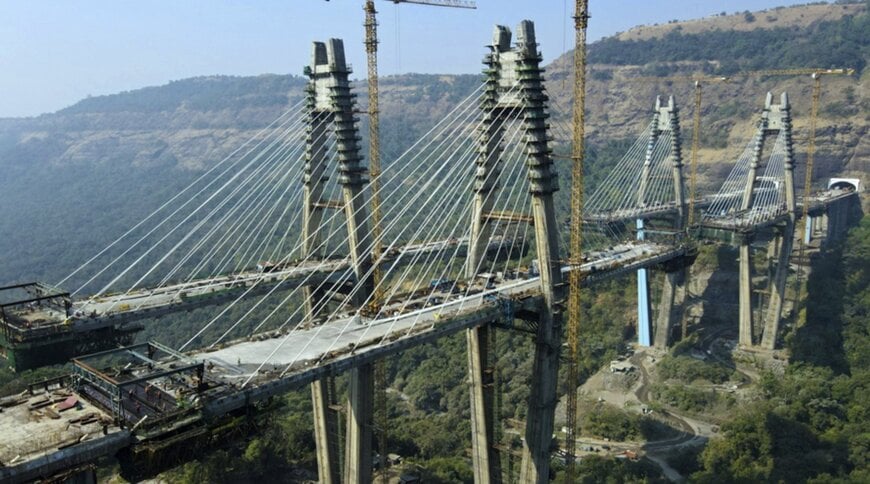
Bridge construction and transport infrastructure projects require lifting systems capable of sustained heavy-duty operation, high-altitude precision, and minimal operational disruption. Afcons Infrastructure deployed tower crane technology from Manitowoc for the construction of the Lonavala Bridge, a cable-stayed structure forming part of India’s Mumbai–Pune Expressway Missing Link project.
High-Elevation Lifting for Cable-Stayed Bridge Construction
Afcons Infrastructure deployed tower crane technology from Manitowoc for the construction of the Lonavala Bridge, a cable-stayed structure forming part of India’s Mumbai–Pune Expressway Missing Link project.
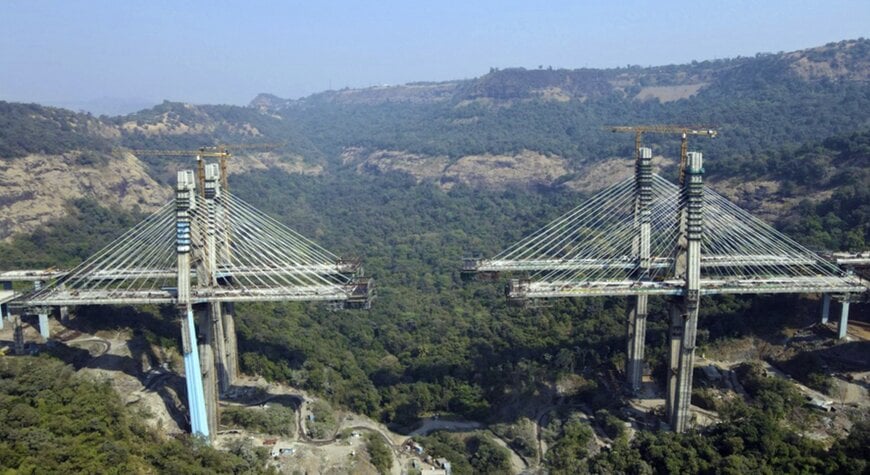
The engineering challenge involved constructing four bridge pylons for a cable-stayed bridge, requiring continuous heavy lifting at significant working heights under demanding site conditions.
Such infrastructure projects require lifting systems capable of handling structural components, formwork systems, concrete placement, and cable installation while maintaining operational continuity over multi-year construction schedules.
Tower Crane Selection and Technical Deployment
Afcons Infrastructure selected four Potain MCT 385 tower cranes, assigning one crane to each bridge pylon.
The cranes were chosen for their ability to combine heavy lifting capacity with positioning precision required in high-rise infrastructure construction. Each crane has a 20-tonne lifting capacity and was configured with 50-metre jibs. Hook heights ranged from 175 metres to 190 metres, reflecting the vertical demands of pylon construction. The cranes were deployed for multiple operational tasks including lifting hanging brackets, positioning cable-stay pipes, pouring concrete, and handling structural construction materials.
This multi-role deployment reduced the need for repeated equipment changes, improving workflow continuity on site.
Operational Support and Maintenance Strategy
Long-duration infrastructure projects place significant demands on crane availability. Since commissioning in 2022, the four cranes have reportedly maintained an average uptime of 98 percent.
This operational continuity was supported through local service and spare parts support from Manitowoc, reducing downtime risk associated with component failures or maintenance delays. For bridge construction projects with tightly sequenced structural work, equipment downtime can directly affect labour productivity, concrete scheduling, subcontractor coordination, and milestone completion. The availability of local engineering support appears to have been a practical factor in sustaining crane utilisation over the nearly four-year deployment period.
Integrated Lifting Infrastructure on Site
While tower cranes handled vertical structural construction, the wider site also incorporated Manitowoc crawler cranes and Grove mobile cranes. This indicates a layered lifting strategy in which different crane classes addressed distinct operational requirements, such as horizontal material movement, heavy structural lifting, and mobile support tasks.
In large bridge infrastructure projects, combining fixed tower cranes with mobile lifting equipment improves operational flexibility and reduces bottlenecks across parallel work zones.
Infrastructure Delivery Impact
The clearest measurable outcome is uptime performance. A 98 percent availability rate over a multi-year deployment suggests effective maintenance planning, equipment suitability, and operational resilience.
Edited by Aishwarya Mambet, Induportals Editor, with AI assistance.
www.manitowoc.com
Powered by
Induportals Media Publishing