This Oregon Apparel Manufacturer Makes Clothes to Last a Lifetime
Dehen Knitting Company makes only a few garments, but makes them exceedingly well.
 machineryasia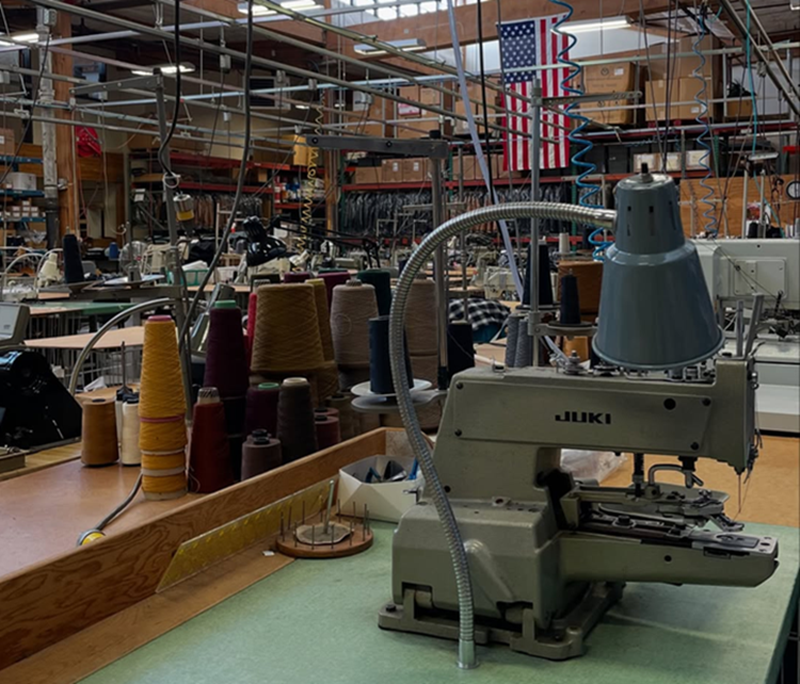
Dehen Knitting Company makes only a few garments, but makes them exceedingly well.
Dehen Knitting Company owner Jim Artaiz describes the upscale men’s clothing manufacturer as “a hundred-year-old startup company.”
It sounds like a contradiction, particularly for a business founded in 1920, but spend some time considering what the Dehen 1920 brand is doing today, and the description begins to fit.
The company has more than a century of history behind it, generations of family involvement and a manufacturing operation that has survived dramatic changes in the American apparel industry. At the same time, Artaiz says Dehen has had to approach the modern marketplace with the energy and uncertainty of a much younger company.
“We have reinvented ourselves,” said Artaiz, owner and president of the third-generation, family-run Portland, Oregon apparel manufacturer.
The clothes, however, are still made the old-fashioned way.
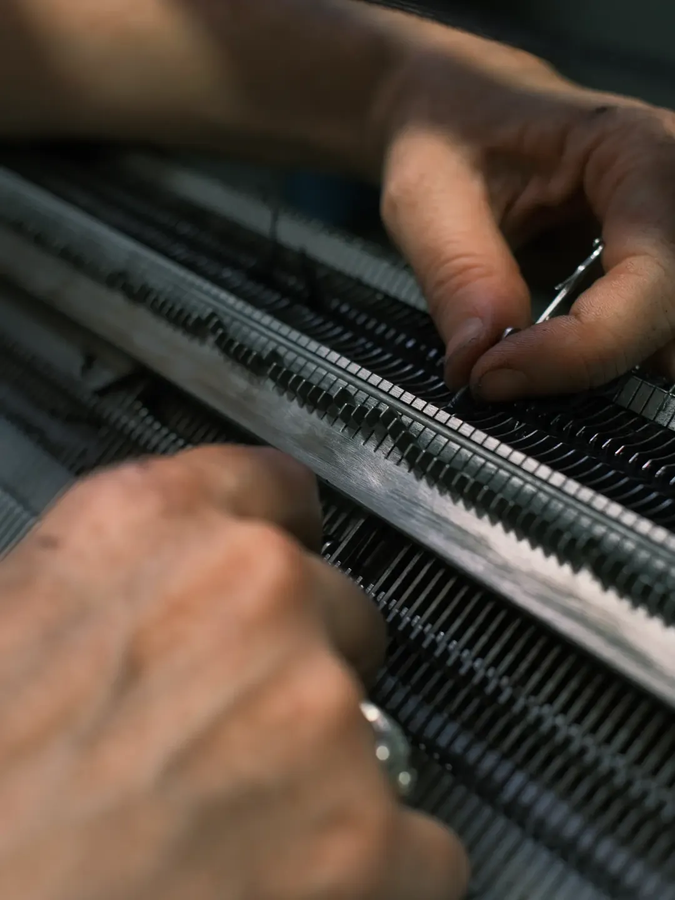
“We are a knitter,” Artaiz said. “We actually knit fabric. We then press, cut and sew so that we are making sweaters from yarn into a finished product right here in the building.”
That building is a 20,000-square-foot factory in Portland where the company employs about 26 people. It is where much of the Dehen 1920 collection comes together, from the heavy wool sweaters for which the company is known to varsity jackets, overshirts and other pieces of bespoke American-made menswear.
In an apparel industry increasingly defined by global production, enormous quantities and rapidly changing fashion, Dehen has chosen a different path.
The company has concentrated on making fewer products, making them well and finding customers willing to appreciate the difference. It is high-end men’s garments that have kept Dehen in business for 106 years.
If there is one material that best represents Dehen, it is wool.
“We make a heavy, 100% wool knit from custom-dyed yarns,” Artaiz said. “We buy those yarns on the East Coast, in the Carolinas, and they are shipped to us as yarn and then we knit fabric here in the building.
“We are wool-centric for sure.”
That might seem like a narrow proposition in a clothing business dominated by synthetic fabrics and inexpensive blends, but Artaiz sees renewed interest in natural fibers as an opportunity.
“Wool has had a nice resurgence,” he said. “There is a lot of product out there with wool because it is a natural fiber and it keeps you warm, keeps you warm when it is wet and there are a number of benefits to it.”
Dehen does make cotton products, including spring jackets in cotton corduroy, but the company remains closely identified with wool.
“If you don’t like wool, we get it,” Artaiz said. “We do offer some cotton products, springtime jackets in cotton corduroy for instance as opposed to wool. We do develop items that are not wool but, again, we are known for the wool.”
The same philosophy applies to the company’s apparel. Dehen is not trying to chase every fashion trend. Instead, it makes clothing designed to remain useful long after the season in which it was purchased.
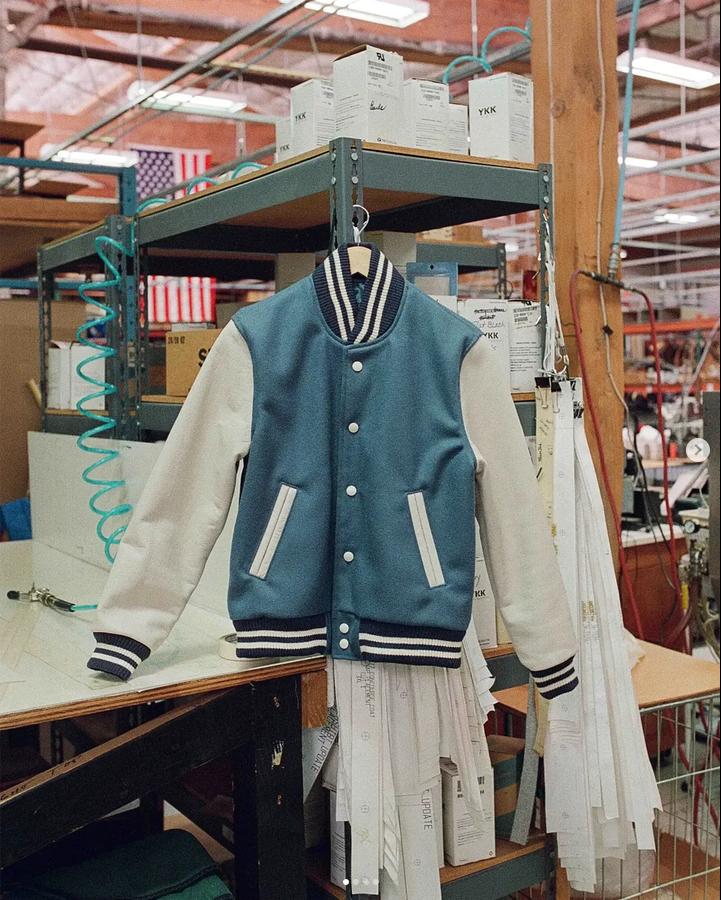
The Dehen varsity jacket is a good example.
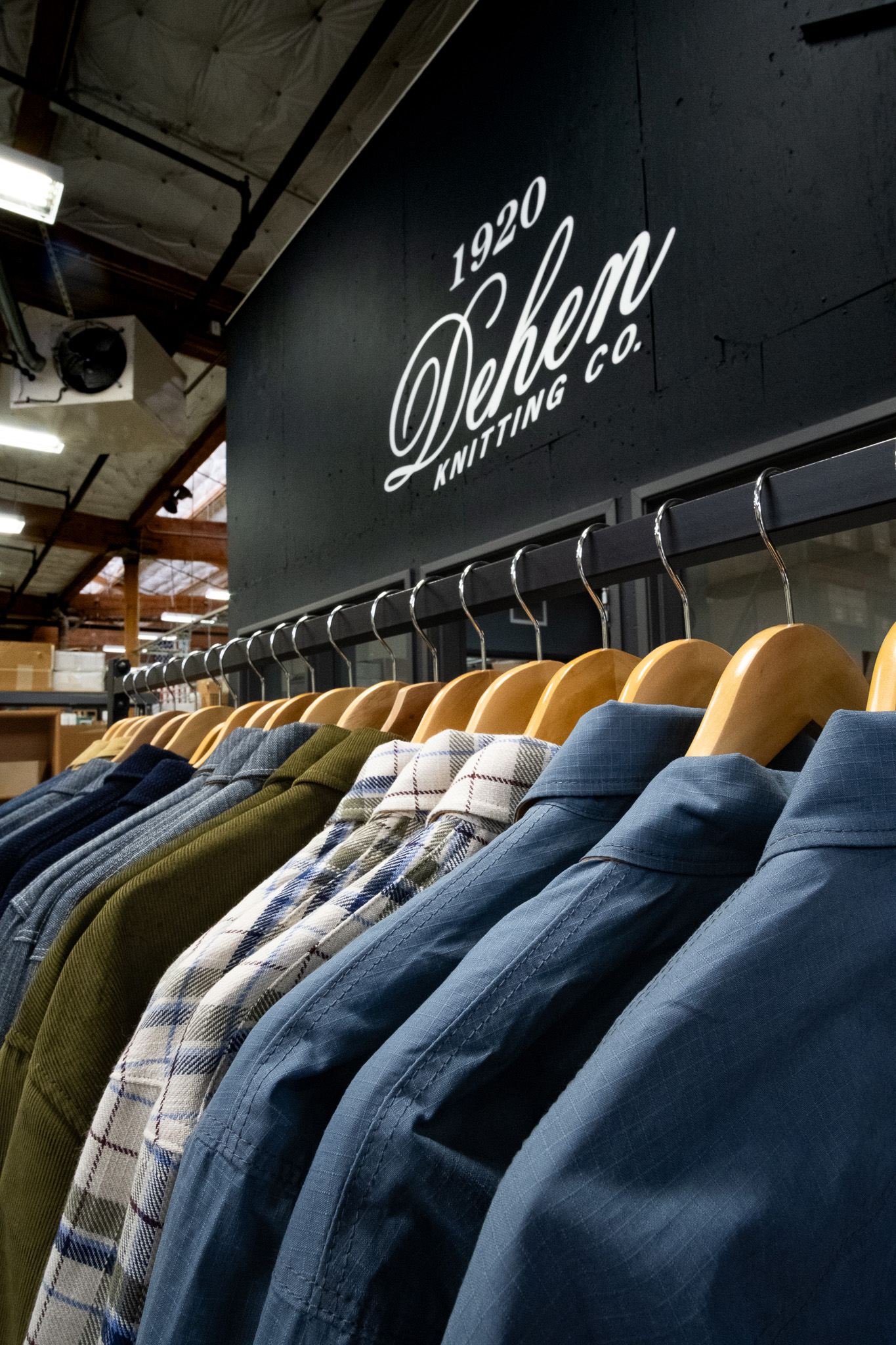
“We do make varsity jackets,” Artaiz said. “We have an inventory of multiple colors. A black-on-black varsity jacket is ubiquitous out in the marketplace; black body, black leather sleeves. We feel like we make them as good or better than anybody else.
“It’s a substantial piece, like a lot of things we make. If you take care of it, you’ll have it your entire life.”
That idea of longevity is central to Dehen’s identity.
“It’s not a ‘buy it this year and move on,’” Artaiz said. “You have this jacket and it becomes part of your repertoire. It’s in your wardrobe to be used year after year.”
Dehen garments were known for their durability from the very beginning.
“The company was founded by Peter and Celia Dehen,” Artaiz said. “It’s a family-owned business created in 1920. Peter Dehen had worked for Jantzen here in Portland as a knitter and he started his own business.”
For decades, Dehen manufactured clothing for other labels. The work kept the factory running, but consumers rarely knew the company behind the garments.
“About 15 years ago we introduced Dehen 1920 as its own label,” Artaiz said. “For many years we were doing private label goods, custom work sometimes with a Dehen label but most times without a Dehen label in the garments.”
That decision changed the company’s direction.
“Today, 98% of what we make has the Dehen 1920 label in it,” Artaiz said. “So, we are producing for ourselves, for direct-to-consumer sales as well as wholesale sales just building equity in our own name, in our own ability instead of manufacturing for other labels nobody knew that Dehen was making.
“It is all about Dehen 1920 at this point and we are much more focused than we have ever been certainly during this generation.”
The company still works with Harley-Davidson, an important customer given Dehen’s connection to motorcycle culture.
“We are not doing any private label anymore,” Artaiz said. “We do some work with Harley-Davidson as one customer. Their label goes in that garment, and we put our label in the side seam. That remains an important customer for us.”
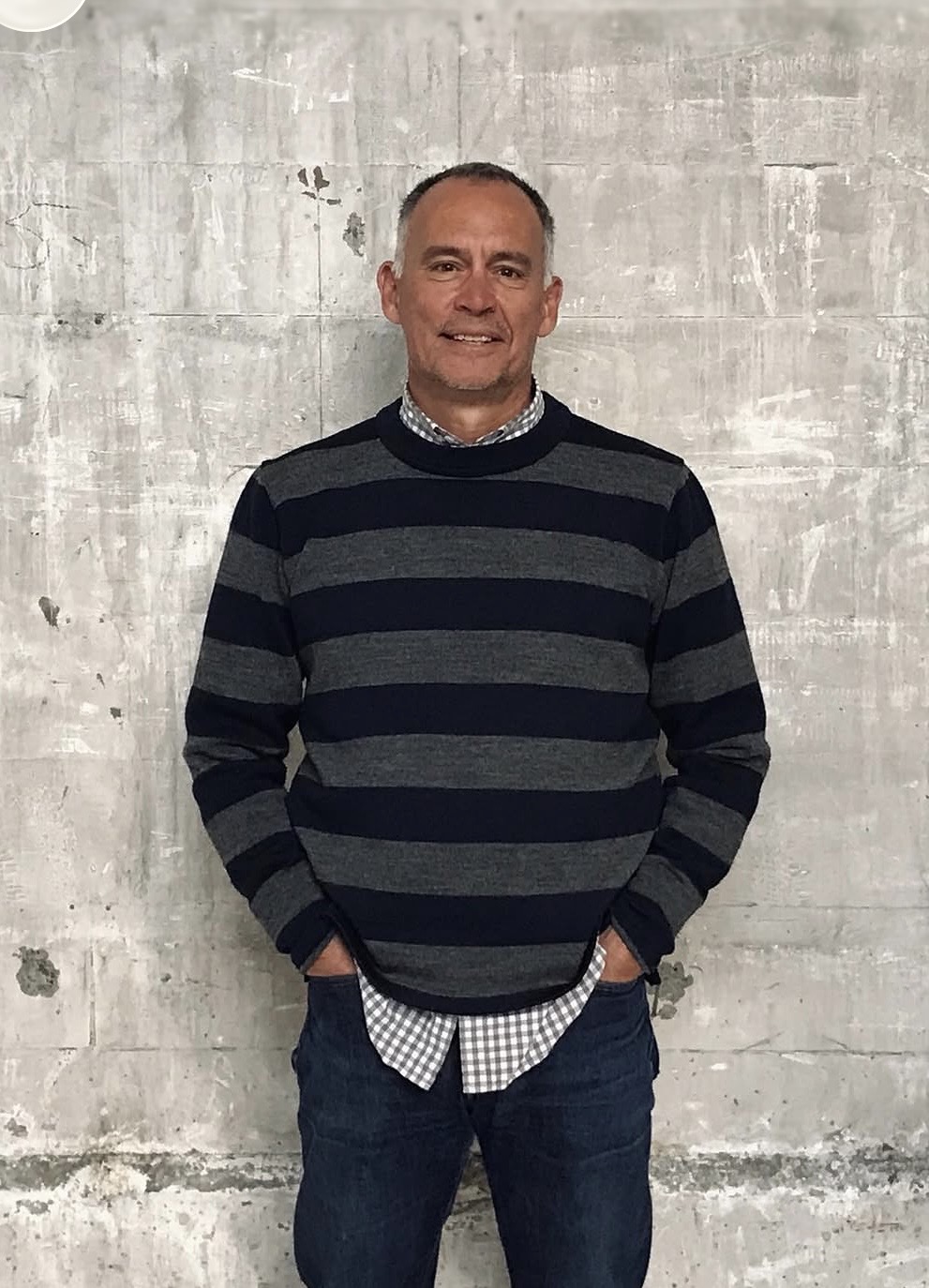
Dehen was once one of hundreds of small regional manufacturers producing clothing for local customers.
“Dehen was like hundreds and hundreds of manufacturers around the country that produced products for their region,” Artaiz said. “Whether it be high school varsity jackets or sweaters for their clubs, but they weren’t big companies. They were all kind of mom and pop businesses like us.”
Many disappeared as the economics of apparel manufacturing changed.
“It just so happens that Dehen has survived and chosen to continue to make what we’ve always made,” Artaiz said.
That survival has become part of the company’s appeal.
“A lot of times in the processes the way we make our jackets and sweaters is very similar to the way it was done 50, 60, 70 years ago,” he said.
But Dehen has not simply preserved an old manufacturing process. It has developed new products while maintaining its identity.
The Chrissman overshirt is one example.
“Our designer, Nathaniel Chrissman designed this garment 11 years ago and immediately it was successful,” Artaiz said. “We’ve continued to make the same garment with minor tweaks and improvements over the last 11 years in different colors, in different fabrications, some lined, some not.”
The overshirt can be dressed up or down, and versions are made in wool, cotton and waxed cotton.
“They are water resistant and take on a real patina as they are used,” Artaiz said.
That aging is part of the appeal. Rather than treating wear as a flaw, Dehen builds garments that can acquire a history of their own.
The company’s N1 Deck jacket pushes that philosophy even further.
“Another garment that is super popular for us and is hard to keep up with demand is our N1 Deck jacket,” Artaiz said. “So, if you look online at that piece, it’s over the top built. It’s a luxury garment that is not a practical purchase per se, but people buy this thing to be seen in it. It’s just luxurious.”
The jacket has a sheepskin liner and waxed cotton exterior and is based on N1 Deck jackets worn by the U.S. Navy during World War II.
“It’s a balancing act finding the right market for our products and we’ve been able to do that thus far,” added Artaiz.
About 60 percent of Dehen’s sales are direct to consumer, with the remaining 40 percent coming from wholesale accounts in the United States, Europe and Asia.
“You can’t be everything to everybody, and I think once you find what you are good at generally speaking you stay focused there and build around the edges but don’t try to do too much,” Artaiz said. “We are not trying to set trends nor are we following trends,” he said. “We’re very proud of what we make.”
The result is a company that is both old and new at the same time.
It still makes clothing much as it did generations ago, but it sells through a modern direct-to-consumer operation and reaches customers around the world. It still makes heavyweight wool sweaters and varsity jackets while developing newer garments that give the company room to move forward.
“It’s not about growth and making a big splash in the marketplace or being well known,” Artaiz said. “Dehen is one of those ‘if you know, you know’ kind of things.
“We’re happy in the niche that we’re in. We’re content and proud that we have been able to survive and do this work.”
The Alliance for American Manufacturing does not receive a commission from purchases made through the above links, nor was the organization or author paid for favorable coverage.
Labeling Note: This story is intended to highlight companies that support American jobs and that make great products in the United States. We rely on the companies listed to provide accurate information regarding their domestic operations and their products. Each company featured is individually responsible for labeling and advertising their products according to applicable standards, such as the Federal Trade Commission’s “Made in USA” standard or California’s “Made in USA” labeling law. We do not review individual products for compliance or claim that because a company is listed in the guide that their products comply with specific labeling or advertising standards. Our focus is on supporting companies that create American jobs.
For more on the Federal Trade Commission’s standards for “Made in USA” claims and California’s “Made in USA” labeling law, please also read this guest post by Dustin Painter and Kristi Wolff of Kelly Drye & Warren, LLP.