Somalev Cranes & Logistics Dismantles Casablanca Port Cranes
Liebherr LTM 1400-7.1 and LTM 1250/1 remove 1,400 tonnes during live operations. www.liebherr.com The LTM 1400-7.1 operates precisely between narrow part areas and adapts flexibly to local conditions. In the Port of Casablanca, Somalev Cranes & Logistics has successfully dismantled two ship-to-shore (STS) container cranes as part of a terminal modernization program. The operation involved the controlled removal of more than 1,400 tonnes of steel structure while port activities continued uninterrupted. For the project, Somalev deployed two Liebherr telescopic cranes: the LTM 1400-7.1 and the LTM 1250/1. Selected for their high lifting capacity, flexibility and suitability for confined port environments, the cranes enabled step-by-step removal of major components, including boom sections, machinery houses and portal structures. The decision to use telescopic cranes instead of lattice boom cranes provided greater adaptability to changing load cases and limited ground space. Technical and operational challenges The dismantling presented several engineering challenges. Due to the age of the container cranes, conservative load calculations and reinforced rigging solutions were required. Operations were conducted at lifting heights of up to 70 metres within an active terminal environment, where restricted space demanded precise positioning and carefully defined exclusion zones. Continuous coordination with port authorities ensured safe execution while minimizing disruption to ongoing terminal operations. Controlled dismantling with synchronized lifting The cranes operated in reverse sequence to the original assembly process. Various load scenarios required multiple crane configurations and rigging arrangements. In several phases, synchronized lifting operations between the LTM 1400-7.1 and LTM 1250/1 were executed, demanding detailed planning, real-time communication and precise coordination. Somalev implemented comprehensive safety measures, including project-specific risk assessments, redundant rigging systems, wind monitoring and continuous tracking of crane parameters. Optimized crane configurations minimized the required footprint and reduced impact on port logistics. The successful completion of the dismantling project highlights Somalev’s expertise in complex industrial decommissioning and demonstrates the operational reliability and adaptability of Liebherr mobile crane technology in demanding port environments. www.liebherr.com Powered by Induportals Media Publishing
 machineryasia
Liebherr LTM 1400-7.1 and LTM 1250/1 remove 1,400 tonnes during live operations.
www.liebherr.com
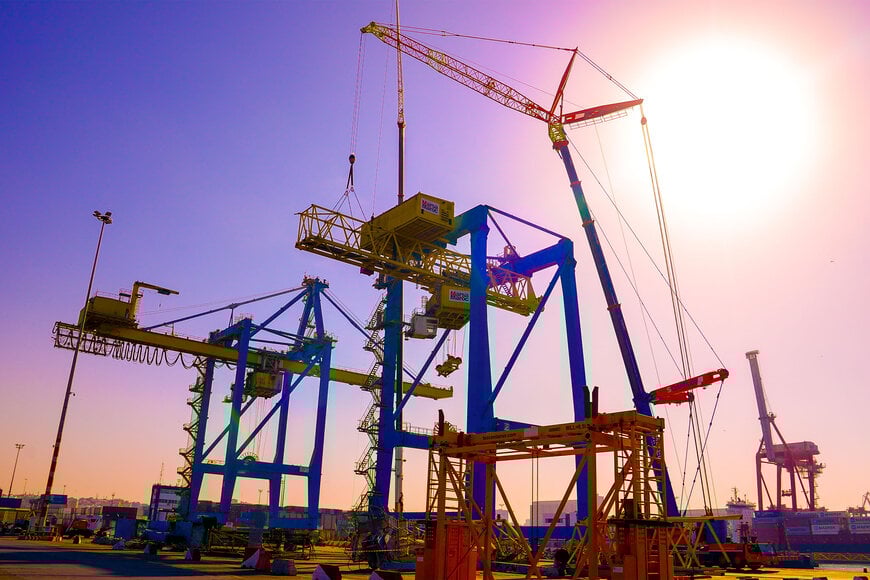
The LTM 1400-7.1 operates precisely between narrow part areas and adapts flexibly to local conditions.
In the Port of Casablanca, Somalev Cranes & Logistics has successfully dismantled two ship-to-shore (STS) container cranes as part of a terminal modernization program. The operation involved the controlled removal of more than 1,400 tonnes of steel structure while port activities continued uninterrupted.
For the project, Somalev deployed two Liebherr telescopic cranes: the LTM 1400-7.1 and the LTM 1250/1. Selected for their high lifting capacity, flexibility and suitability for confined port environments, the cranes enabled step-by-step removal of major components, including boom sections, machinery houses and portal structures. The decision to use telescopic cranes instead of lattice boom cranes provided greater adaptability to changing load cases and limited ground space.
Technical and operational challenges
The dismantling presented several engineering challenges. Due to the age of the container cranes, conservative load calculations and reinforced rigging solutions were required. Operations were conducted at lifting heights of up to 70 metres within an active terminal environment, where restricted space demanded precise positioning and carefully defined exclusion zones.
Continuous coordination with port authorities ensured safe execution while minimizing disruption to ongoing terminal operations.
Controlled dismantling with synchronized lifting
The cranes operated in reverse sequence to the original assembly process. Various load scenarios required multiple crane configurations and rigging arrangements. In several phases, synchronized lifting operations between the LTM 1400-7.1 and LTM 1250/1 were executed, demanding detailed planning, real-time communication and precise coordination.
Somalev implemented comprehensive safety measures, including project-specific risk assessments, redundant rigging systems, wind monitoring and continuous tracking of crane parameters. Optimized crane configurations minimized the required footprint and reduced impact on port logistics.
The successful completion of the dismantling project highlights Somalev’s expertise in complex industrial decommissioning and demonstrates the operational reliability and adaptability of Liebherr mobile crane technology in demanding port environments.
www.liebherr.com
In the Port of Casablanca, Somalev Cranes & Logistics has successfully dismantled two ship-to-shore (STS) container cranes as part of a terminal modernization program. The operation involved the controlled removal of more than 1,400 tonnes of steel structure while port activities continued uninterrupted.
For the project, Somalev deployed two Liebherr telescopic cranes: the LTM 1400-7.1 and the LTM 1250/1. Selected for their high lifting capacity, flexibility and suitability for confined port environments, the cranes enabled step-by-step removal of major components, including boom sections, machinery houses and portal structures. The decision to use telescopic cranes instead of lattice boom cranes provided greater adaptability to changing load cases and limited ground space.
Technical and operational challenges
The dismantling presented several engineering challenges. Due to the age of the container cranes, conservative load calculations and reinforced rigging solutions were required. Operations were conducted at lifting heights of up to 70 metres within an active terminal environment, where restricted space demanded precise positioning and carefully defined exclusion zones.
Continuous coordination with port authorities ensured safe execution while minimizing disruption to ongoing terminal operations.
Controlled dismantling with synchronized lifting
The cranes operated in reverse sequence to the original assembly process. Various load scenarios required multiple crane configurations and rigging arrangements. In several phases, synchronized lifting operations between the LTM 1400-7.1 and LTM 1250/1 were executed, demanding detailed planning, real-time communication and precise coordination.
Somalev implemented comprehensive safety measures, including project-specific risk assessments, redundant rigging systems, wind monitoring and continuous tracking of crane parameters. Optimized crane configurations minimized the required footprint and reduced impact on port logistics.
The successful completion of the dismantling project highlights Somalev’s expertise in complex industrial decommissioning and demonstrates the operational reliability and adaptability of Liebherr mobile crane technology in demanding port environments.
www.liebherr.com
Powered by
Induportals Media Publishing