Motor graders: equipment insight and trends
Motor graders are among the most skill-intensive machines on the job site. Achieving a smooth, accurate finish requires continuous coordination of steering, articulation, blade position, and machine speed. This is a skill that typically develops through years of experience. As contractors face ongoing labour shortages and an influx of less-experienced operators, OEMs are introducing technologies that simplify machine operation without compromising precision. Rather than replacing operator skill, the latest motor graders reduce operator workload through automation, integrated grade control, improved visibility, and more intuitive controls. These machines are easier to learn, more comfortable to operate, and capable of delivering consistent results with fewer manual inputs. Across the latest generation of machines, OEMs are simplifying operation in different ways while pursuing the same objective: helping operators achieve precision with less effort. Redesigned Caterpillar 150 and 160 focus on operator comfort Caterpillar has expanded its Next Generation motor grader platform with the redesigned Cat 150 and 160, featuring updates focused on operator ergonomics and streamlined controls. The most significant update is the introduction of joystick controls, which are standard on the 160 and optional on the 150. The two three-axis joysticks consolidate steering, transmission, directional travel, throttle, and mouldboard functions into a single control system, reducing the hand and arm movement required compared to a traditional steering wheel and lever configuration. Cat also introduced a dedicated finish gear that allows slower, more precise machine control during final grading passes. The redesigned cab complements the simplified controls with larger windows that improve sightlines to the mouldboard and front tires. A centralized 10-inch touchscreen serves as the interface for optional technologies, including Cat Grade; integrated front, rear, and 360-degree cameras; and Cat's People Detection system.
 machineryasia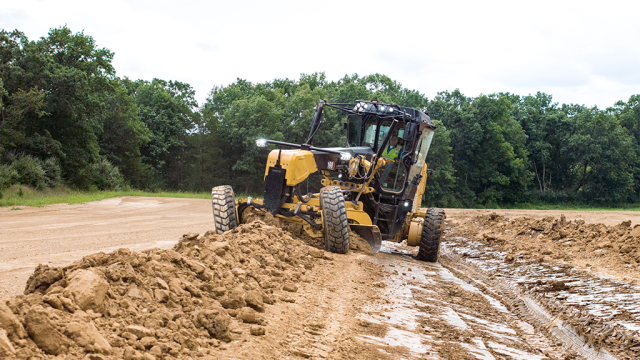
Motor graders are among the most skill-intensive machines on the job site. Achieving a smooth, accurate finish requires continuous coordination of steering, articulation, blade position, and machine speed. This is a skill that typically develops through years of experience. As contractors face ongoing labour shortages and an influx of less-experienced operators, OEMs are introducing technologies that simplify machine operation without compromising precision.
Rather than replacing operator skill, the latest motor graders reduce operator workload through automation, integrated grade control, improved visibility, and more intuitive controls. These machines are easier to learn, more comfortable to operate, and capable of delivering consistent results with fewer manual inputs. Across the latest generation of machines, OEMs are simplifying operation in different ways while pursuing the same objective: helping operators achieve precision with less effort.
Redesigned Caterpillar 150 and 160 focus on operator comfort
Caterpillar has expanded its Next Generation motor grader platform with the redesigned Cat 150 and 160, featuring updates focused on operator ergonomics and streamlined controls. The most significant update is the introduction of joystick controls, which are standard on the 160 and optional on the 150.
The two three-axis joysticks consolidate steering, transmission, directional travel, throttle, and mouldboard functions into a single control system, reducing the hand and arm movement required compared to a traditional steering wheel and lever configuration. Cat also introduced a dedicated finish gear that allows slower, more precise machine control during final grading passes.
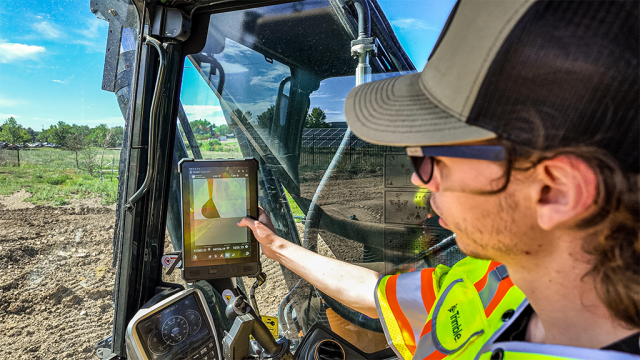
The redesigned cab complements the simplified controls with larger windows that improve sightlines to the mouldboard and front tires. A centralized 10-inch touchscreen serves as the interface for optional technologies, including Cat Grade; integrated front, rear, and 360-degree cameras; and Cat's People Detection system.


![[Job Story] Parker Expands EMEA Support with New Service Centres](https://www.heavyquipmag.com/wp-content/uploads/2024/11/Parker-Centers1.jpg)