Hydrogen Engines Enable Low-Emission Construction Logistics
Liebherr, MAN Truck & Bus and Daimler Truck cooperate within the Hydrogen Engine Alliance to test hydrogen-powered heavy machinery under real construction site conditions. www.liebherr.com A joint test deployment at a gravel plant in Munich demonstrates how hydrogen internal combustion engines can support low-emission construction site operations for heavy-duty machinery and transport vehicles with high energy demands. Context of the Cooperation The cooperation brings together construction machinery and commercial vehicle manufacturers with complementary expertise in drivetrain development, vehicle integration, and heavy-duty applications. The project is coordinated through the Hydrogen Engine Alliance, a cross-industry initiative aimed at promoting hydrogen combustion engines for applications where battery-electric systems face limitations in range, refuelling time, or continuous power output. The industrial challenge addressed is the decarbonisation of construction logistics while maintaining operational availability comparable to diesel-based systems. Technical Solution and Responsibilities The test operation combines three hydrogen-powered vehicles: the Liebherr L 566 H large wheel loader prototype, the series-ready MAN hTGX truck, and a hydrogen engine development vehicle based on the Mercedes-Benz Arocs from Daimler Truck. Liebherr is responsible for the hydrogen engine integration in the wheel loader and for on-site material handling. MAN and Daimler Truck contribute hydrogen-powered heavy-duty trucks designed for long-range and high-load transport. All vehicles use hydrogen combustion engines, enabling familiar drivetrain architectures while significantly reducing CO₂ emissions when operated with green hydrogen. Deployment and Integration The deployment took place at an operational gravel plant, where the wheel loader continuously fed raw material into processing systems and loaded the trucks for transport tasks. Refuelling was carried out via an on-site hydrogen filling station developed by Liebherr. Refuelling times of approximately 10–15 minutes allowed full-shift operation without changes to existing work processes, demonstrating compatibility with current construction site logistics and digital infrastructure. Applications and Use Cases Early in the project, the partners focused on demanding applications such as earthmoving, bulk material handling, and heavy transport. These use cases are typical for construction, mining, and quarry operations, where high payloads, long operating cycles, and minimal downtime are critical. Hydrogen engines provide consistent power output and thermal robustness under these conditions. Results and Expected Impact The test confirmed that hydrogen-powered machinery can match diesel vehicles in performance and availability while reducing local emissions and noise levels. The cooperation illustrates how industrial automation and low-emission drivetrains can be combined in existing equipment platforms. Wider adoption will depend on the expansion of hydrogen supply infrastructure and standardized refuelling solutions, but the project demonstrates that technically viable low-emission construction sites are already achievable under real operating conditions. www.liebherr.com Powered by Induportals Media Publishing
 machineryasia
Liebherr, MAN Truck & Bus and Daimler Truck cooperate within the Hydrogen Engine Alliance to test hydrogen-powered heavy machinery under real construction site conditions.
www.liebherr.com
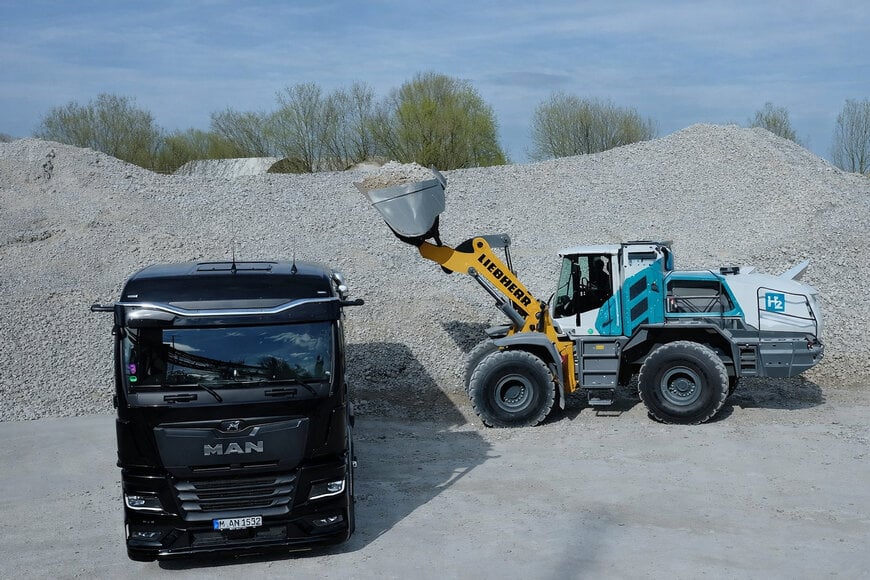
A joint test deployment at a gravel plant in Munich demonstrates how hydrogen internal combustion engines can support low-emission construction site operations for heavy-duty machinery and transport vehicles with high energy demands.
Context of the Cooperation
The cooperation brings together construction machinery and commercial vehicle manufacturers with complementary expertise in drivetrain development, vehicle integration, and heavy-duty applications. The project is coordinated through the Hydrogen Engine Alliance, a cross-industry initiative aimed at promoting hydrogen combustion engines for applications where battery-electric systems face limitations in range, refuelling time, or continuous power output.
The industrial challenge addressed is the decarbonisation of construction logistics while maintaining operational availability comparable to diesel-based systems.
Technical Solution and Responsibilities
The test operation combines three hydrogen-powered vehicles: the Liebherr L 566 H large wheel loader prototype, the series-ready MAN hTGX truck, and a hydrogen engine development vehicle based on the Mercedes-Benz Arocs from Daimler Truck.
Liebherr is responsible for the hydrogen engine integration in the wheel loader and for on-site material handling. MAN and Daimler Truck contribute hydrogen-powered heavy-duty trucks designed for long-range and high-load transport. All vehicles use hydrogen combustion engines, enabling familiar drivetrain architectures while significantly reducing CO₂ emissions when operated with green hydrogen.
Deployment and Integration
The deployment took place at an operational gravel plant, where the wheel loader continuously fed raw material into processing systems and loaded the trucks for transport tasks. Refuelling was carried out via an on-site hydrogen filling station developed by Liebherr. Refuelling times of approximately 10–15 minutes allowed full-shift operation without changes to existing work processes, demonstrating compatibility with current construction site logistics and digital infrastructure.
Applications and Use Cases
Early in the project, the partners focused on demanding applications such as earthmoving, bulk material handling, and heavy transport. These use cases are typical for construction, mining, and quarry operations, where high payloads, long operating cycles, and minimal downtime are critical. Hydrogen engines provide consistent power output and thermal robustness under these conditions.
Results and Expected Impact
The test confirmed that hydrogen-powered machinery can match diesel vehicles in performance and availability while reducing local emissions and noise levels. The cooperation illustrates how industrial automation and low-emission drivetrains can be combined in existing equipment platforms. Wider adoption will depend on the expansion of hydrogen supply infrastructure and standardized refuelling solutions, but the project demonstrates that technically viable low-emission construction sites are already achievable under real operating conditions.
www.liebherr.com
Powered by
Induportals Media Publishing