Heavy Lifting Operations For Mountain Infrastructure
Manitowoc supplied specialized tower cranes to construct structural pylons, addressing complex environmental constraints and spatial limitations during a railway expansion in China. www.manitowoc.com Manitowoc deployed its Potain MC 480 tower cranes to support the construction of main pylons for the Sichuan-Tibet Railway. The heavy-lifting technology provides the structural stability and load capacity necessary for massive civil engineering applications operating under challenging topographical conditions. Overcoming Environmental Constraints in Heavy Infrastructure Construction The deployment of specialized tower cranes addresses the logistical and environmental challenges inherent in mountain railway expansion. The Luding Dadu River Bridge, spanning 1,060 meters, required machinery capable of operating within a deep V-shaped canyon characterized by high wind velocities. To meet these demands, the lifting operations ecosystem utilized three tower cranes configured with jib lengths ranging from 40 meters to 60 meters. This specific configuration allowed the main contractor, China Railway Major Bridge Engineering Group, to fully leverage the 25-tonne maximum lifting capacity of each crane while maintaining structural stability in a high-wind corridor. Technical Adaptations for Complex Pylon Architecture Constructing the 262.8-meter and 255.8-meter main pylons introduced significant spatial and structural constraints. A 21-meter steel formwork section lacked tie-off points for the cranes, necessitating freestanding operational methods around the advancing structure as the elevation increased. Furthermore, the multi-crane setup required precise coordination, as staggered operations permitted only 10 meters of clearance between the jibs. Maintaining operational safety and efficiency within such tight spatial tolerances demonstrates the precision control mechanisms required for high-density construction sites. Lifecycle Management and Operational Reliability The lifting equipment, originally acquired by dealer Xiamen Vigors Mechanical Equipment in 2016, commenced bridge operations in November 2022 and concluded the pylon phase in May. Continuous operation over an extended timeline relies on a robust aftermarket support structure. The main contractor utilized parts and technical servicing from the manufacturing facility in Zhangjiagang, combined with localized mechanical expertise from the dealer, to ensure consistent uptime and efficient maintenance schedules. Wang Zhiwei, head of engineering at Manitowoc China, stated that the MC 480 continues to deliver the lifting capability and structural durability required for demanding infrastructure applications. Edited by Aishwarya Mambet, Induportals Editor, with AI assistance. www.manitowoc.com Powered by Induportals Media Publishing
 machineryasia
Manitowoc supplied specialized tower cranes to construct structural pylons, addressing complex environmental constraints and spatial limitations during a railway expansion in China.
www.manitowoc.com
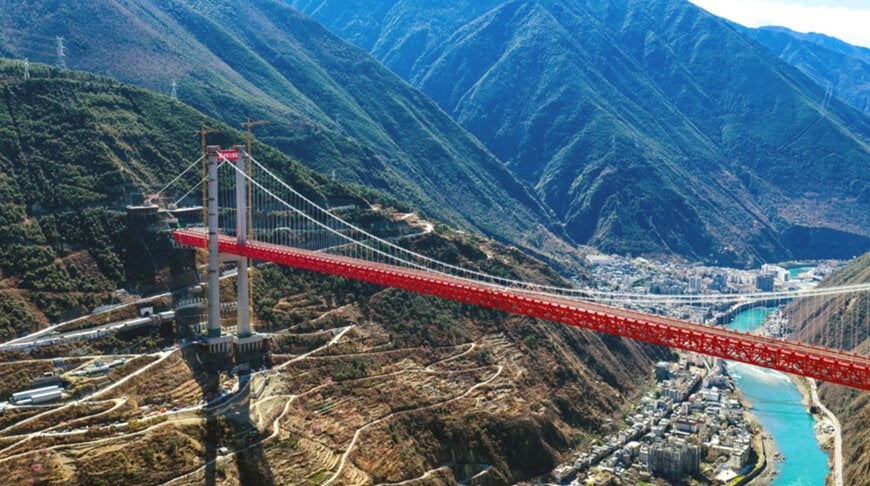
Manitowoc deployed its Potain MC 480 tower cranes to support the construction of main pylons for the Sichuan-Tibet Railway. The heavy-lifting technology provides the structural stability and load capacity necessary for massive civil engineering applications operating under challenging topographical conditions.
Overcoming Environmental Constraints in Heavy Infrastructure Construction
The deployment of specialized tower cranes addresses the logistical and environmental challenges inherent in mountain railway expansion. The Luding Dadu River Bridge, spanning 1,060 meters, required machinery capable of operating within a deep V-shaped canyon characterized by high wind velocities. To meet these demands, the lifting operations ecosystem utilized three tower cranes configured with jib lengths ranging from 40 meters to 60 meters. This specific configuration allowed the main contractor, China Railway Major Bridge Engineering Group, to fully leverage the 25-tonne maximum lifting capacity of each crane while maintaining structural stability in a high-wind corridor.
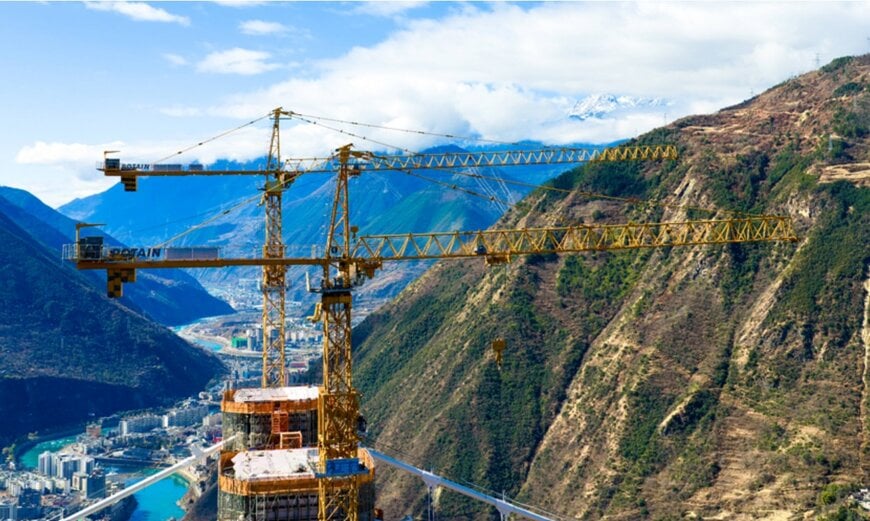
Technical Adaptations for Complex Pylon Architecture
Constructing the 262.8-meter and 255.8-meter main pylons introduced significant spatial and structural constraints. A 21-meter steel formwork section lacked tie-off points for the cranes, necessitating freestanding operational methods around the advancing structure as the elevation increased. Furthermore, the multi-crane setup required precise coordination, as staggered operations permitted only 10 meters of clearance between the jibs. Maintaining operational safety and efficiency within such tight spatial tolerances demonstrates the precision control mechanisms required for high-density construction sites.
Lifecycle Management and Operational Reliability
The lifting equipment, originally acquired by dealer Xiamen Vigors Mechanical Equipment in 2016, commenced bridge operations in November 2022 and concluded the pylon phase in May. Continuous operation over an extended timeline relies on a robust aftermarket support structure. The main contractor utilized parts and technical servicing from the manufacturing facility in Zhangjiagang, combined with localized mechanical expertise from the dealer, to ensure consistent uptime and efficient maintenance schedules.
Wang Zhiwei, head of engineering at Manitowoc China, stated that the MC 480 continues to deliver the lifting capability and structural durability required for demanding infrastructure applications.
Edited by Aishwarya Mambet, Induportals Editor, with AI assistance.
www.manitowoc.com
Powered by
Induportals Media Publishing