Guest Opinion: 10 Things Tech Schools Need to Change in Electrical Training
'We seriously need to change how we do what we do now, and we need to stop using examples in classes that are outdated, ineffective...
 machineryasia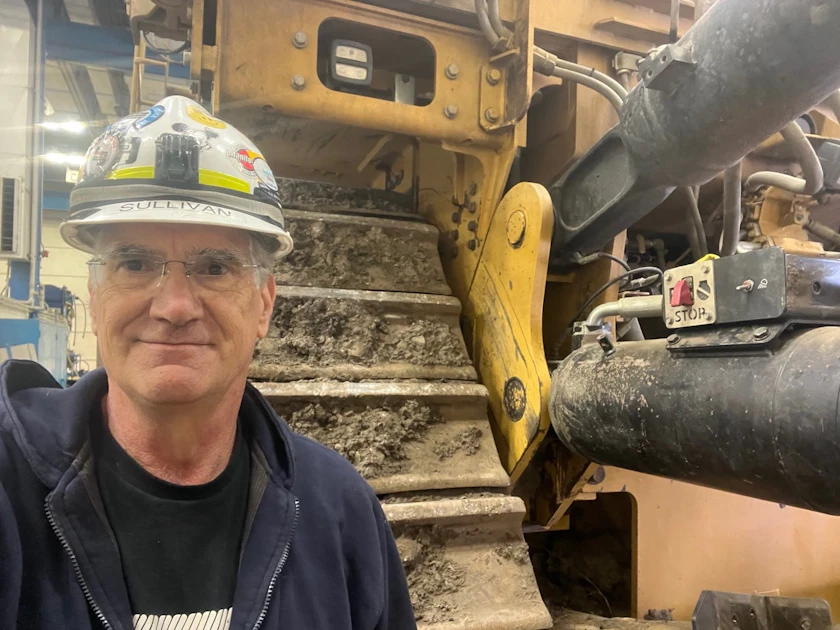
Editor's Note: The views and opinions expressed in this post are those of the author's and do not necessarily reflect the views or positions of Equipment World.
Guest post by Dan Sullivan
On July 26th this year, I’ll celebrate the 30th anniversary of the first class I ever taught as an independent electrical theory and diagnostics trainer.
The last time I counted I own over 100 various books on electricity. My oldest was printed in 1820. Curiously, all of them, even the newest, contain very basic lessons on the most fundamental elements of the subject that have been understood and taught since, well, 1820 by my count. What frustrates me to no end is that, even after 130 years, we still teach the subject of electricity horribly.
We seriously need to change how we do what we do now, and we need to stop using examples in classes that are outdated, ineffective, confusing and in a word, awful. This is where I hope to share some of the wisdom gleaned from three decades and nearly 9,000 students and their questions.
If we’re going to someday transition to an “electrified world,” we’d better have people who understand what a 200-year-old electromagnet is and how it works.
Here are 10 things tech schools need to change in electrical training:
- Current flow direction does not matter. Stop trying to teach students about “hole flow” and “electron flow” theories of current. They’re irrelevant. First, no one has ever looked down from an excavator and said, “I have 24 volts with positive flow.” It’s just dumb. There’s only one wire. Current direction is pointless, and it confuses the hell out a student who has no way to relate. OEMs seldom ever mention current in diagnostics. And while knowing that current is or isn’t flowing matters, the direction it’s moving doesn’t. And in AC systems, the direction changes every 0.016 seconds.
- Stop teaching current first, ignore any math until the end of the term. Ohm’s law mechanically is this: “Volts and ohms make amps.” If we teach this concept first, along with meter reading, then a relevant basis for current flow is more understandable. You can work on voltage (alternator), and you can work on resistance (a motor). But you cannot work on amperage.
- Don’t teach flow, teach polarity. Polarity, unlike current flow direction, is essential and critical to understand. Diodes, LEDs, capacitors, batteries, motors, alternators, transistors, meters and more all depend upon polarity — not current flow. A student told me it took them four days to determine a battery was charged backward, because they ignored the negative sign on the voltmeter. Details matter and ignoring them can result in serious problems. OEMs are putting more and more electronic systems on machines, and I can assure you, these systems depend entirely upon polarity.
- Stop using water and hydraulics to teach electricity — it’s never worked. There’s no basis for students understanding electricity using liquids. But they have put air into something, which means they understand pressure. And since “voltage is electrical pressure” is at the top of a basic electricity test, why not use that as the concept for explaining electricity? Voltage is more accurately and clearly explained by comparing it to an air bottle or compressor — not a water hose. A voltmeter is a pressure gauge, just like a tire-pressure gauge, so if you change “psi” to “volts,” they understand. Every mechanic knows the difference in torque in an impact when the compressor is at 135 psi and 90 psi — use that!
- Don’t teach reading schematics from positive to negative. I teach this weekly, and all 12 students are astounded that the correct negative-to-positive method takes less than 5 minutes, while the incorrect method is generally impossible. Additionally, it’s best to draw out a schematic as a straight line and work from your own drawing. Manufacturers largely ignore all standards for schematics and give us their own jumbled methods, interpretations and styles. Some schematics are good, some are bad, some are terrible.
- An ohmmeter is a terrible way to test continuity. Seeing voltage at the far end of a circuit is in fact a continuity test. There are only three faults that can exist in a single wire: open circuit, short-to-ground or high resistance. If you turn the circuit on and go to the far end and read voltage and ground in both the positive and negative conductors at the connector, seeing normal source voltage rules out both the open and the short-to-ground. In other words, the circuit is continuous. The ohmmeter function is only one way to test continuity, and it’s terrible. It’s not designed for long distances. Ohmmeters can lie, and they require you to isolate every circuit branch before you take a reading. That takes time.
- Don’t teach Ohm’s Law as a math equation. All systems — old and new — operate on only a small number of basic concepts. Ohm’s Law and voltage drop are the two most important. But “Ohm’s Law” is too frequently taught only as a math equation, so the critical importance of these concepts is severely misunderstood by 18-year-old students.
- Don’t neglect language education in tech class, regardless of the students’ experiences in high school. I teach language every day and with every lesson, because using correct language makes the concepts easier to understand. For example, a battery is called a battery because one definition of battery is a repeating collection of identical things. An artillery battery is a stack of identical guns, and our batteries are stacks of identical cells. Rheostat means “flow” (rheo) and “not changing” (static). Potentiometer means “voltage” (potential) and “meter” (measure). They’re not the same. If you learn one word that explains multiple concepts, education overall is more efficient. “Thermostat” = heat stationary. “Thermometer” = heat measure. “Thermistor” = heat sensitive resistor. “Transistor” = transient resistor. Get to know your high school English teachers.
- Every class should be an electrical class. An established test of basic knowledge (schematic symbols, relays, diodes, etc.) should be given at the beginning of the first class, and at the end of the last class in every subject, and graduation is only after the test is passed 100%. Electricity is part of every system in the vehicle, and it’s too crucial to be misunderstood. I assure you, even guys who come out of tech schools come into my classes clearly confused.
- There’s no such thing as an electrical repair. All “electrical” tools are really mechanical tools, so all repairs are mechanical. That means that all electrical work is diagnostics, so 100% of electrical education should be focused on the theory and application of diagnostics. Yet the one part of the electrical process everyone hates for many reasons is the diagnostics part. The desire to “get it running” rather than to “get it right” is endemic in the transportation world, and changing parts in an electrical diagnosis is statistically the wrong choice. 80% of all electrical faults are in the circuit, so simply starting out by saying, “It’s in the circuit,” raises your batting average to .800.
We can do this. We can make the needed adjustments, but there’s a lot standing in the way.
The books, lessons and tests are often wrong. There are historic flaws, assumptions and falsehoods.
The business has changed, and after 30 years in the classroom, I can testify firsthand to the changes. A vehicle that used to have 50 wires in total now has 50 connectors each with dozens — or hundreds — of wires.
I’m ready to share what I’ve learned and hopefully learn more along the way. If anyone or any company or any school wants my help, I’m ready. I’ll donate my time, and I’ll even pay my expenses, if anyone wants to work with me to create a better way to do what we so desperately need done.
Dan Sullivan is the owner of Sullivan Training Systems and an electrical diagnostics trainer since 1996. He is also a professional mechanic, author and owner of seven U.S. and European Union patents.