Global Steel Overcapacity Has Reached Crisis Levels
A look at one of the sectors being examined by the USTR’s Section 301 investigation.
 machineryasia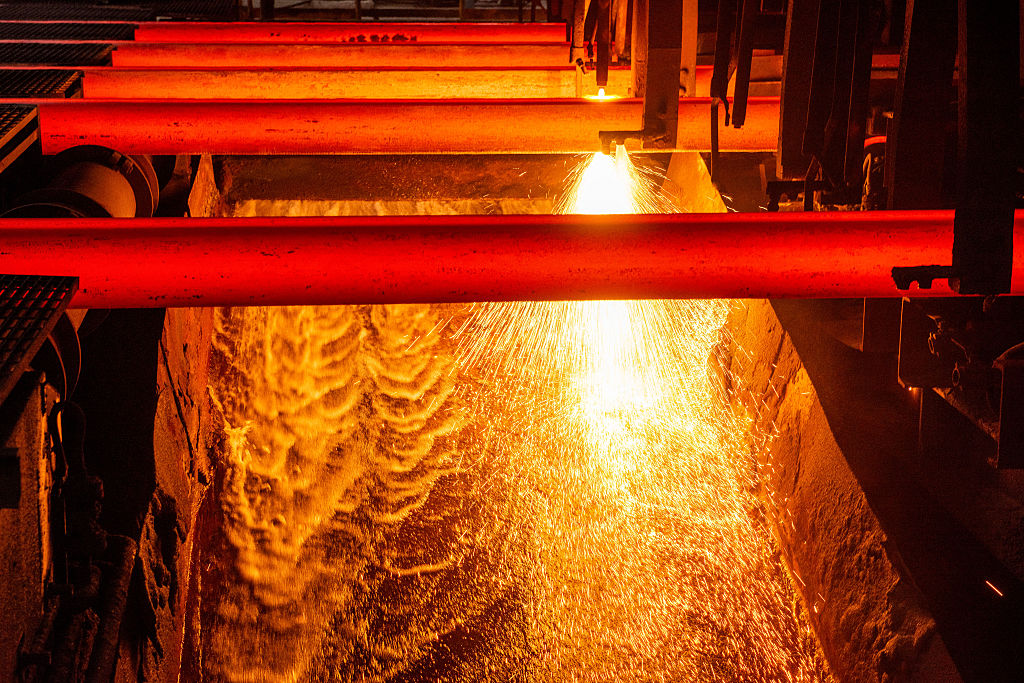
A look at one of the sectors being examined by the USTR’s Section 301 investigation.
The Office of the United States Trade Representative (USTR) has launched a major investigation into global industrial overcapacity, examining how foreign government policies are driving production far beyond market demand and distorting global trade. In response, the Alliance for American Manufacturing (AAM) is taking a sector‑by‑sector look at how overcapacity undercuts American workers, weakens domestic manufacturing and discourages long‑term investment in some of the specific industries mentioned in the USTR probe.
Steel is the natural place to start.
Few industries better illustrate the damage caused by persistent overcapacity, and few are supported by such a deep and well‑documented record. At its March 2026 meeting, the OECD Steel Committee warned that the long-recognized global steel overcapacity crisis has deepened further, with excess capacity reaching roughly 640 million metric tons (MT) in 2025. This exceeds total steel production across OECD countries by more than 200 million MT. Without intervention, the OECD projects excess capacity will rise further to around 721 million MT by 2027 – roughly seven times total U.S. steelmaking capacity. This is not a temporary imbalance. It is a structural breakdown of global markets.
China remains a central driver of this imbalance. While Chinese domestic demand continues its structural decline, particularly in construction and real estate, steelmaking capacity in China has not meaningfully adjusted. Instead, excess output is being redirected abroad. The OECD reports that China’s steel exports reached a record level of approximately 131 million MT in 2025, nearly doubling over the past three years. That export surge has occurred even as global demand has stagnated; clear evidence that production is being sustained not by market fundamentals but by government policy.
China’s steel overcapacity problem is increasingly being exported through overseas investment. As domestic demand weakens, Chinese steelmakers are developing major production hubs across Southeast Asia and Europe, including large‑scale projects in Indonesia, Malaysia, Vietnam and the Philippines, as well as in Serbia, where HBIS owns and operates the country’s largest steel plant. Chinese producers are also expanding into the Middle East, most notably through Baosteel’s Saudi Arabia joint venture, with capacity designed to serve export markets. Collectively, these investments allow steel production to continue outside mainland China, often under Chinese ownership or control, even as global demand softens, raising concerns about capacity migration, trade circumvention and the persistence of structural overcapacity.
But this is not solely a story about China. Turkey shipped more than 13 million MT of steel abroad in 2024, a 27.6% year‑over‑year increase, while finished steel consumption rose just 0.6%. Turkey’s crude steel production continued to increase in 2025, underscoring how capacity growth is increasingly detached from internal demand. Meanwhile, Vietnam is bringing significant new capacity online through its Hoa Phat Dung Quat 2 expansion; and South Korea produces significant volumes of oil country tubular goods for export markets, including the United States, even though domestic demand for those products is very limited.
Despite sustained policy attention, the United States continues to be a destination for global surplus steel, whether directly or indirectly through downstream, steel‑containing products. In 2024, the U.S. imported nearly 29 million net tons of steel, with finished imports accounting for roughly 23% of domestic consumption, according to the American Iron and Steel Institute. Since then, President Trump has strengthened Section 232 tariffs, raising duties on steel and derivative products and closing longstanding exemptions that had allowed import surges to persist.
Trade enforcement is essential, but existing tools have limits. The OECD has been explicit that antidumping and countervailing duty (AD/CVD) laws are not designed to address systemic overcapacity. While trade remedy cases have increased globally, the OECD warns their effectiveness is increasingly undermined by circumvention, semi‑finished exports and geographic re‑routing of surplus steel. When governments subsidize production, keep facilities operating that market forces would otherwise shutter, and push excess output into global markets, AD/CVD alone cannot restore balance. Broader tools, such as Section 232 national security tariffs and Section 301 investigations – like the one currently examining industrial overcapacity – are necessary to protect U.S. security.
Steel shows why USTR’s overcapacity investigation matters. Unchecked overcapacity already threatens employment and erodes profitability, conditions that can delay legitimate investment in steelmaking here in the United States to meet domestic demand. If it is left that way, structural overproduction will continue to disrupt global markets and harm workers.
And steel is only the beginning. Stay tuned for the next post in this series on overcapacity.
The Alliance for American Manufacturing is looking at how sectors mentioned in the U.S. Trade Representative’s Section 301 investigation into global industrial overcapacity are affected by this market condition. You can read our introduction to this series here.