Gefran at iVT 2026
From August 19-20, in Chicago, US, Gefran collaborates with original equipment manufacturers to simplify digital infrastructure and safety architectures in off-highway vehicles. www.gefran.com Gefran has introduced a series of functional safety-certified sensing solutions designed for integration into mobile machinery control architectures. The partnership between the sensor manufacturer and original equipment manufacturers (OEMs) in the off-highway and construction sectors addresses the growing complexity of electronic control units in heavy machinery. Technical Challenge and Integration Logic Modern mobile machinery requires precise feedback for positioning, system dynamics, and environmental conditions to maintain operational stability. Traditionally, acquiring these parameters demanded multiple single-variable sensors, which increased wiring harness density, raised failure rates, and complicated the master control unit interface. To overcome these physical and computational constraints, joint development focuses on consolidating data acquisition into unified hardware interfaces. Gefran provides specialized sensor technology, while OEM engineering teams integrate these components into vehicle control networks, such as CANbus and SAE J1939 protocols. Multivariable Sensing Hardware and Functional Safety The core technical implementation utilizes the TWIIST patented linear position sensor and GSH draw wire sensors. The TWIIST system uses a contactless measuring principle to capture linear position, velocity, inclination, acceleration, and vibration simultaneously within a single housing. Key technical characteristics include: Measurement Consolidation: Five distinct dynamic parameters processed by a single device interface, reducing component count. Safety Compliance: Integration of GSH draw wire sensors certified to Safety Integrity Level 2 (SIL2) and Performance Level d (PLd) standards according to IEC 61508 and ISO 13849. Physical Robustness: Enclosures engineered for high ingress protection, severe shock resistance, and wide thermal operating ranges typical of construction site environments. By combining primary measurement variables with dynamic vibration and acceleration data, vehicle control units can execute predictive maintenance algorithms and active tilt compensation without requiring auxiliary sensor modules. Operational Deployment and Applications The integrated sensing systems are deployed in mobile working platforms, earthmoving machinery, and agricultural equipment. Functional safety-certified pressure sensors, such as the KM series, operate alongside linear position units to provide continuous load and displacement monitoring during critical lifting and steering operations. At the iVT Expo held from August 19 to 20, 2026, in Chicago, USA, Gefran demonstrated live hardware implementations in Hall F, Booth 185, illustrating how simplified wiring layouts improve fault diagnostics and signal processing efficiency in heavy vehicle electronics. System Architecture Impact Reducing the total sensor count per machine simplifies physical harness routing and decreases potential points of failure. The implementation of SIL2/PLd-certified components allows OEMs to satisfy functional safety requirements for autonomous and semi-autonomous operating modes, ensuring predictable control behavior under extreme physical loads. Edited by Evgeny Churilov, Induportals Media - Adapted by AI. www.gefran.com Powered by Induportals Media Publishing
 machineryasia
From August 19-20, in Chicago, US, Gefran collaborates with original equipment manufacturers to simplify digital infrastructure and safety architectures in off-highway vehicles.
www.gefran.com
Gefran has introduced a series of functional safety-certified sensing solutions designed for integration into mobile machinery control architectures. The partnership between the sensor manufacturer and original equipment manufacturers (OEMs) in the off-highway and construction sectors addresses the growing complexity of electronic control units in heavy machinery.
Technical Challenge and Integration Logic
Modern mobile machinery requires precise feedback for positioning, system dynamics, and environmental conditions to maintain operational stability. Traditionally, acquiring these parameters demanded multiple single-variable sensors, which increased wiring harness density, raised failure rates, and complicated the master control unit interface.
To overcome these physical and computational constraints, joint development focuses on consolidating data acquisition into unified hardware interfaces. Gefran provides specialized sensor technology, while OEM engineering teams integrate these components into vehicle control networks, such as CANbus and SAE J1939 protocols.
Multivariable Sensing Hardware and Functional Safety
The core technical implementation utilizes the TWIIST patented linear position sensor and GSH draw wire sensors. The TWIIST system uses a contactless measuring principle to capture linear position, velocity, inclination, acceleration, and vibration simultaneously within a single housing.
Key technical characteristics include:
- Measurement Consolidation: Five distinct dynamic parameters processed by a single device interface, reducing component count.
- Safety Compliance: Integration of GSH draw wire sensors certified to Safety Integrity Level 2 (SIL2) and Performance Level d (PLd) standards according to IEC 61508 and ISO 13849.
- Physical Robustness: Enclosures engineered for high ingress protection, severe shock resistance, and wide thermal operating ranges typical of construction site environments.
By combining primary measurement variables with dynamic vibration and acceleration data, vehicle control units can execute predictive maintenance algorithms and active tilt compensation without requiring auxiliary sensor modules.
Operational Deployment and Applications
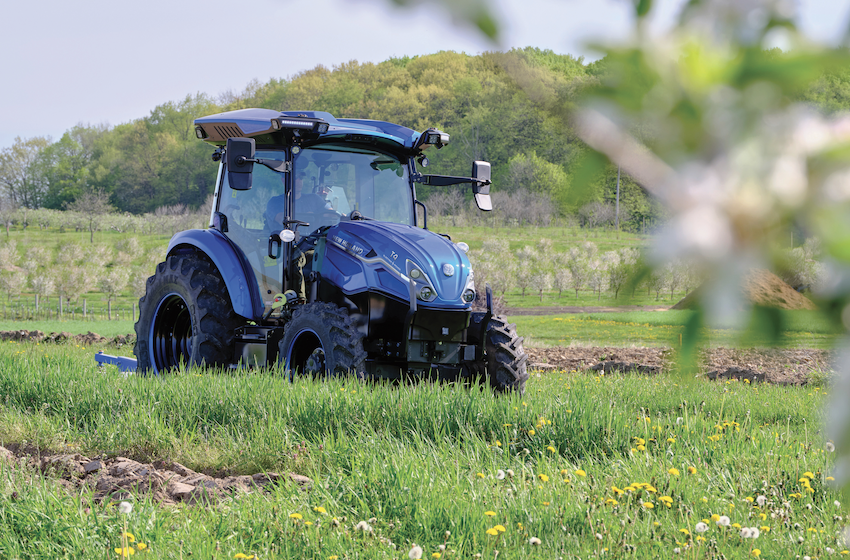
The integrated sensing systems are deployed in mobile working platforms, earthmoving machinery, and agricultural equipment. Functional safety-certified pressure sensors, such as the KM series, operate alongside linear position units to provide continuous load and displacement monitoring during critical lifting and steering operations.
At the iVT Expo held from August 19 to 20, 2026, in Chicago, USA, Gefran demonstrated live hardware implementations in Hall F, Booth 185, illustrating how simplified wiring layouts improve fault diagnostics and signal processing efficiency in heavy vehicle electronics.
System Architecture Impact
Reducing the total sensor count per machine simplifies physical harness routing and decreases potential points of failure. The implementation of SIL2/PLd-certified components allows OEMs to satisfy functional safety requirements for autonomous and semi-autonomous operating modes, ensuring predictable control behavior under extreme physical loads.
Edited by Evgeny Churilov, Induportals Media - Adapted by AI.
www.gefran.com
Operational Deployment and Applications
The integrated sensing systems are deployed in mobile working platforms, earthmoving machinery, and agricultural equipment. Functional safety-certified pressure sensors, such as the KM series, operate alongside linear position units to provide continuous load and displacement monitoring during critical lifting and steering operations.
At the iVT Expo held from August 19 to 20, 2026, in Chicago, USA, Gefran demonstrated live hardware implementations in Hall F, Booth 185, illustrating how simplified wiring layouts improve fault diagnostics and signal processing efficiency in heavy vehicle electronics.
System Architecture Impact
Reducing the total sensor count per machine simplifies physical harness routing and decreases potential points of failure. The implementation of SIL2/PLd-certified components allows OEMs to satisfy functional safety requirements for autonomous and semi-autonomous operating modes, ensuring predictable control behavior under extreme physical loads.
Edited by Evgeny Churilov, Induportals Media - Adapted by AI.
www.gefran.com
Powered by
Induportals Media Publishing