Five-shell grab improves scrap handling efficiency
SENNEBOGEN introduces MG4.1 series to enhance recycling operations with optimized hydraulics and robust material design at IFAT 2026. www.sennebogen.com A new series of orange peel grabs expands capabilities in scrap and recycling applications by combining optimized hydraulic performance with wear-resistant materials. The design targets high-duty material handling environments requiring reliability, efficiency, and simplified maintenance. Trade show introduction and application scope At IFAT 2026 (May 4 to May 8) in Munich, SENNEBOGEN presented the MG4.1 series of five-shell orange peel grabs, developed specifically for scrap handling and recycling operations. The product range includes four size variants with capacities between 600 and 1,200 liters, supporting different throughput requirements in metal recycling yards and bulk material facilities. The system integrates attachment and machine compatibility, enabling coordinated performance across handling equipment. This approach aligns with broader trends in the digital supply chain, where equipment standardisation supports predictable performance and maintenance planning. Configurable shell design for material variability The MG4.1 series offers multiple shell configurations, ranging from semi-open to fully closed designs. This enables adaptation to different material characteristics, particularly particle size. Closed shell geometries are suited for finer materials, reducing spillage and improving handling precision, while more open configurations allow efficient gripping of larger scrap components. Custom configurations extend the applicability to specialised recycling workflows. Structural design and material durability The grab is engineered using high-strength materials to withstand demanding operating conditions. The central crossbeam is manufactured from cast steel, while the shells are made from Hardox steel, known for its abrasion resistance. Critical wear components, including the grab tips, are produced from forged steel and designed for extended service life. Integrated wear indicators provide a measurable method for determining replacement intervals, reducing unplanned downtime. The geometry at the shell pivot points allows fine materials to pass through, preventing accumulation and maintaining consistent operating performance. Hydraulic optimisation and performance balance Hydraulic system design plays a central role in the grab’s efficiency. Large hydraulic cross-sections improve fluid flow, contributing to faster cycle times and reduced energy losses. The kinematics of the shells are engineered to balance opening speed and closing force. This ensures effective material penetration while maintaining energy-efficient movement. Such optimisation is critical in high-cycle applications, where incremental efficiency gains translate into measurable productivity improvements. Optional configurations include one or two rotary drives, allowing operators to prioritise either rotational speed or torque depending on application requirements. Serviceability and lifecycle efficiency The MG4.1 incorporates design features aimed at reducing maintenance effort and supporting lifecycle efficiency. These include a limited number of lubrication points, accessible hydraulic connections, and simplified hose routing. Digital access to documentation via QR codes embedded on components supports faster servicing and troubleshooting, reinforcing integration within a connected recycling equipment ecosystem. Standardisation on metric components ensures compatibility with commonly available tools, further reducing service complexity in global operations. Position within recycling equipment segment Within the scrap handling sector, orange peel grabs are benchmarked based on durability, cycle efficiency, and adaptability to material types. The MG4.1 series addresses these criteria through material selection, hydraulic optimisation, and modular design. By combining structural robustness with service-oriented features, the system reflects a shift toward equipment designed not only for peak performance but also for predictable maintenance and operational continuity in high-demand recycling environments. Edited by an industrial journalist Sucithra Mani with AI assistance. www.sennebogen.com Powered by Induportals Media Publishing
 machineryasia
SENNEBOGEN introduces MG4.1 series to enhance recycling operations with optimized hydraulics and robust material design at IFAT 2026.
www.sennebogen.com
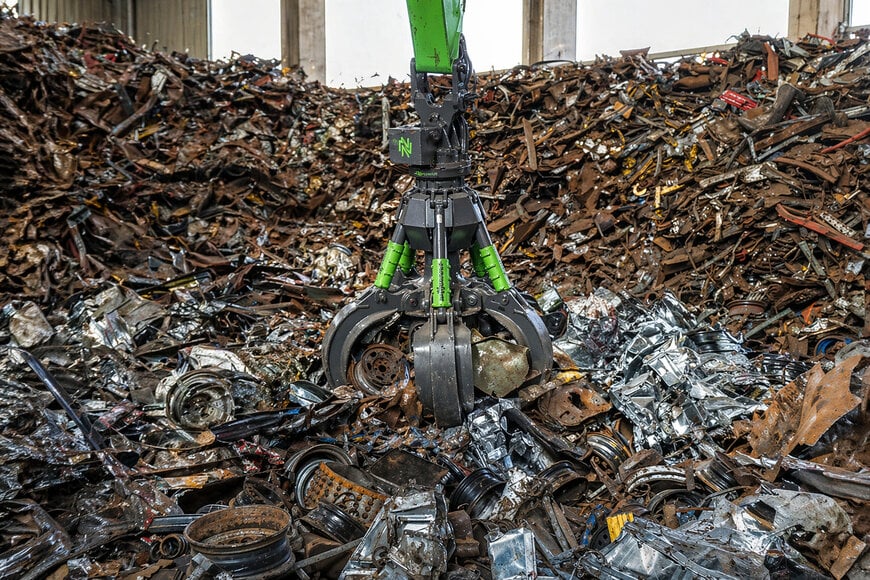
A new series of orange peel grabs expands capabilities in scrap and recycling applications by combining optimized hydraulic performance with wear-resistant materials. The design targets high-duty material handling environments requiring reliability, efficiency, and simplified maintenance.
Trade show introduction and application scope
At IFAT 2026 (May 4 to May 8) in Munich, SENNEBOGEN presented the MG4.1 series of five-shell orange peel grabs, developed specifically for scrap handling and recycling operations. The product range includes four size variants with capacities between 600 and 1,200 liters, supporting different throughput requirements in metal recycling yards and bulk material facilities.
The system integrates attachment and machine compatibility, enabling coordinated performance across handling equipment. This approach aligns with broader trends in the digital supply chain, where equipment standardisation supports predictable performance and maintenance planning.
Configurable shell design for material variability
The MG4.1 series offers multiple shell configurations, ranging from semi-open to fully closed designs. This enables adaptation to different material characteristics, particularly particle size.
Closed shell geometries are suited for finer materials, reducing spillage and improving handling precision, while more open configurations allow efficient gripping of larger scrap components. Custom configurations extend the applicability to specialised recycling workflows.
Structural design and material durability
The grab is engineered using high-strength materials to withstand demanding operating conditions. The central crossbeam is manufactured from cast steel, while the shells are made from Hardox steel, known for its abrasion resistance.
Critical wear components, including the grab tips, are produced from forged steel and designed for extended service life. Integrated wear indicators provide a measurable method for determining replacement intervals, reducing unplanned downtime.
The geometry at the shell pivot points allows fine materials to pass through, preventing accumulation and maintaining consistent operating performance.
Hydraulic optimisation and performance balance
Hydraulic system design plays a central role in the grab’s efficiency. Large hydraulic cross-sections improve fluid flow, contributing to faster cycle times and reduced energy losses.
The kinematics of the shells are engineered to balance opening speed and closing force. This ensures effective material penetration while maintaining energy-efficient movement. Such optimisation is critical in high-cycle applications, where incremental efficiency gains translate into measurable productivity improvements.
Optional configurations include one or two rotary drives, allowing operators to prioritise either rotational speed or torque depending on application requirements.
Serviceability and lifecycle efficiency
The MG4.1 incorporates design features aimed at reducing maintenance effort and supporting lifecycle efficiency. These include a limited number of lubrication points, accessible hydraulic connections, and simplified hose routing.
Digital access to documentation via QR codes embedded on components supports faster servicing and troubleshooting, reinforcing integration within a connected recycling equipment ecosystem.
Standardisation on metric components ensures compatibility with commonly available tools, further reducing service complexity in global operations.
Position within recycling equipment segment
Within the scrap handling sector, orange peel grabs are benchmarked based on durability, cycle efficiency, and adaptability to material types. The MG4.1 series addresses these criteria through material selection, hydraulic optimisation, and modular design.
By combining structural robustness with service-oriented features, the system reflects a shift toward equipment designed not only for peak performance but also for predictable maintenance and operational continuity in high-demand recycling environments.
Edited by an industrial journalist Sucithra Mani with AI assistance.
www.sennebogen.com
Powered by
Induportals Media Publishing