Dave Matthews’ “Papertown” Is About More Than One Mill
The tune from famous singer-songwriter was written with Canton, North Carolina in mind. But it speaks to any American manufacturing community.
 machineryasia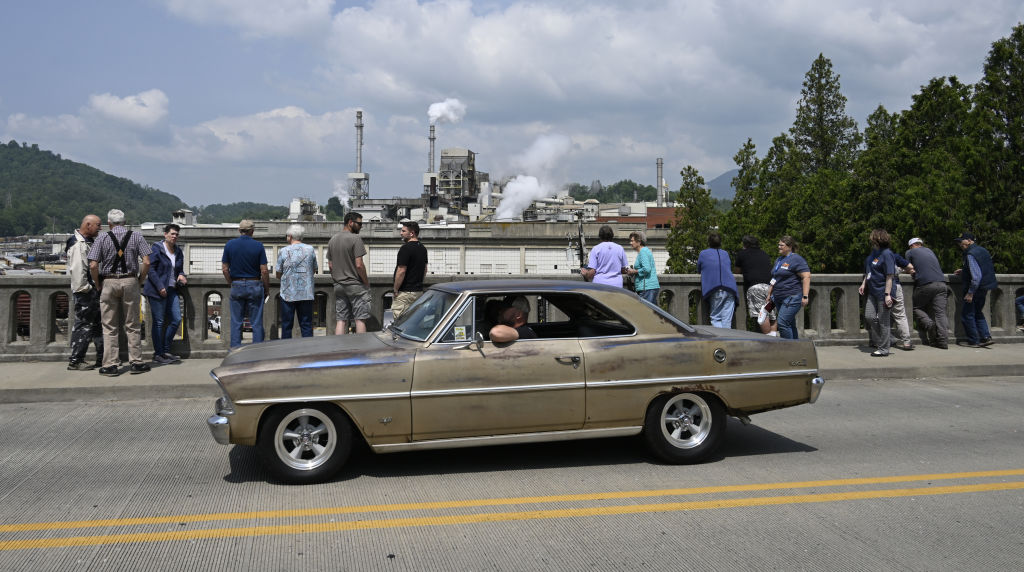
The tune from famous singer-songwriter was written with Canton, North Carolina in mind. But it speaks to any American manufacturing community.
I will admit my bias right up front: I’ve been a fan of the Dave Matthews Band since 1995. Over the years I’ve traveled to countless shows, introduced friends to the band, and built more memories than I can count. Like so many fans, I’ve always appreciated the band’s ability to tell stories through music; sometimes deeply personal, sometimes about places we’ve never been or people we’ve never met.
So, when I learned he had written a song, “Papertown,” for a documentary about the closure of the 115-year-old paper mill in Canton, North Carolina, I was drawn in right away, simply because it meant new music from Dave Matthews.
Then I listened.
As someone who spends every day advocating for American manufacturing, I quickly realized this wasn’t just another song but a story about identity, family and what happens when the economic foundation of an entire community disappears. It’s a story about work – one that I’ve heard before and one I’ve witnessed firsthand more times than I can count.
Years before the Canton mill closed for good, I had the chance to tour the facility. Walking through a paper mill is hard to describe until you’ve done it yourself: the machines seem to go on forever, the heat and steam never let up, and the scale of it all makes you realize how much work goes into products most of us barely think about.
What stayed with me most, though, wasn’t the machinery. It was the people. You could feel the pride they took in what they made and in the role the mill played in their lives and their community. Manufacturing wasn’t just where they worked. It was part of who they were.
At the time, I never imagined the mill would one day close, or that its story would inspire a Dave Matthews song. Looking back now, that tour means something different.
The more I listened to “Papertown”, the more I realized it isn’t really about the paper mill but the people whose lives revolved around it: Families who measured time in shifts, generations who expected to follow their parents onto the floor, and a community that grew up around someone’s decision to build something there. Those communities exist all across America, and there’s been lots of examples of rupture when industry moves away.
One image from the song stayed with me: “the gates are locked.” Four words, but they capture the finality of it. For workers, families, and entire towns, it’s not just a workplace that closes. It’s routines, traditions, and often generations of opportunities that are disrupted.
Listening, I couldn’t help but think about the experience of my Alliance for American Manufacturing (AAM) colleague Meghan Hasse. Before joining AAM, Meghan worked at the Georgia-Pacific Day Street paper mill in Green Bay, Wisconsin, which — like the mill in Canton — closed in 2023. Her father had worked there too, which made the job much more than employment. It was part of her family’s story.
When I asked what the song brought to mind for her, she didn’t talk about the machines or the building. She talked about the people:
“Working at the paper mill for me was really a big experience. I finally got to see inside the place my dad worked all those years. I remember walking through the toweling, napkin and tissue departments. There was so much to learn. The longer I worked there, the more I realized how important the mill was to the entire community.”
That realization extended well past the factory gates. “The Mill Town Café,” she told me, “ran its whole business around workers’ shifts. When the mill closed, the diner eventually closed too.”
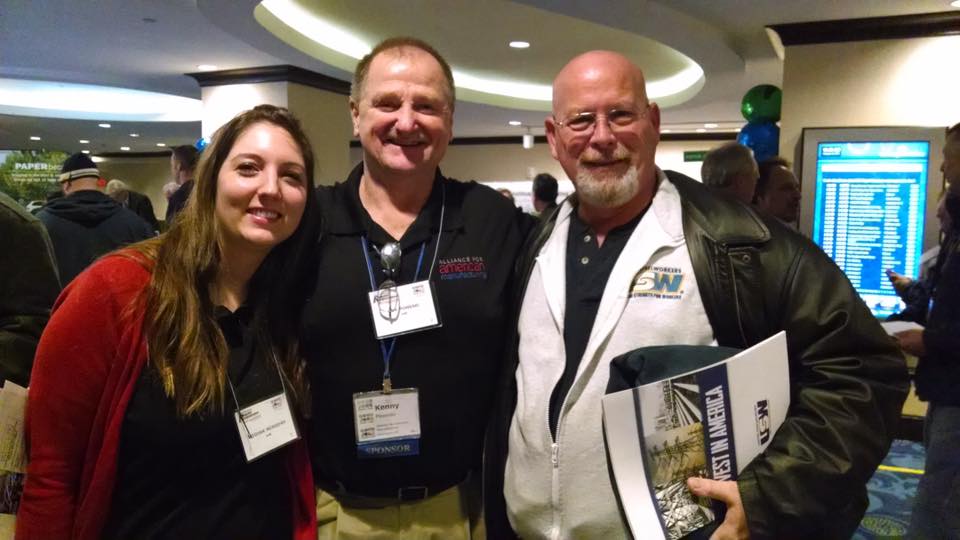
Green Bay isn’t the only place Hasse watched that happen. She recalled the closures of NewPage paper mills in nearby Kimberly and Niagara, Wisconsin, where papermaking was woven into the town identity.
“In Kimberly the school mascot is the Papermaker,” she said. “When those mills closed, people had to sell their homes, move away, and find work somewhere else.
“Everyone feels the impact of a mill doing well, or a mill closing.”
She’s right. Not just the workers but the hospitals, credit unions, grocery stores, car dealerships, schools, flower shops and restaurants. Every part of the local economy feels it, in both directions. When manufacturing thrives, its workers do too. Meghan remembers paper workers organizing food drives, blood donations, winter coat collections, toy drives and Thanksgiving turkey giveaways. Manufacturing wasn’t just supporting jobs. It was supporting neighbors.
“My heart goes out to everyone there,” Hasse said.
Years before Canton closed, Meghan had spent time there documenting stories during a paper trade campaign. In 2009, she and former AAM colleague Dan Lawson traveled through American paper towns, including Canton, interviewing workers about what these mills meant to their communities. Their goal was simple: Put faces to the policy debates around trade and help people understand what was actually at stake.
Listening to “Papertown,” it’s hard not to think back on those conversations. The song captures something economists often struggle to measure: A factory isn’t just a line item on an employment report. It’s the Little League coach, the volunteer firefighter, the person on the school board, the family at the neighborhood restaurant every Friday night having dinner together, the donations to the food bank and the blood drives. It’s the people who quietly make a community work.
That’s why conversations about manufacturing shouldn’t end with employment statistics. Every factory supports opportunities that extend far beyond the production floor. Stories like Canton’s, as “Papertown” reflects, remind us these outcomes aren’t inevitable. A level playing field for American manufacturers, strong trade enforcement, Buy America policies, investment in domestic production and a real commitment to rebuilding our industrial base can help more communities avoid the same loss. There is nothing abstract about a decision that determine whether a town keeps growing or slowly fades away.
“Papertown” is a great song. As a fan, I heard another beautifully written story. As someone who works in manufacturing policy, I heard the voices of workers I’ve met over the years: the mill in Canton, Meghan Hasse’s stories from Wisconsin and the countless workers I’ve interviewed whose pride wasn’t just in earning a paycheck, but in making something that mattered.