Crawler Excavators Expand Fifty-Tonne Heavy Earthmoving and Extraction Machinery Segment
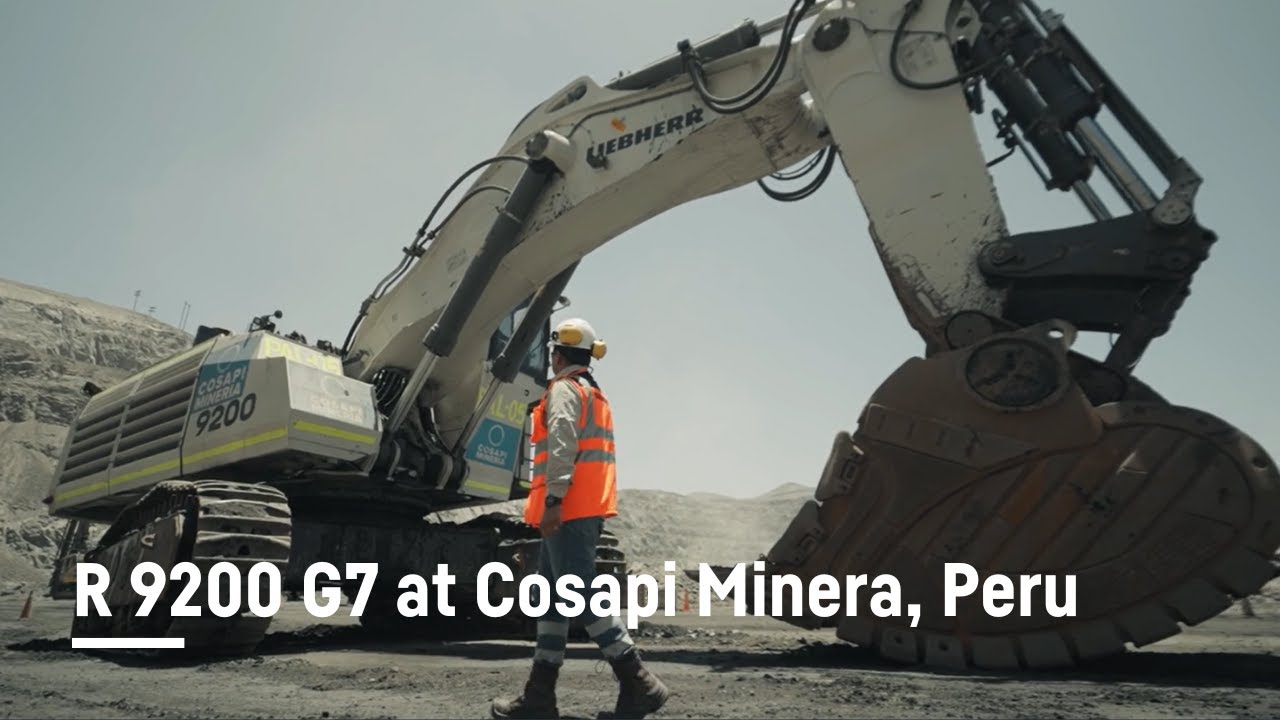
Liebherr introduces three generation eight crawler excavators designed to optimize material extraction and site preparation through integrated electrohydraulic controls and structural reinforcement. www.liebherr.com Liebherr has expanded its medium-to-heavy machinery segment with three generation eight crawler excavator configurations: the R 948 G8, R 952 G8, and R 958 G8. These machines are engineered for earthmoving, mass extraction, and mining operations requiring high duty-cycle durability and automated assistance. Structural Design and Application-Specific Configurations Each variant targets distinct application demands via customized undercarriages and mass distribution profiles. The R 948 G8 utilizes a long crawler (LC) undercarriage coupled with an optimized powertrain designed to lower specific fuel consumption during continuous bulk earthmoving. Positioned for multi-utility applications, the R 952 G8 features three undercarriage options and elevated engine power outputs to accommodate varying ground bearing pressures. For severe quarrying and mineral extraction, the R 958 G8 utilizes an S-HD (super heavy-duty) chassis and dedicated Mass Excavation (ME) kinematics constructed with high-strength structural steels and cast steel junctions to resist torsional loading. Electrohydraulics and Automation Systems Machine dynamics are governed by Liebherr Positive Control hydraulic circuits, which utilize electronic sensor inputs to balance flow across multi-valve manifolds for simultaneous multi-axis movements. Operating alongside the hydraulics, the proprietary Liebherr Power Efficiency (LPE) power-management system adjusts hydraulic displacement and engine speed electronically, delivering up to a 10 percent reduction in diesel consumption without reducing cycle speeds. To standardize productivity regardless of operator experience, the Bucket Fill Assist (BFA) system provides semi-automated penetration and rollback cycles during loading phases. Overall dynamic response curves are calibrated via the Modetronic interface, which allows real-time adjustment of hydraulic spool rates and swing brake aggression to match material densities. Machine Guidance and Payload Metrology Grade control and load monitoring systems are embedded at factory level. A passive 2D machine guidance system engineered jointly with Leica Geosystems comes standard, cross-referencing position sensor telemetry with bucket edge positioning. For high-precision digital terrain modeling, an optional 3D control architecture supports semi-automated boom and arm path following. Integrated dynamic payload monitoring provides real-time bucket-weight validation during the swing phase, supported by a standard 500-operating-hour software license to verify continuous haul-truck capacity utilization. Operator Interface and Ergonomics Machine control centers around the emCAB operator station combined with the INTUSI (Intuitive User Interface) human-machine interface. Electric pilot-control joysticks replace low-pressure hydraulic pilot lines, providing direct electronic signaling to the main control block while dampening mechanical vibration. The cabin architecture prioritizes continuous line of sight to working zones, augmented by standard surround cameras and an optional Skyview 360-degree aerial composite video feed. Fluid verification points and bulk replenishment ports are arranged at ground level, complemented by an automatic centralized lubrication system monitored directly through the cab display. Additional Context This section details technical specifications and competitive benchmarking not included in the original product announcement. Operating in the 48- to 58-tonne class, the R 948 G8, R 952 G8, and R 958 G8 compete directly against production-class machines such as the Caterpillar 349 and 352, the Komatsu PC490LC-11, and the Volvo EC530E. While competitive machines frequently rely on conventional open-center or negative-flow hydraulic networks with separate pilot-pressure control lines, Liebherr utilizes fully electronic Positive Control systems that independently signal dual variable-displacement pumps. This electronic architecture matches the semi-autonomous grade-assist and payload systems seen in Caterpillar Cat Grade with Assist and Komatsu intelligent Machine Control (iMC 2.0). In severe rock extraction, the R 958 G8 matches the mass-excavation kinematics of the Volvo EC530E and Cat 352 ME, which utilize shorter booms and larger-bore bucket cylinders to maximize breakout forces above 250 kN. Liebherr's integration of an automated central lubrication pump managed entirely via the operating software platform eliminates secondary third-party monitoring hardware commonly found across competitive mining-support excavators. Edited by Evgeny Churilov, Induportals Media - Adapted by AI. www.liebherr.com Powered by Induportals Media Publishing
 machineryasia
Liebherr introduces three generation eight crawler excavators designed to optimize material extraction and site preparation through integrated electrohydraulic controls and structural reinforcement.
www.liebherr.com
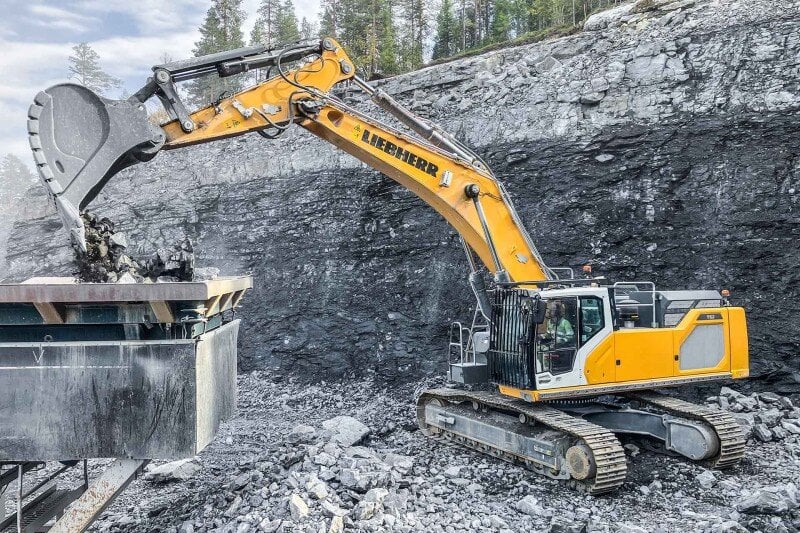
Liebherr has expanded its medium-to-heavy machinery segment with three generation eight crawler excavator configurations: the R 948 G8, R 952 G8, and R 958 G8. These machines are engineered for earthmoving, mass extraction, and mining operations requiring high duty-cycle durability and automated assistance.
Structural Design and Application-Specific Configurations
Each variant targets distinct application demands via customized undercarriages and mass distribution profiles. The R 948 G8 utilizes a long crawler (LC) undercarriage coupled with an optimized powertrain designed to lower specific fuel consumption during continuous bulk earthmoving. Positioned for multi-utility applications, the R 952 G8 features three undercarriage options and elevated engine power outputs to accommodate varying ground bearing pressures. For severe quarrying and mineral extraction, the R 958 G8 utilizes an S-HD (super heavy-duty) chassis and dedicated Mass Excavation (ME) kinematics constructed with high-strength structural steels and cast steel junctions to resist torsional loading.
Electrohydraulics and Automation Systems
Machine dynamics are governed by Liebherr Positive Control hydraulic circuits, which utilize electronic sensor inputs to balance flow across multi-valve manifolds for simultaneous multi-axis movements. Operating alongside the hydraulics, the proprietary Liebherr Power Efficiency (LPE) power-management system adjusts hydraulic displacement and engine speed electronically, delivering up to a 10 percent reduction in diesel consumption without reducing cycle speeds.
To standardize productivity regardless of operator experience, the Bucket Fill Assist (BFA) system provides semi-automated penetration and rollback cycles during loading phases. Overall dynamic response curves are calibrated via the Modetronic interface, which allows real-time adjustment of hydraulic spool rates and swing brake aggression to match material densities.
Machine Guidance and Payload Metrology
Grade control and load monitoring systems are embedded at factory level. A passive 2D machine guidance system engineered jointly with Leica Geosystems comes standard, cross-referencing position sensor telemetry with bucket edge positioning. For high-precision digital terrain modeling, an optional 3D control architecture supports semi-automated boom and arm path following. Integrated dynamic payload monitoring provides real-time bucket-weight validation during the swing phase, supported by a standard 500-operating-hour software license to verify continuous haul-truck capacity utilization.
Operator Interface and Ergonomics
Machine control centers around the emCAB operator station combined with the INTUSI (Intuitive User Interface) human-machine interface. Electric pilot-control joysticks replace low-pressure hydraulic pilot lines, providing direct electronic signaling to the main control block while dampening mechanical vibration. The cabin architecture prioritizes continuous line of sight to working zones, augmented by standard surround cameras and an optional Skyview 360-degree aerial composite video feed. Fluid verification points and bulk replenishment ports are arranged at ground level, complemented by an automatic centralized lubrication system monitored directly through the cab display.
Additional Context
This section details technical specifications and competitive benchmarking not included in the original product announcement.
Operating in the 48- to 58-tonne class, the R 948 G8, R 952 G8, and R 958 G8 compete directly against production-class machines such as the Caterpillar 349 and 352, the Komatsu PC490LC-11, and the Volvo EC530E.
While competitive machines frequently rely on conventional open-center or negative-flow hydraulic networks with separate pilot-pressure control lines, Liebherr utilizes fully electronic Positive Control systems that independently signal dual variable-displacement pumps. This electronic architecture matches the semi-autonomous grade-assist and payload systems seen in Caterpillar Cat Grade with Assist and Komatsu intelligent Machine Control (iMC 2.0).
In severe rock extraction, the R 958 G8 matches the mass-excavation kinematics of the Volvo EC530E and Cat 352 ME, which utilize shorter booms and larger-bore bucket cylinders to maximize breakout forces above 250 kN. Liebherr's integration of an automated central lubrication pump managed entirely via the operating software platform eliminates secondary third-party monitoring hardware commonly found across competitive mining-support excavators.
Edited by Evgeny Churilov, Induportals Media - Adapted by AI.
www.liebherr.com
Powered by
Induportals Media Publishing