China’s Industrial Overcapacity has its Export Machine Humming
As Xi Jinping prepares to visit Washington, D.C., for an official visit, his country's trade surpluses are breaking records.
 machineryasia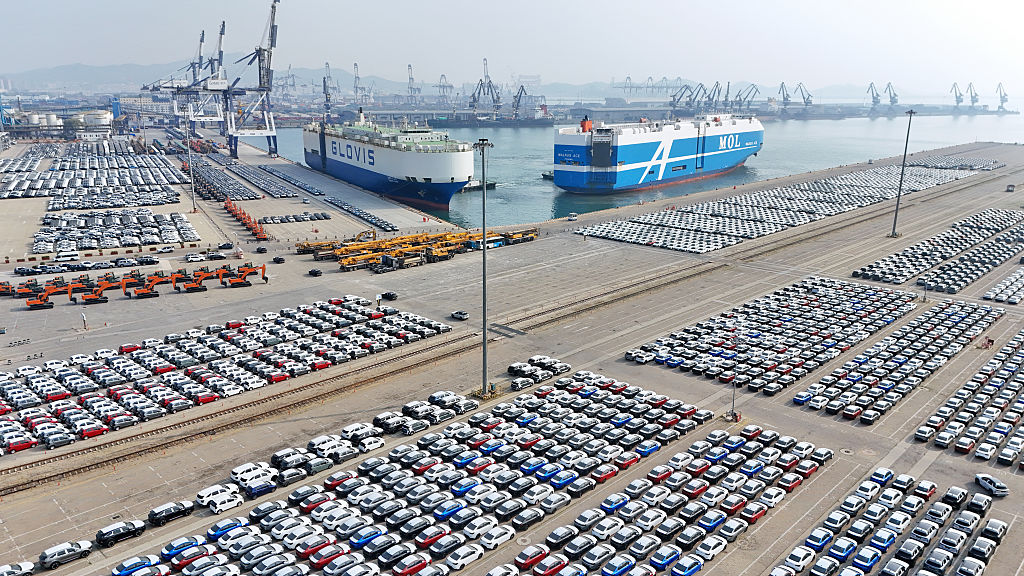
As Xi Jinping prepares to visit Washington, D.C., for an official visit, his country’s trade surpluses are breaking records.
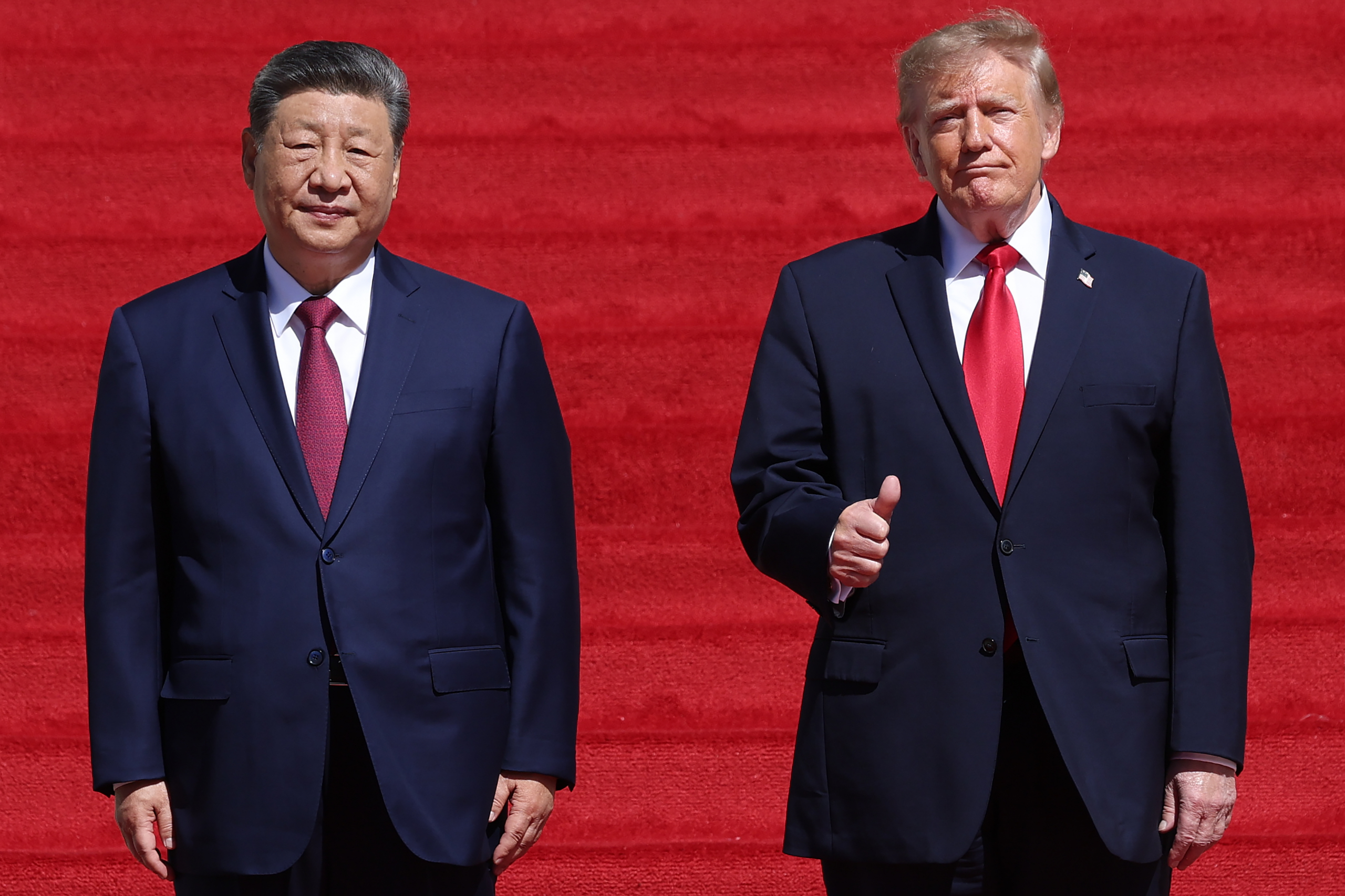
China’s leader Xi Jinping is due to visit Washington DC in September for a state visit with U.S. President Donald Trump. There are scores of issues the two could talk about during the choreographed diplomatic affair but, ahead of Xi’s arrival, the Alliance for American Manufacturing is taking a look at a handful of issues we hope are addressed. Today’s topic: Chinese industrial overcapacity.
A recent meeting of G20 finance ministers ended without consensus after China objected to language in the communique that typically is produced by these summits. Among other objections, it didn’t like a section that called out an overreliance on exports as a model for economic growth, which figures! That, after all, is how China is growing.
Consumer confidence in China has been down since the government deflated a real estate bubble a few years ago. But the industrial capacity the country built up partly in support of that bubble didn’t go away. It’s being put to use.
Chinese exports rose 25% year over year in August 2026. Its automobile exports (a sector targeted for heavy investment in multiple Five Year Plans) increased 67%. China’s overall trade surplus surpassed $119 billion for the month, and the country remains on pace to exceed the record $1.2 trillion trade surplus it registered in 2025.
The problem with cheap consumer imports is that too much of them will displace your own industries and lay off your own factory workers. China is effectively exporting unemployment to its trading partners. And, as former U.S. Trade Representative Michael Froman put it in a recent essay, “the political appetite for accepting the deindustrialization and critical dependencies that come with the flood of Chinese imports is finite and shrinking.”
Countries around the world are coming around to a position held by the United States that overcapacity in China’s manufacturing sector – created by a combination of local, provincial and national-level industrial policies and low Chinese household consumption that doesn’t soak all this production up – is effectively powering this export machine.
But this is not a new phenomenon. A 2024 Alliance for American Manufacturing (AAM) report argued that overcapacity is a feature, not a bug, of the Chinese economic model. The last time a broad base of Chinese-made imports flooded the United States, economists coined the term “the China Shock” to describe the social and economic effects of the resulting deindustrialization.
Today, similar government-driven overcapacity dynamics extend across other manufacturing industries. In shipbuilding, state ownership, subsidized finance and industrial targeting have produced chronic global surpluses, with Chinese shipyards capturing roughly 80% of new shipbuilding orders. In glass and paper, AAM warned more than a decade ago that billions of dollars in subsidies were fueling rapid capacity expansion in China, driving import surges that resulted in U.S. mill closures and job losses. Its steel industry (the world’s largest) has been in a state of severe overcapacity for roughly 20 years. The tire sector reflects a similar pattern, as unchecked overcapacity and export surges from China and other markets have displaced U.S. production and led to plant closures.
Today, U.S. tariffs on Chinese imports are relatively high, and so the current wave of Chinese imports isn’t just being sponged up by the U.S. economy. It’s landing elsewhere – namely, Europe. But China Shock 2.0 isn’t a repeat of relatively low-end consumer electronics, toys and furniture, but industries on the cutting edge: Batteries, solar panels and, as mentioned before, millions of incredibly cheap automobiles.
China is the world’s largest vehicle exporter, and its production capacity continues to expand despite a lack of domestic demand. Chinese automakers are targeting foreign markets, and they’re establishing manufacturing hubs overseas to secure market access. The commercial champions it built up with extensive government assistance are vertically integrated and couched in deep industrial ecosystems that decades of state policy support helped create. As such, they’re able to export vehicles at prices many competitors can’t match.
“Anyone here ever seen a BYD car?” U.S. Treasury Secretary Scott Bessent asked a North Carolina audience on the sidelines of that recent G20 summit. “It is the best $70,000 car that $35,000 can buy — it is heavily subsidized.”
The rupture now happening in Germany to Volkswagen is one example of what happens when market-oriented automakers have to compete with these export-oriented juggernauts. If they’re allowed into the United States, similar layoffs could happen at U.S. automakers and up and down their extensive supply chains.
So, with Xi coming to town, what should President Trump do about this? The Trump administration alone can’t resolve the problem of Chinese industrial overcapacity. But it can mitigate its effects on the U.S. economy.
For starters, his administration should release the findings of the Section 301 investigation into global excess industrial capacity (overcapacity, by another term) that the office of the U.S. Trade Representative has undertaken and, where such acts and practices are found to be unreasonable and actionable, it should adopt robust remedies. Chinese industrial overcapacity is well-documented, and remedies should reflect that.
And as for all those cheap Chinese automobiles floating around out there? Import tariffs on them are already quite high, but what’s really keeping them out is a U.S. Commerce Department rule that bans the sale of cars that contain Chinese software and communications hardware. But since that rule was borne out of executive action, though, there’s no long-term guarantee it will stay in place. It should be codified so that we don’t invite a second import flood that risks the existence of the American auto industry.
This is a job for the U.S. Congress. The Trump administration should throw its support behind a strong Connected Vehicle Security Act – put forward in the U.S. Senate by a Democrat from Michigan and a Republican from Ohio – that would turn this rule into law.