Building India’s Manufacturing Backbone Through Innovation, Integration and Trust
Introduction Founded in 1981 and headquartered in Kirti Nagar, Delhi, Noble Group has grown into one of India’s most respected and trusted manufacturing partners in the consumer electronics and durable goods sector. With over five decades of experience, the group has built a strong reputation for delivering comprehensive OEM and ODM solutions, combining deep local … The post Building India’s Manufacturing Backbone Through Innovation, Integration and Trust appeared first on Machine Insider.
 machineryasia
Introduction
Founded in 1981 and headquartered in Kirti Nagar, Delhi, Noble Group has grown into one of India’s most respected and trusted manufacturing partners in the consumer electronics and durable goods sector. With over five decades of experience, the group has built a strong reputation for delivering comprehensive OEM and ODM solutions, combining deep local expertise with internationally benchmarked manufacturing standards.
Noble Group’s manufacturing capabilities span a wide spectrum, including air coolers, washing machines, PCB assembly, tool manufacturing, plastic moulding, sheet metal stamping, PU painting, and powder coating. Its fully integrated approach—supported by in-house design, product development, and innovation-driven R&D—enables seamless execution from concept ideation to high-volume production.
In an era where manufacturing in India is becoming increasingly dynamic and demand-driven, Noble Group stands out for its agility, resilience, and commitment to localisation. Strategic investments in vertical integration, advanced manufacturing infrastructure, and smart supply chain practices have allowed the company to reduce import dependency, improve lead times, and maintain quality even amid global disruptions.
Aligned strongly with the Make in India vision, Noble Group continues to expand capacity, retain value within the country, and develop world-class manufacturing ecosystems that serve both Indian and global markets. As the company accelerates towards its next phase of growth, its long-term vision is clear—to position Noble Group among India’s most trusted, innovation-led manufacturing partners while contributing to India’s emergence as a preferred global production hub.
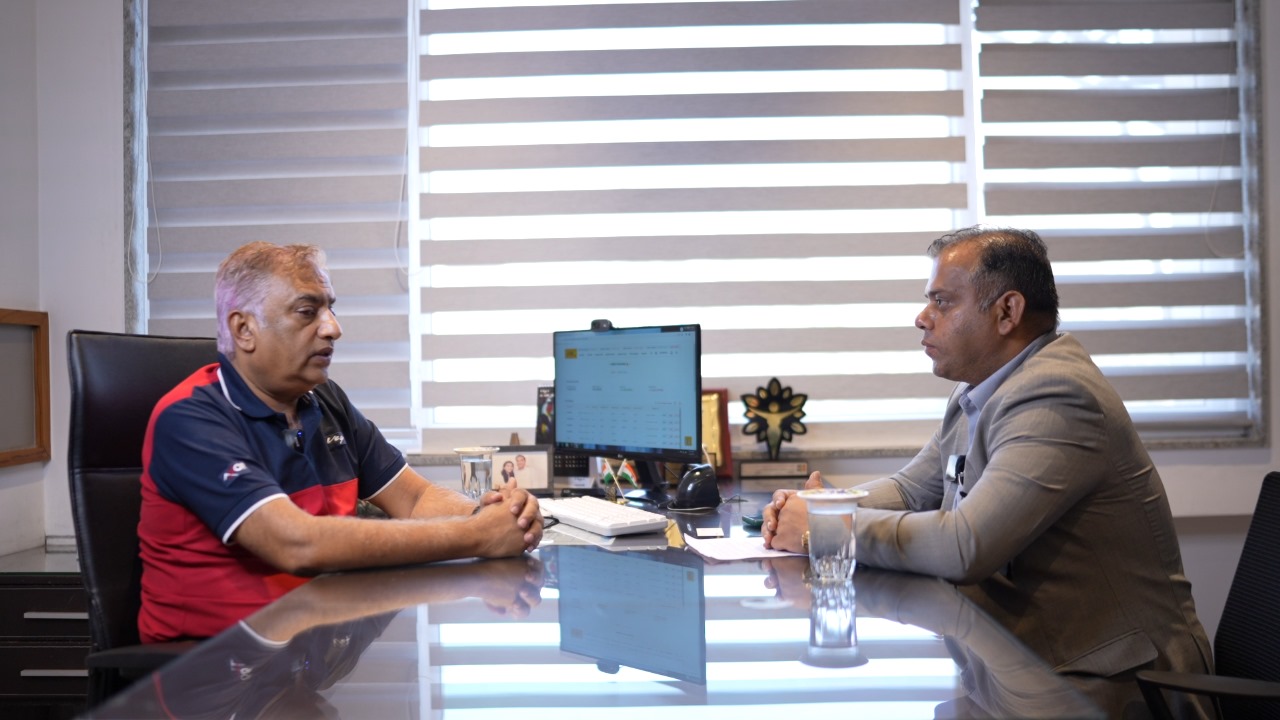
- Since its founding in 1981, Noble Group has evolved into a leading OEM and ODM partner. What have been the key milestones that shaped this transformation?
Noble Group’s journey began in the early 1980s with a tool room, rooted firmly in engineering and precision mould-making. That foundation shaped how the company evolved. Instead of starting with assembly, we built capabilities layer by layer on a strong technical base, which gave us long-term depth rather than short-term scale.
Over time, this engineering-first approach allowed us to expand into plastic moulding, consumer durables and integrated manufacturing. A key milestone was our transition from pure contract manufacturing to a true ODM model, where we take ownership of product design, R&D, tooling and final assembly. This shift enabled us to play a more strategic role for our partners, moving beyond execution to co-creating reliable, market-ready products.
Today, Noble Group operates as a backbone of India’s consumer appliances manufacturing ecosystem, supporting several leading domestic and global brands across categories such as washing machines and air coolers. Our current phase of growth includes the commissioning of the integrated Ghiloth facility and planning a finished-goods plant in Chennai, allowing us to scale responsibly while remaining focused on our core categories.
Each phase of this journey has been guided by one principle: building capabilities that last and strengthening India’s manufacturing base from the ground up.
- How does Noble Group’s vertically integrated manufacturing model create resilience and competitive advantage in today’s volatile global supply chain environment?
Vertical integration gives us control over the full chain: from design and toolmaking to plastics, electronics and assembly, so we are not forced to depend on fragmented suppliers for each critical step. When demand patterns, input costs or import conditions change, we can adjust moulds, component choices and production plans within the group instead of waiting for external capacity. This also allows us to balance cost and lead time rather than optimising one at the expense of the others.
In a world where import dependence and logistics disruptions are frequent, having in-house tool rooms, moulding and final assembly under one umbrella makes our business more resilient and keeps our customers’ programmes more stable.
- With a diverse product portfolio spanning consumer durables and electronics
manufacturing, how does Noble Group ensure consistency in quality, scale, and delivery?
Consistency at scale doesn’t happen by chance. For us, it has been a conscious design choice built into how Noble Group has structured its manufacturing over the years.
We operate specialised facilities across different stages of the value chain. Our plastics and toolmaking capabilities are based in Noida, electronics and air-cooler assembly runs as a focused vertical, and our integrated Ghiloth site brings together washing machine and cooler manufacturing under one roof. As we look ahead, our planned finished-goods assembly facility in Chennai is intended to strengthen this network and support growing demand while staying aligned with our core product categories.
Each location has clearly defined product families and capacities. This reduces complexity, avoids overlap and allows teams to develop deep expertise within their domain. At the same time, these facilities are not isolated. Common systems such as ERP and MES, along with standard operating procedures, connect planning, material flow and execution across plants.
What this structure enables is balance. We can scale volumes without fragmenting quality standards. Whether we are supplying a component or a finished appliance, the philosophy remains the same. Build with discipline, plan with clarity and deliver with consistency.
- What role does in-house R&D, product design, and engineering play in accelerating innovation and reducing time-to-market for your customers?
Our in-house R&D and design teams are responsible for the complete product platform, including mechanical design, electronics and manufacturability. Because we own the tool room and plastics, we can move from a concept design to mould development and trial shots much faster than if we relied on outside vendors. Historically, we have seen lead times for new moulds and products drop by around two months compared to industry norms because this work stays within Noble. This tight link between design, tooling and production allows us to respond quickly to new briefs, seasonal changes or feature upgrades, which is critical when our customers are planning launches or refreshing their own portfolios.
- The Ghiloth manufacturing facility is a cornerstone of Noble Group’s operations. What makes this plant future-ready in terms of technology, automation, and capacity?
The Ghiloth plant spans roughly 40,000 square metres with about 280,000 square feet of covered area and is designed for an annual capacity of around 600,000 air coolers and 700,000 washing machines. It houses 65 moulding machines ranging from 80 tons to 2,200 tons, backed by a centralised material conveying system, ultrasonic welding, and noise and vibration test booths. The facility is integrated with ERP and MES systems, and we are now building live dashboards for each moulding machine to support better data-driven decisions. Our roadmap includes moving towards all-electric machines, higher levels of automation and deeper component localisation, so that the plant can support both higher volumes and more complex product designs over time.
- How does Noble Group’s hybrid sourcing strategy balance long-term strategic partnerships with multi-vendor flexibility?
We classify materials using ABC analysis and set clear minimum stock levels at an item level, all of which is monitored through our ERP system. For critical A-class items, we build long-term strategic relationships with selected suppliers to ensure reliability, technical support and consistent quality. At the same time, for non-critical or more standard items, we maintain multi-vendor options so that we can respond quickly to changes in demand, price or policy without being locked in. This hybrid approach allows us to protect the supply chain where it matters most while keeping enough flexibility to manage cost and risk in a changing environment.
- Quality assurance is a critical pillar at Noble. Could you elaborate on your three-tier quality framework and testing protocols?
We follow a structured quality framework that covers the entire lifecycle of a product: inward quality control (IQC) for incoming materials, in-process quality control (IPQC) on the line, final quality control (FQC) before packing, and outward quality control (OQC) at dispatch. Our guiding principle is that every unit must pass checks on function, safety and endurance before it leaves the plant. To support this, we run product life-cycle tests, parts-endurance tests, vibration and noise tests, and a range of electrical and safety tests in-house. This combination of layered checks and dedicated test infrastructure ensures that quality is built into the design and process, not just inspected at the end.
- As India strengthens its position as a global manufacturing hub, how is Noble Group preparing to support both domestic demand and international markets?
India’s manufacturing opportunity today is about building depth, not just scale. At Noble Group, our preparation reflects that shift.
We are expanding capacity in our core categories, with the Ghiloth facility ramping up and a new finished-goods assembly plant planned in Chennai. These investments are aligned with the Make in India vision and are designed to serve domestic demand more efficiently across regions.
At the same time, we are focusing on design and development within India. Strengthening in-house R&D allows us to take greater ownership of products and respond faster to market needs. Localisation is also moving deeper, across electronics, plastics and mechanical components, including work on gearboxes and PCB-level parts. This reduces import dependence and builds resilience into the supply chain.
Together, capacity expansion, Design in India and localisation form the foundation of our long-term approach. This positions us to support rising domestic penetration today and participate more meaningfully in global manufacturing programmes as India’s ecosystem continues to mature.
Leadership Spotlight
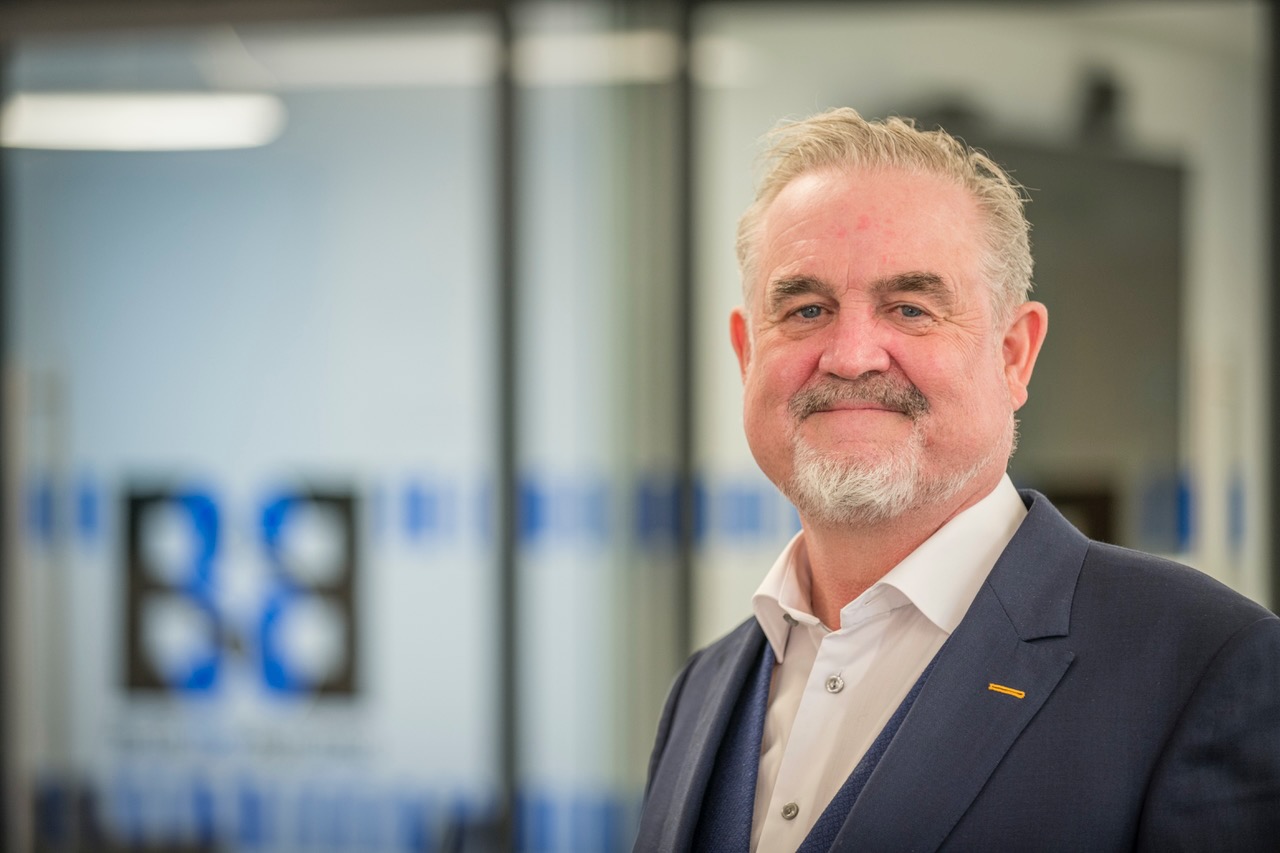
Jasraaj S Kalra, Managing Director of Noble Group, represents the second generation of leadership at one of India’s most trusted consumer appliances and durables manufacturing companies. Building on the legacy established by his father in 1981, Jasraaj formally joined the Group in 2014 and has since been instrumental in steering it into a new era of growth, innovation and national competitiveness.
Educated in Delhi, with a Master’s degree from the University of Hampton, London, Jasraaj brings both academic rigour and practical business insight to his role. His early years at Noble were spent working across departments including marketing, sales, finance, and business development, giving him a holistic understanding of operations and an eye for solving inefficiencies at every level.
With a vision to “think big and execute well,” Jasraaj is deeply aligned with India’s Make in India mission, championing indigenous manufacturing while adhering to global quality standards. He has been a driving force behind Noble’s expansion into advanced R&D, large-scale tool manufacturing, and state-of-the-art production facilities in Noida, Neemrana, and the upcoming unit in Chennai. Under his leadership, Noble Group closed FY 2024–25 with a turnover of ₹470 crores and now aims for a 20–30% revenue growth trajectory.
Guided by a consumer-first philosophy, Jasraaj constantly asks: “How will this product benefit the end user?” This approach ensures Noble’s solutions go beyond production efficiency to deliver meaningful impact in people’s everyday lives. A firm believer in sustainable growth and innovation-led manufacturing, he continues to shape Noble Group as a benchmark for trust
Jasraaj S. Kalra, CEO of Noble Group
Jasraaj S Kalra, Managing Director of Noble Group, represents the second generation of leadership at one of India’s most trusted consumer electronics and durables manufacturing companies. Building on the legacy established by his father in 1981, Jasraaj formally joined the Group in 2014 and has since been instrumental in steering it into a new era of growth, innovation and global competitiveness.
Educated in Delhi, with a Master’s degree from the University of Hampton, London, Jasraaj brings both academic rigour and practical business insight to his role. His early years at Noble were spent working across departments including marketing, sales, finance, and business development, giving him a holistic understanding of operations and an eye for solving inefficiencies at every level.
With a vision to “think big and execute well,” Jasraaj is deeply aligned with India’s Make in India mission, championing indigenous manufacturing while adhering to global quality standards. He has been a driving force behind Noble’s expansion into advanced R&D, large-scale tool manufacturing, and state-of-the-art production facilities in Noida, Neemrana, and the upcoming unit in Chennai. Under his leadership, Noble Group closed FY 2024–25 with a turnover of ₹470 crore and now aims for a 20–30% revenue growth trajectory.
Guided by a consumer-first philosophy, Jasraaj constantly asks: “How will this product benefit the end user?” This approach ensures Noble’s solutions go beyond production efficiency to deliver meaningful impact in people’s everyday lives. A firm believer in sustainable growth and innovation-led manufacturing, he continues to shape Noble Group as a benchmark for trust, scale, and excellence in India’s manufacturing landscape.
The post Building India’s Manufacturing Backbone Through Innovation, Integration and Trust appeared first on Machine Insider.