Automated laser sensor systems optimize road infrastructure rehabilitation
The construction company Eiffage Infra-Bau SE deployed automated screed width control systems to ensure high-precision asphalt layer installation. www.wirtgen-group.com In conventional asphalt paving procedures with changing paving widths between 8 m and 11.80 m, the operating personnel must continuously regulate the extending screed extensions manually. This permanent adjustment binds personnel capacity, increases the risk of control errors, and leads to material waste or insufficient joint quality if edge following is imprecise. Furthermore, manual measuring and correcting in close proximity to moving traffic poses significant safety risks for the workforce on the construction site. Operating Principle of Laser Sensors for Edge Tracking To solve these operational challenges, the contractor used a laser-based edge tracking system as an integrated component of the automatic screed width and steering control system. The sensor system was mounted directly onto the side plate of the extending screed and coupled via a cable connection to the operator's control console. The system operates via a defined technical process: The laser sensor continuously scans the area in front of the side plate within a 70-degree measuring angle. Geometric edges and profile transitions are detected automatically from a minimum height of 2 cm. The control unit translates these positioning data in real time into positioning commands for the hydraulic extensions of the screed, allowing the system to follow the reference edge automatically. A multi-cell sonic sensor simultaneously assisted the automatic grade and slope control of the road paver. Parallel Hot-to-Hot Paving in Site Operations The site-specific implementation was carried out using the hot-to-hot method over a distance of 1.6 km. A first large paver laid down an asphalt strip alongside the central safety barrier. A following paver, equipped with the laser sensor system for edge tracking, used the joint edge of the first strip as an exact reference datum. Two mobile material feeders secured the continuous material supply of the mix quantities for the 10 cm thick binder course and the subsequent 4 cm thick surface course, thereby preventing interruptions in the material flow. Resource Efficiency and Optimization of Occupational Safety The deployment of the automated width control led to precise material dosing at the joints of the two lanes. By accurately following the connecting edge, paving beyond the required width was prevented, which minimized the consumption of the calculated asphalt mix and increased material efficiency. The automation of the mechanical adjustment processes eliminated the manual correction steps for the screed operator. Personnel could focus on monitoring the paving quality, while the safety risk associated with staying in hazardous areas directly adjacent to moving traffic was reduced. The operating personnel retained the ability to intervene manually in the automated process at any time via the control interface. Edited by Sucithra Mani, Induportals editor – adapted by AI. www.wirtgen-group.com Powered by Induportals Media Publishing
 machineryasia
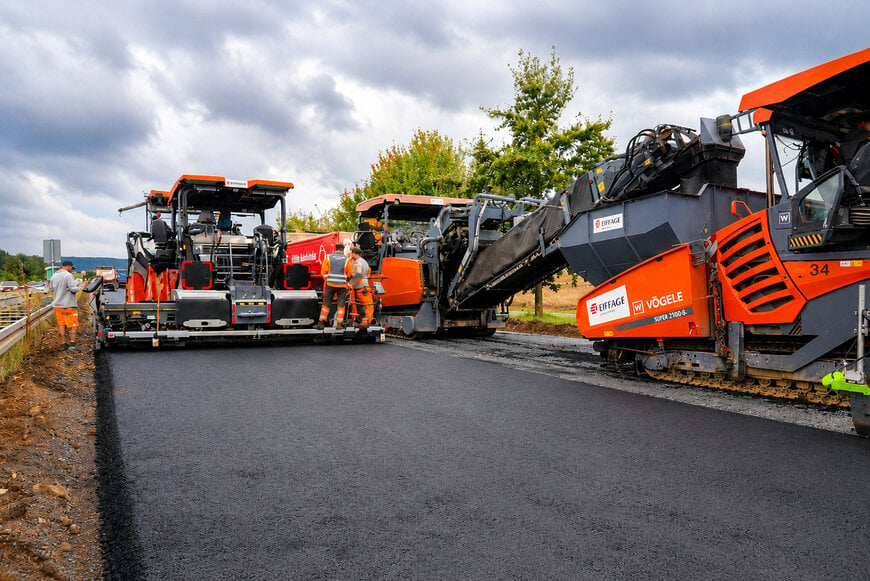
The construction company Eiffage Infra-Bau SE deployed automated screed width control systems to ensure high-precision asphalt layer installation.
www.wirtgen-group.com
In conventional asphalt paving procedures with changing paving widths between 8 m and 11.80 m, the operating personnel must continuously regulate the extending screed extensions manually. This permanent adjustment binds personnel capacity, increases the risk of control errors, and leads to material waste or insufficient joint quality if edge following is imprecise. Furthermore, manual measuring and correcting in close proximity to moving traffic poses significant safety risks for the workforce on the construction site.
Operating Principle of Laser Sensors for Edge Tracking
To solve these operational challenges, the contractor used a laser-based edge tracking system as an integrated component of the automatic screed width and steering control system. The sensor system was mounted directly onto the side plate of the extending screed and coupled via a cable connection to the operator's control console.
The system operates via a defined technical process:
- The laser sensor continuously scans the area in front of the side plate within a 70-degree measuring angle.
- Geometric edges and profile transitions are detected automatically from a minimum height of 2 cm.
- The control unit translates these positioning data in real time into positioning commands for the hydraulic extensions of the screed, allowing the system to follow the reference edge automatically.
A multi-cell sonic sensor simultaneously assisted the automatic grade and slope control of the road paver.
Parallel Hot-to-Hot Paving in Site Operations
The site-specific implementation was carried out using the hot-to-hot method over a distance of 1.6 km. A first large paver laid down an asphalt strip alongside the central safety barrier. A following paver, equipped with the laser sensor system for edge tracking, used the joint edge of the first strip as an exact reference datum. Two mobile material feeders secured the continuous material supply of the mix quantities for the 10 cm thick binder course and the subsequent 4 cm thick surface course, thereby preventing interruptions in the material flow.
Resource Efficiency and Optimization of Occupational Safety
The deployment of the automated width control led to precise material dosing at the joints of the two lanes. By accurately following the connecting edge, paving beyond the required width was prevented, which minimized the consumption of the calculated asphalt mix and increased material efficiency.
The automation of the mechanical adjustment processes eliminated the manual correction steps for the screed operator. Personnel could focus on monitoring the paving quality, while the safety risk associated with staying in hazardous areas directly adjacent to moving traffic was reduced. The operating personnel retained the ability to intervene manually in the automated process at any time via the control interface.
Edited by Sucithra Mani, Induportals editor – adapted by AI.
www.wirtgen-group.com
Parallel Hot-to-Hot Paving in Site Operations
The site-specific implementation was carried out using the hot-to-hot method over a distance of 1.6 km. A first large paver laid down an asphalt strip alongside the central safety barrier. A following paver, equipped with the laser sensor system for edge tracking, used the joint edge of the first strip as an exact reference datum. Two mobile material feeders secured the continuous material supply of the mix quantities for the 10 cm thick binder course and the subsequent 4 cm thick surface course, thereby preventing interruptions in the material flow.
Resource Efficiency and Optimization of Occupational Safety
The deployment of the automated width control led to precise material dosing at the joints of the two lanes. By accurately following the connecting edge, paving beyond the required width was prevented, which minimized the consumption of the calculated asphalt mix and increased material efficiency.
The automation of the mechanical adjustment processes eliminated the manual correction steps for the screed operator. Personnel could focus on monitoring the paving quality, while the safety risk associated with staying in hazardous areas directly adjacent to moving traffic was reduced. The operating personnel retained the ability to intervene manually in the automated process at any time via the control interface.
Edited by Sucithra Mani, Induportals editor – adapted by AI.
www.wirtgen-group.com
Powered by
Induportals Media Publishing