When Construction Companies Are Liable for Putting Employees Behind the Wheel
A construction truck collision can prompt scrutiny of the company’s dispatch decision, not just the driver’s conduct. The dispute may turn on what a supervisor knew before handing over the keys. A construction company may face liability for negligent entrustment of commercial drivers if it assigns a work truck to someone it knew, or reasonably […] The post When Construction Companies Are Liable for Putting Employees Behind the Wheel appeared first on World Construction Today.
 machineryasia
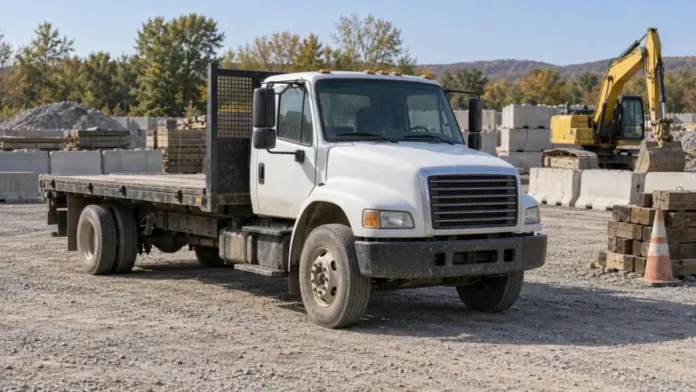
A construction truck collision can prompt scrutiny of the company’s dispatch decision, not just the driver’s conduct. The dispute may turn on what a supervisor knew before handing over the keys.
A construction company may face liability for negligent entrustment of commercial drivers if it assigns a work truck to someone it knew, or reasonably should have known, was unfit to drive safely and that unfitness contributes to a collision causing harm. State law sets the precise elements and the required proof.
How does driver conduct differ from the company’s assignment decision?
Driver negligence concerns the employee’s driving, such as running a red light. Negligent entrustment concerns the employer’s or owner’s decision to let someone drive despite known or reasonably discoverable unfitness. The claim directly targets the business or person that allowed the truck’s use; it doesn’t rest solely on the driver’s mistake.
Claims involving negligent entrustment of commercial drivers turn on what licensing records, driving history, training files, and prior safety concerns told the employer or vehicle owner before the assignment.
Vicarious liability operates differently. State law may hold an employer responsible when an employee drives negligently within the scope of employment, even if the assignment decision wasn’t defective. A service technician driving between jobs presents a different scope-of-employment question than an employee using the same truck for an unauthorized personal trip.
Contractor status doesn’t resolve every liability question. A vehicle owner may face an entrustment allegation, while a maintenance provider may face a separate claim over negligent brake work. Contracts and actual control over driver selection help distinguish the construction company’s conduct from a subcontractor’s decisions.
Record who hired the driver and who could suspend driving privileges. A site superintendent’s scheduling request may not carry the same authority as a fleet manager’s permission to use a company truck.
What records can prove negligent entrustment of commercial drivers?
Evidence supports negligent entrustment when it links permission to use the truck to the driver’s unfitness and the company’s knowledge, along with the risk that caused the collision. License and medical records address whether the driver had the required qualifications. Dated reports and complaints about earlier crashes or violations can show what the decision-maker knew or reasonably should have known before dispatch.
| Allegation | Factual focus | Likely records |
|---|---|---|
| The company entrusted the truck | Who authorized driving and controlled access | Dispatch instructions and key-control logs |
| The driver lacked a required qualification | Qualification status for that vehicle and assignment | License checks and medical qualification records |
| Management had prior warning | Safety problems reported before the collision | Motor vehicle reports and dated complaints |
| The company continued assigning driving duties after warnings | Management’s response to documented incidents | Disciplinary notices and subsequent dispatch records |
| The known risk contributed to the crash | The connection between the warning and collision mechanics | Telematics and collision investigation findings |
A record’s date matters just as much as the document itself. A motor vehicle report obtained after the crash may identify an earlier violation without showing when management learned about it. Keep screening requests and delivery receipts alongside the report. A complaint logged before dispatch, along with the supervisor’s response, establishes a different timeline than an undated personnel note.
Which commercial driver licensing and training records matter?
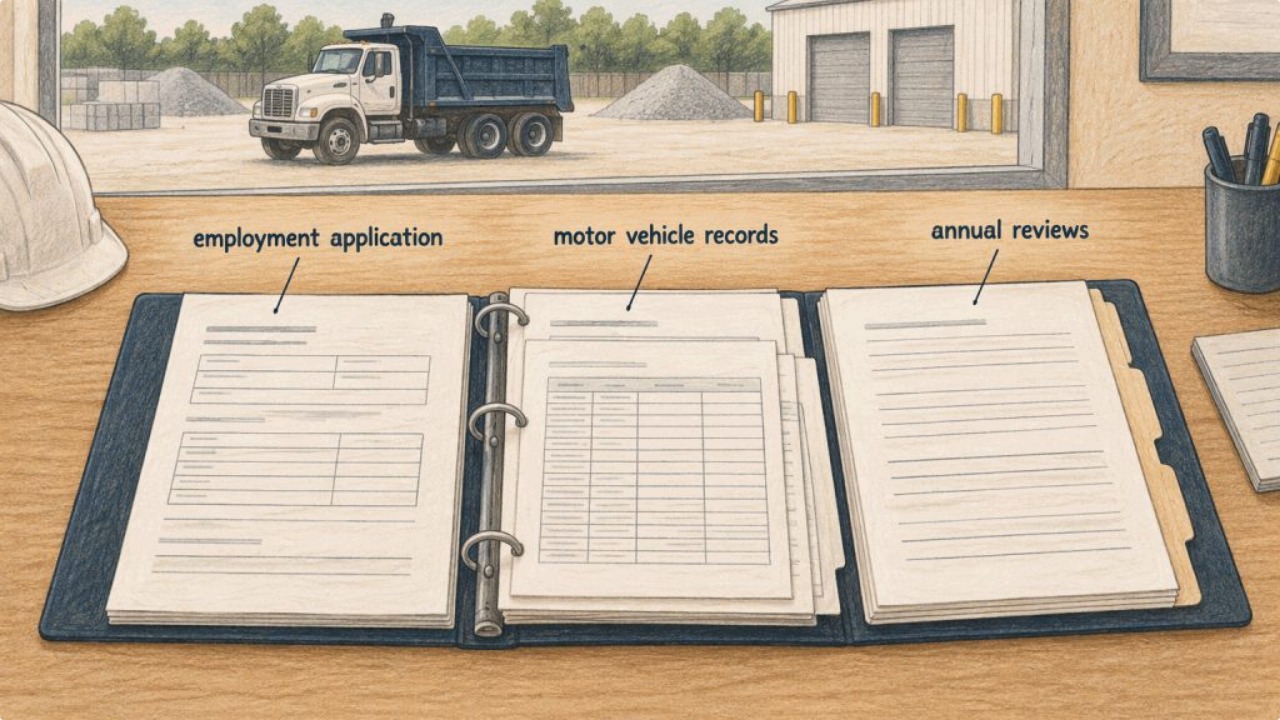
The Federal Motor Carrier Safety Administration’s March 2006 guidance says carriers subject to federal driver-qualification rules must maintain a file for each covered driver. The file contains an employment application and motor vehicle records, plus notes on annual reviews of the driver’s record.
 The license requirement doesn’t depend on the driver’s job title. Match the driver’s CDL class and endorsements to the truck itself, then check the license restrictions. A heavy single-unit dump truck may need a different class than a tractor-trailer, while a service vehicle may not require a CDL. Check whether federal file rules cover the operation and whether any exemptions apply before you apply those rules to the entire fleet.
Medical qualification records should show the driver’s status on the assignment date when certification is required. Training records should cover the work the driver actually performed. A documented vehicle-specific assessment, rather than a generic orientation attendance sheet, provides useful evidence for a mixer or dump truck. A valid CDL alone doesn’t document proficiency on a steep site access road.
A missing required record raises a compliance concern, but it doesn’t automatically establish that a driver was unsafe or that a qualification problem caused the crash. An expired copy in the company file doesn’t mean the qualification itself has expired. Obtain the dated credential history and retain both versions rather than quietly replacing the old copy.
How do prior warning signs and jurisdictional rules affect liability?
Retention and supervision extend beyond the initial hire. A company that learns of repeated unsafe reversing may need to rethink assignments, even if its original screening was sound. The company creates a different evidentiary record if it dispatches that employee without addressing documented backing incidents than if it assigns a driver with no reported backing incidents.
The alleged warning must relate to the collision under the governing legal test. A documented failure to check mirrors before reversing may be relevant to a later backing collision, but it doesn’t automatically explain an unrelated mechanical failure. Record what the complaint described and the task assigned afterward.
Land Line reported on November 4, 2026 that Michigan’s proposed HB6286 could permit claims against freight brokers and trucking companies for hiring or retaining drivers they knew or should have known had serious safety problems. The proposal’s particular-unfitness standard would require a direct link between the driver’s safety problem and the crash. The report addressed proposed legislation, not enacted law.
Liability standards and available claims differ by jurisdiction, and so does the proof required. Local counsel should assess how state law treats owner permission and contractor relationships, including whether direct negligence claims may proceed alongside an admitted vicarious-liability claim.
How should companies preserve records and set the response protocol?
Preserve qualification and personnel files together with dispatch data after a dump truck or service vehicle collision. Keep electronic logs and telematics, and retain inspection and maintenance records too. Secure post-collision testing records and communications, and keep the vehicle and its onboard data intact before repair or disposal.
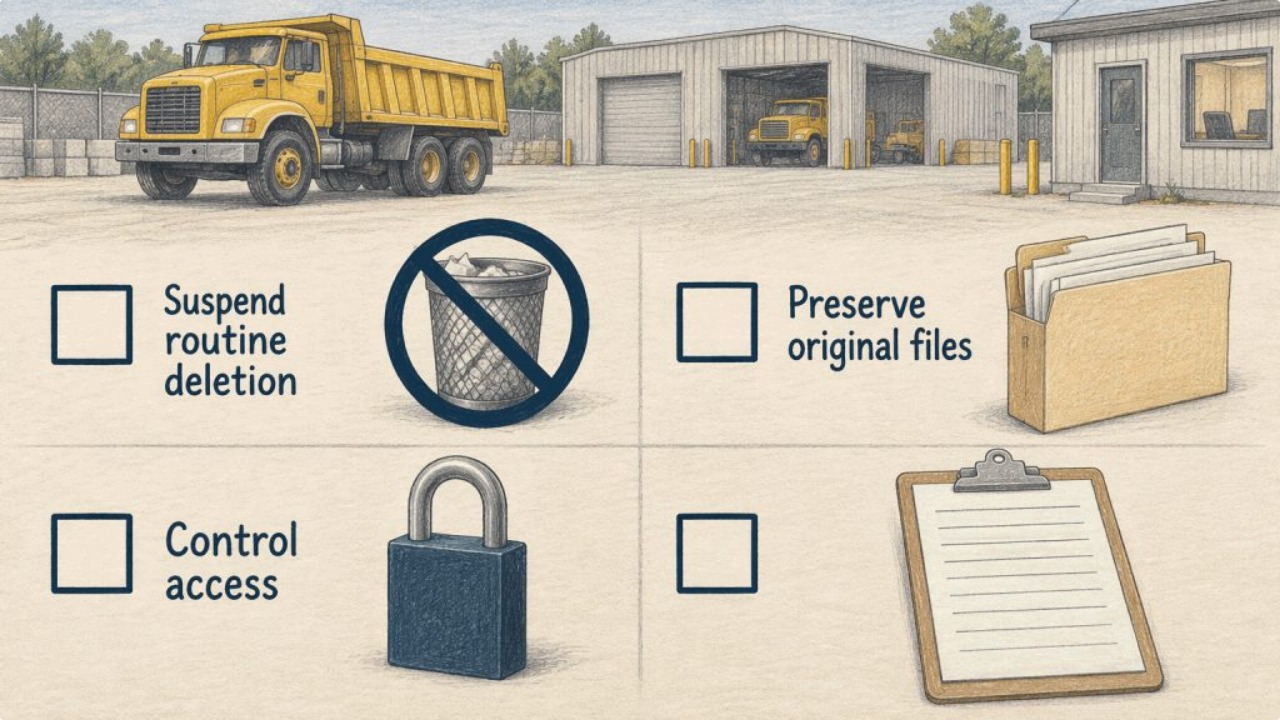 Suspend routine deletion. Send written retention instructions to the dispatch team and outside data vendors, covering dashcam footage and automatic telematics overwriting.
- Preserve original files. Keep messages together with their timestamps and metadata, including communications on company-approved apps and business messages on personal devices where you can lawfully obtain them.
- Control access to the truck. Arrange safe storage and an inspection that counsel directs before repairs or destructive testing. Document any movement or safety work that you can’t avoid.
- Check testing requirements immediately. Determine whether post-collision testing rules apply, then record collection times or why a required test couldn’t take place.
Assign a named custodian to gather the records and document transfers. The retention notice should reach leased-equipment owners and subcontractors if they hold dispatch or maintenance evidence. Preserve unfavorable material with the favorable records; don’t backdate a training signoff or alter an incident report.
How should companies coordinate counsel and the insurer?
Bring counsel and the insurer into a written preservation protocol before routine deletion or repairs remove evidence. The legal review should address the jurisdiction governing the claim, while the operational plan assigns responsibility for retained records and vehicle custody.
The post When Construction Companies Are Liable for Putting Employees Behind the Wheel appeared first on World Construction Today.