What to look for when buying a compact track loader
Compact track loaders are among the most versatile machines on the job site, and more than a dozen manufacturers offer CTLs in North America. We reached out to the experts and asked for their advice to help you dial in on the right choice for your business. Here are their tips for CTL selection. 1. Start with fundamentals to match a machine to your job site Application, job site space and access, seasons of use, and ground conditions will provide initial direction when choosing a CTL. Our experts agree that the CTL's lift path is an important early consideration. Radial lift CTLs are great for ground-level work, such as digging and grading. Vertical lift machines are more suited to loading trucks and other applications that require higher lifting. While considering horsepower is important, and it is one of the most advertised CTL specs, Lee Tice, senior product manager at JCB, suggests looking at the torque as well. "Torque is what helps a machine push into a pile, climb grades, power through tough ground conditions, and maintain performance under load. Operators feel torque every time they accelerate, grade, or carry heavy material across uneven terrain." CTLs are chosen for their traction, flotation, and low ground pressure. However, not every job site places the same demands on the undercarriage. Joe Boufford, CASE Construction Equipment's product marketing manager for construction products, notes that landscapers working on finished lawns will require lower ground pressure and a smoother ride, while contractors working in more rugged demolition or site development applications will prioritize durability, traction, and stability under load. There are two categories of undercarriage to choose between, says Peter Ovrebo, director of product management at Yanmar Compact Equipment North America. Rigid undercarriages are generally lower cost but transmit more ground impact to the machine and operator. Suspended undercarriages provide better ride quality and traction. Where buyers often go wrong is size. Dan Kakareka, product marketing manager at New Holland Construction, says, "One of the biggest mistakes buyers make is choosing a machine that is either too large or too small for their typical work. A CTL should match material weights, attachment requirements, and job site conditions operators face most often." He adds, "Buying a right-sized machine improves productivity, reduces unnecessary fuel consumption, and helps avoid premature wear caused by overworking an under-sized loader." Seasonal applications should also be considered, says Jonathan Gardner, construction equipment product manager at Kubota Canada. "Particularly for contractors who use attachments such as snowblowers or pushers throughout the winter months. Evaluating year-round operating conditions can help ensure the machine is properly matched to the work environment." 2. Equip your CTL for attachments that will drive utilization The value you get out of your CTL relies on the attachments you have for it. Attachment diversity is a good strategy for alleviating the pressures of tighter margins, labour shortages, and rising equipment costs. A well-equipped CTL can reduce the number of machines you need on the job site, and it can be used year-round. "Many contractors focus first on engine horsepower," says Dylan Freeman, Takeuchi-US product manager, "but auxiliary hydraulic performance can have an even greater impact on machine versatility. Buyers should evaluate hydraulic flow pressure and available high-flow options based on the attachments they plan to use. Demanding attachments, such as mulchers, cold planers, trenchers, and brush cutters, require sufficient hydraulic capability to perform efficiently." Attachments also come in a variety of sizes and configurations, notes Ovrebo from Yanmar. Just because the attachment can fit to your machine doesn't mean that it's the right size for your application — physical dimensions matter. "A bucket, for example, may sit within the width of the tracks or extend beyond them, which has real implications for how the machine performs and manoeuvres on the job site." Jason Taylor, compact equipment product manager from HD Construction Equipment Hyundai North America, recommends a universal hydraulic quick coupler for fast and tool-free attachment changes, especially if you will frequently switch between attachments on the job site. And don't forget to research attachment compatibility. Joel Hicks, product line manager at Kioti, points out that some manufacturers offer attachment options designed specifically for their machines, while others support a broader range of third-party attachments.
 machineryasia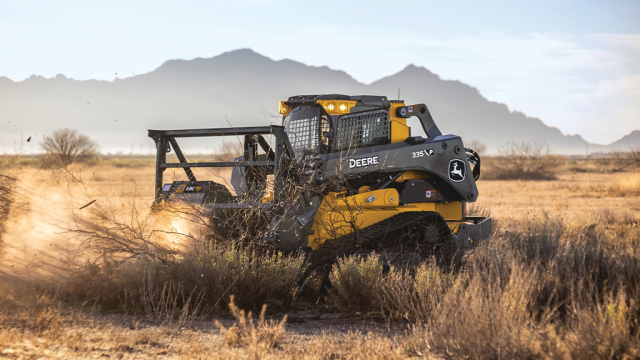
Compact track loaders are among the most versatile machines on the job site, and more than a dozen manufacturers offer CTLs in North America. We reached out to the experts and asked for their advice to help you dial in on the right choice for your business. Here are their tips for CTL selection.
1. Start with fundamentals to match a machine to your job site
Application, job site space and access, seasons of use, and ground conditions will provide initial direction when choosing a CTL.
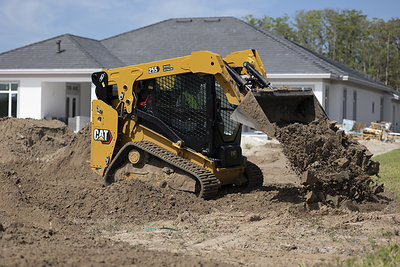
Our experts agree that the CTL's lift path is an important early consideration. Radial lift CTLs are great for ground-level work, such as digging and grading. Vertical lift machines are more suited to loading trucks and other applications that require higher lifting.
While considering horsepower is important, and it is one of the most advertised CTL specs, Lee Tice, senior product manager at JCB, suggests looking at the torque as well. "Torque is what helps a machine push into a pile, climb grades, power through tough ground conditions, and maintain performance under load. Operators feel torque every time they accelerate, grade, or carry heavy material across uneven terrain."
CTLs are chosen for their traction, flotation, and low ground pressure. However, not every job site places the same demands on the undercarriage. Joe Boufford, CASE Construction Equipment's product marketing manager for construction products, notes that landscapers working on finished lawns will require lower ground pressure and a smoother ride, while contractors working in more rugged demolition or site development applications will prioritize durability, traction, and stability under load.
There are two categories of undercarriage to choose between, says Peter Ovrebo, director of product management at Yanmar Compact Equipment North America. Rigid undercarriages are generally lower cost but transmit more ground impact to the machine and operator. Suspended undercarriages provide better ride quality and traction.
Where buyers often go wrong is size. Dan Kakareka, product marketing manager at New Holland Construction, says, "One of the biggest mistakes buyers make is choosing a machine that is either too large or too small for their typical work. A CTL should match material weights, attachment requirements, and job site conditions operators face most often."
He adds, "Buying a right-sized machine improves productivity, reduces unnecessary fuel consumption, and helps avoid premature wear caused by overworking an under-sized loader."
Seasonal applications should also be considered, says Jonathan Gardner, construction equipment product manager at Kubota Canada. "Particularly for contractors who use attachments such as snowblowers or pushers throughout the winter months. Evaluating year-round operating conditions can help ensure the machine is properly matched to the work environment."
2. Equip your CTL for attachments that will drive utilization
The value you get out of your CTL relies on the attachments you have for it. Attachment diversity is a good strategy for alleviating the pressures of tighter margins, labour shortages, and rising equipment costs. A well-equipped CTL can reduce the number of machines you need on the job site, and it can be used year-round.
"Many contractors focus first on engine horsepower," says Dylan Freeman, Takeuchi-US product manager, "but auxiliary hydraulic performance can have an even greater impact on machine versatility. Buyers should evaluate hydraulic flow pressure and available high-flow options based on the attachments they plan to use. Demanding attachments, such as mulchers, cold planers, trenchers, and brush cutters, require sufficient hydraulic capability to perform efficiently."
Attachments also come in a variety of sizes and configurations, notes Ovrebo from Yanmar. Just because the attachment can fit to your machine doesn't mean that it's the right size for your application — physical dimensions matter. "A bucket, for example, may sit within the width of the tracks or extend beyond them, which has real implications for how the machine performs and manoeuvres on the job site."
Jason Taylor, compact equipment product manager from HD Construction Equipment Hyundai North America, recommends a universal hydraulic quick coupler for fast and tool-free attachment changes, especially if you will frequently switch between attachments on the job site.
And don't forget to research attachment compatibility. Joel Hicks, product line manager at Kioti, points out that some manufacturers offer attachment options designed specifically for their machines, while others support a broader range of third-party attachments.