U.S. Shipyards Are Growing, But Will Congress Miss the Boat?
Momentum for America's shipbuilding revitalization builds with a $1 billion shipyard upgrade in Texas.
 machineryasia

Momentum for America’s shipbuilding revitalization builds as a $1 billion shipyard upgrade in Texas joins a bevy of other investments, but one bill could supercharge the effort and create thousands of high-wage U.S. jobs.
The shipbuilding industry is making some big waves.
Earlier this week, Davie Defense broke ground on a $1 billion upgrade to its Gulf Cooper shipyards in Galveston and Port Arthur, Texas. The investment will help the shipyards prepare to build brand-new icebreaker ships for the Navy.
These ships will help give the United States an advantage in the Arctic, which is becoming an increasingly important region on the global stage. Countries like Russia and China are already working on using the area for trade and national security. Now, it’s America’s turn.
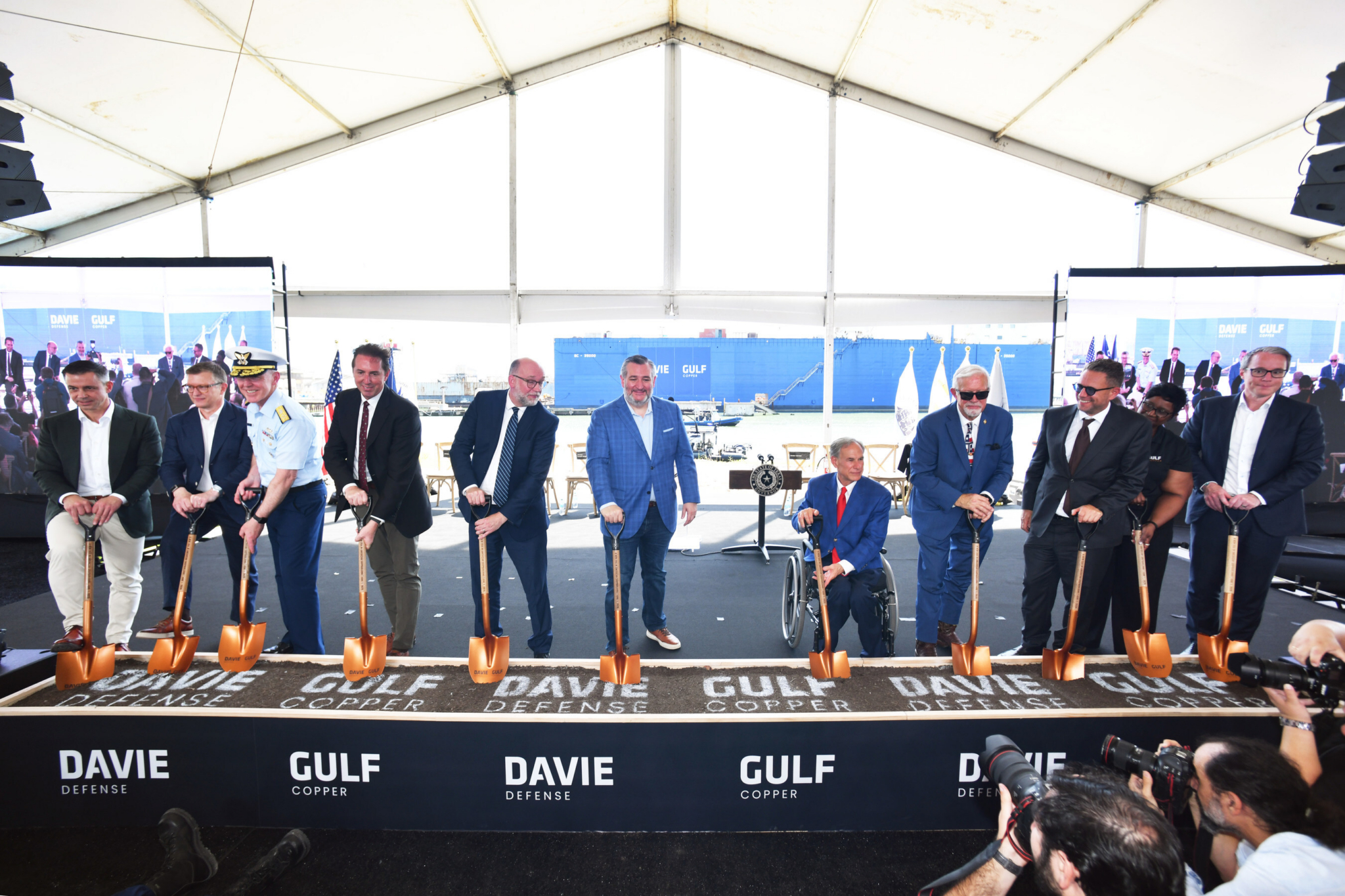
The first of these ships will be built in Finland while the shipyards receive the necessary upgrades. But by 2028, they’ll all be Texas-made. The project will create around 2,400 new jobs and support 7,000 more in Texas — a huge win for the economy and for workers.
Texas isn’t alone. Shipbuilding is having a bit of a moment right now, as the Navy seeks to increase capacity across the country. In Alabama, $2.4 billion is going towards transforming an old railcar factory into a submarine manufacturing plant, which will employ more than 1,000 people. It’s “one of the largest investments in maritime industrial base history,” according to AL.com.
Groton, Conn., was once known as “the submarine capital of the world,” but decades of dwindling funds and lack of interest in shipbuilding led to the city’s decline. Now, it’s starting to boom again — submarine manufacturer Electric Boat has received a $16 billion investment from the Navy and is looking to hire 8,000 people this year alone.
Our own Scott Paul recently attended the commissioning ceremony for the brand-new warship U.S.S. Cleveland in May. Although the ship itself was built in Wisconsin, it was commissioned in Ohio — a first for the state. The U.S.S. Cleveland was made with U.S. materials, from the steel made in Indiana to the paint made in Cleveland, and represents a renewed focus and interest in growing our shipbuilding industry.
All of this is good news. But it’s not good enough to reverse the decades of stagnation in U.S. shipbuilding. Our country used to be the leader of this industry. Now, we’ve allowed rivals like China to surpass us. In 2024 alone, one Chinese shipbuilding company, China State Shipbuilding Corporation, built more ships than the United States has since World War II. All in all, China accounts for more than half of global commercial shipbuilding production. The United States? A measly tenth of a percent.
It’s a massive risk to our national and economic security that the U.S. has fallen so far behind in shipbuilding. If we fail to invest in high-quality ships, our navy will soon fall behind the rest of the world. And it’s not just an issue for warships. Imagine if China controlled all of the world’s commercial ships. In a crisis situation, that could prevent us from getting important goods.
It’s far past time to invest in commercial American shipbuilding. As Davie Defense President and CEO Philip Burns O’Brien said at the Gulf Cooper groundbreaking ceremony this week, “America cannot restore maritime strength without rebuilding its industrial capability. Gulf Copper is more than a facility investment, it is part of the broader vision to revive U.S. shipbuilding capacity as strategic competition increases.”
We couldn’t agree more. While we’re encouraged by the recent developments in shipbuilding, we want to continue to see growth. That’s why we’re in strong support of the SHIPS for America Act.
This bill would revitalize commerical shipyards across the country. It would encourage investments like the ones we’ve seen recently through various financial incentive programs, like tax credits. These investments are vital in ensuring our shipyards can grow their capacity and be competitive on a global scale. The bill would also establish a campaign to promote and recruit shipbuilding jobs, which will help grow the workforce needed to take the American shipbuilding industry into the future.
With as much good as it stands to do, it comes as no surprise that the SHIPS For America Act is a bipartisan effort. It’s co-authored by Sens. Mark Kelly (D-Ariz.) and Todd Young (R-Ind.) as well Reps. John Garamendi (D-Cali.) and Trent Kelly (R-Miss.). Despite how contentious Congress has become, the bill’s quickly gaining traction on both sides of the aisle in the House and Senate.
But the passage of the SHIPS for America Act still isn’t a done deal. We need your help to encourage lawmakers to sponsor it, so we can get it across the finish line. If you want to see more investments like the boom happening in Texas, Alabama and Connecticut, click here to call upon your members of Congress to support the SHIPS for America Act.