This Pennsylvania Tannery Has Turned its Industrial Process Into a Science
In rural Curwensville, Wickett & Craig workers produce a premium leather made exclusively via an old-school vegetable tanning process.
 machineryasia
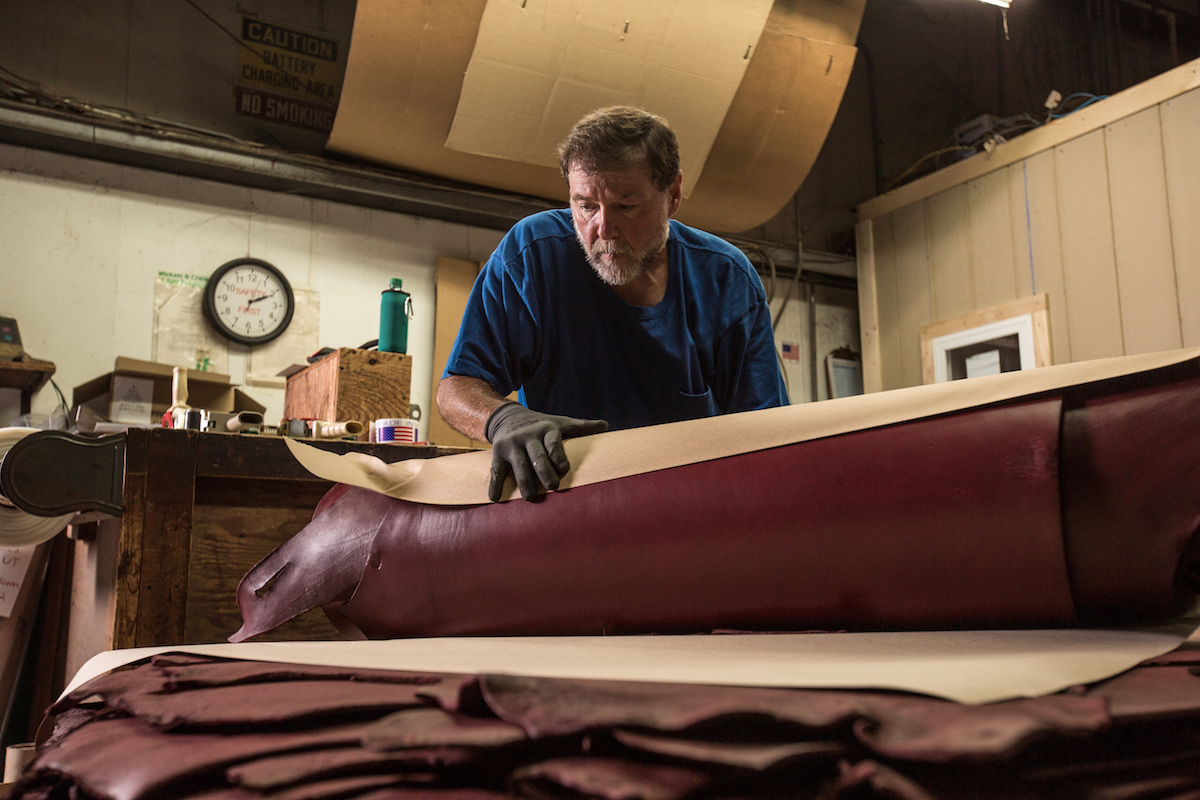
In rural Curwensville, Wickett & Craig workers produce a premium leather made exclusively via an old-school vegetable tanning process.
In a world built on speed, Wickett & Craig still works at the pace of growing tree bark.
Inside the leather company’s Pennsylvania tannery, bovine hides spend eight weeks moving through a vegetable-tanning process that has changed little over centuries. The result is premium leather made by one of the last American companies still practicing the craft at scale.
That deliberate approach has helped Wickett & Craig survive while hundreds of American tanneries have disappeared.
The process of turning animal hides into leather is known as tanning. Today, most of the leather is produced through chrome tanning, which uses chromium salts to convert hides into leather in just a few days. The method revolutionized the industry during the early 20th century, dramatically increasing production speed and lowering costs.
Before that, leather was made almost exclusively through vegetable tanning.
For centuries, hides were soaked in solutions containing natural tannins extracted from bark and plants. The process required patience, skill and time, but it produced durable leather prized for its appearance, character and longevity.
Modern vegetable tanneries are now exceedingly rare.
“What takes us eight weeks to make, other people can make in about a week,” said Matt Bressler, vice president of sales and operations at Wickett & Craig. “Just the tanning itself takes 14 days.”
That extra time produces a leather that many craftspeople and consumers believe cannot be replicated through faster methods.
“A veg-tanned belt, wallet or holster develops a patina over time,” Bressler said. “The leather tells a story. It gets better looking the longer you own it.”
The company’s roots date to 1867, when it was founded near Toronto, Canada. For more than a century, the tannery operated there before an unexpected relocation changed its future.
In the late 1980s, Wickett & Craig was forced to leave its longtime home and eventually crossed the border to settle in Curwensville, Pa., a small community of 3,500 with a history of leather manufacturing.
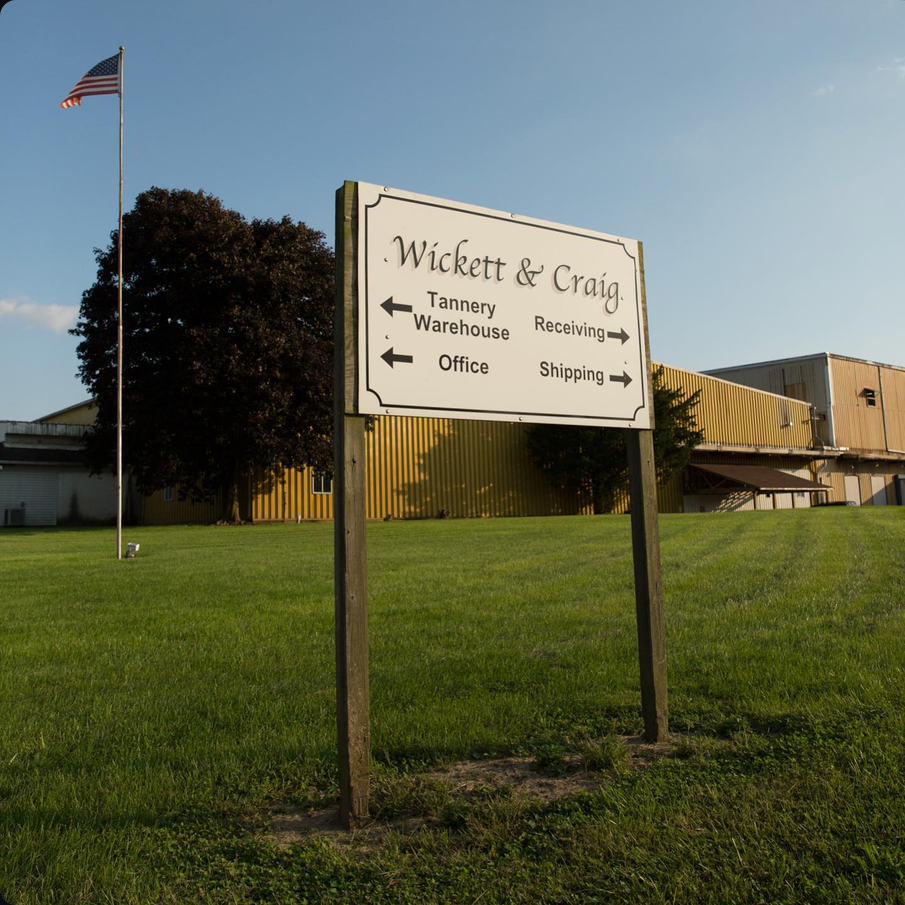
“There was a tannery here called Howe’s Leather,” Bressler recalled. “Next to it was the abandoned Clearfield Cheese factory. We were able to start over and build it the way we wanted.”
The move into its new 180,000 square foot factory allowed the company to modernize without abandoning the methods that made its leather distinctive.
“Our pits are above ground and we maintain the tanning liquor at 90 degrees year-round,” Bressler said. “Whether it’s July or January, the leather tans exactly the same. We’ve made the process more of a science than an art.”
Bressler has witnessed that evolution firsthand. While attending college, he worked for a contractor helping relocate equipment during the move to Pennsylvania. More than three decades later, he is still there.
Today, Wickett & Craig controls nearly every phase of production.
The company purchases salted bovine hides from the beef industry and performs all major processing steps in-house. Workers de-hair the hides, remove excess tissue, tan them, color them and finish them under one roof.
“There are very few tanneries that do everything themselves,” Bressler said. “We start right at the beginning.”
The company primarily sources steer hides from the northern United States and Canada.
Once the hides arrive, they begin a carefully controlled transformation using natural extracts derived from mimosa trees grown in South Africa and quebracho trees harvested in South America.
Those extracts are among the company’s most significant expenses.
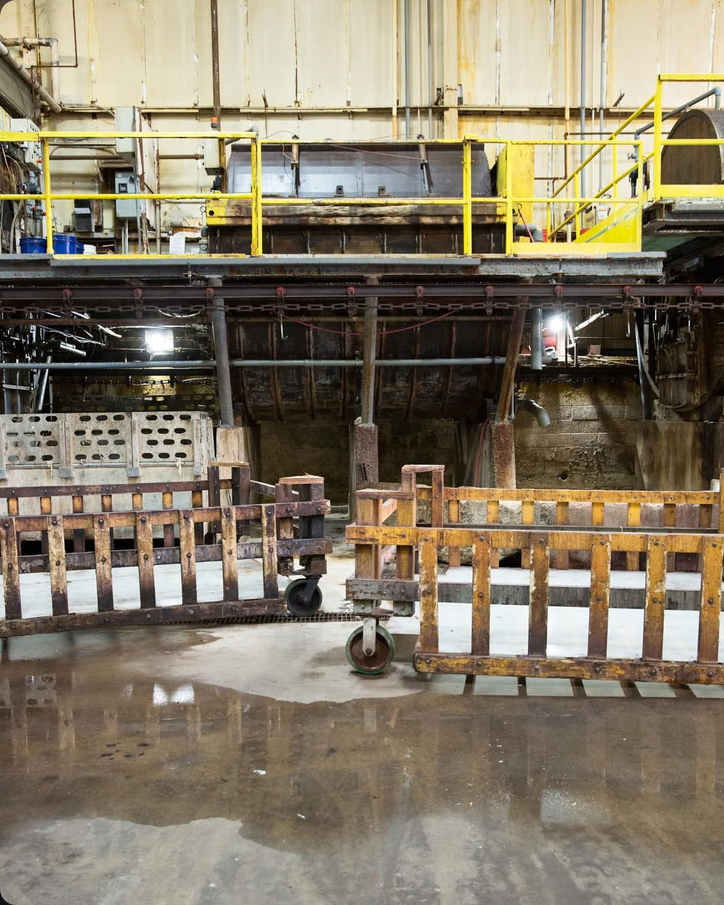
“Our hides are the most expensive thing we buy,” Bressler said. “The extracts are right behind them. We do nothing but full-grain leather.”
That commitment has earned Wickett & Craig customers ranging from luxury brands to independent makers working in one-person shops.
“We can be talking to Ralph Lauren one minute and an Amish man standing in a phone booth the next,” Bressler said.
The company’s leather appears in saddles, bridles, belts, wallets, notebook covers, knife sheaths, holsters, luxury bags, pet products and premium footwear. Small leather goods remain the company’s largest category.
“Wallets, belts, notebook covers, planners and those kinds of products are huge for us,” Bressler said. “We sell a lot of leather in and around Lexington, Ky., where it is used for saddles, stall holders and bridles. Tack and the equestrian industry is big for us.”
The company has also carved out a growing place in the premium boot market. Brands including Nick’s Boots, Frank’s Boots, Drew’s Boots and Baker’s Boots use Wickett & Craig leather in handcrafted footwear known for durability and longevity.
“We recognize the equestrian industry isn’t growing,” Bressler said. “To stay healthy, we have to be diverse.”
Not everyone believed vegetable-tanned leather belonged in work boots. Bressler remembers hearing competitors argue that chrome-tanned leather was the only practical option.
His response was simple.
“What did they make shoes out of before chrome tanning was invented?” he said.
The answer, of course, was vegetable-tanned leather.
The company’s commitment to sustainability also resonates with modern consumers.
All wastewater generated during production is treated onsite before release. Solids removed during treatment are recycled as fertilizer for nearby farm fields.
Across its 14-acre campus, the tannery processes roughly 5,000 hides each month, producing about 10,000 leather sides.
Yet despite its national reach, Wickett & Craig remains deeply connected to the rural community where it operates.
The company employs nearly 80 people in a small town. Like manufacturers across the country hiring remains a challenge.
“Our employees are our biggest asset,” Bressler said. “But right now we don’t have enough. We need to increase production and we can’t get enough employees to do it. There are only two traffic lights in town.
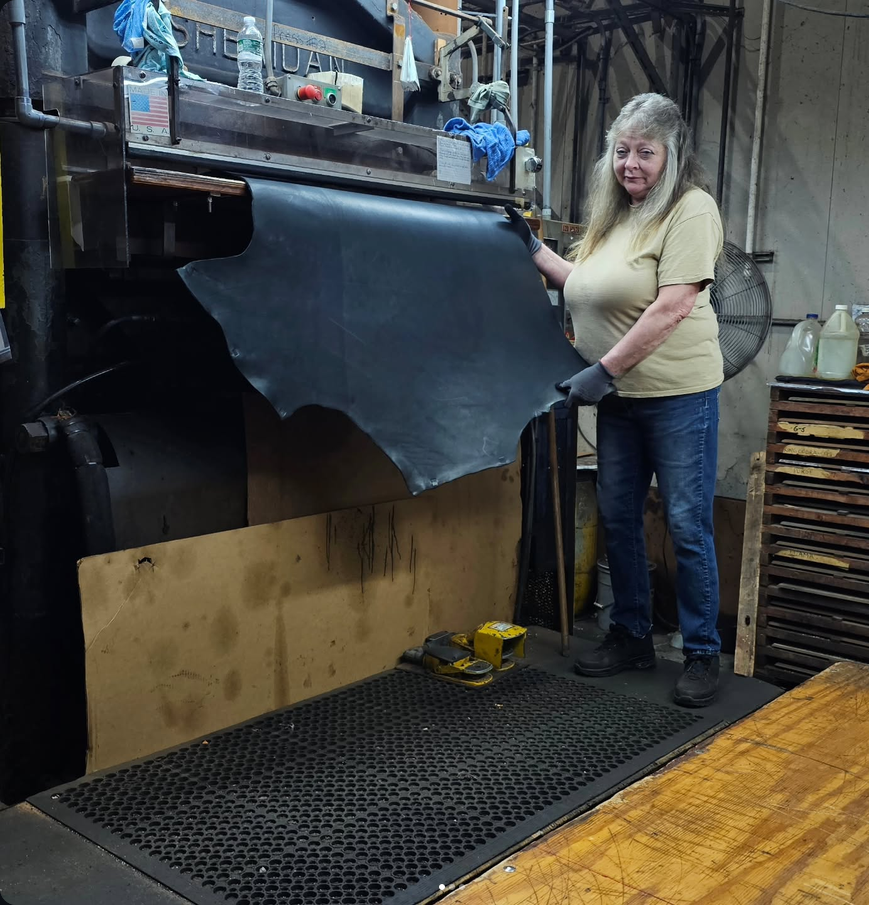
“As far as a decent-sized city nearby, you’re looking at State College where Penn State is. We are right in the middle of central Pennsylvania.”
Even so, Wickett & Craig has survived shifting consumer tastes, international competition, financial struggles and the disappearance of much of America’s tanning industry.
A century ago, leather makers filled communities across New England, the Midwest and upstate New York. Today, most are gone. Wickett & Craig remains because its endurance stems from a willingness to put craftsmanship ahead of speed.
For customers, leather is more than a raw material. It is a product with a story, one connected to a specific place, a specific process and a shrinking group of American craftspeople who still make leather the old-fashioned way.
That matters to Wickett & Craig.
“If it doesn’t matter to you where the leather is made, we’re probably not for you,” Bressler said.
The Alliance for American Manufacturing does not receive a commission from purchases made through the above links, nor was the organization or author paid for favorable coverage.
Labeling Note: This story is intended to highlight companies that support American jobs and that make great products in the United States. We rely on the companies listed to provide accurate information regarding their domestic operations and their products. Each company featured is individually responsible for labeling and advertising their products according to applicable standards, such as the Federal Trade Commission’s “Made in USA” standard or California’s “Made in USA” labeling law. We do not review individual products for compliance or claim that because a company is listed in the guide that their products comply with specific labeling or advertising standards. Our focus is on supporting companies that create American jobs.
For more on the Federal Trade Commission’s standards for “Made in USA” claims and California’s “Made in USA” labeling law, please also read this guest post by Dustin Painter and Kristi Wolff of Kelly Drye & Warren, LLP.