The latest mobile scalper screen plants provide operational flexibility
Mobile scalper screen plants are highly versatile, heavy-duty screening solutions designed to handle coarse, large material. They can also convert to fill a classifying screen role within a plant train. This ability to work in primary and secondary screening applications in the quarrying, mining, iron ore processing, construction and demolition waste, sand, gravel, compost, topsoil, and coal industries has been further improved by the latest equipment designs focused on maximizing their operational flexibility. Flexible power systems, configurability, screen media options, data availability, and accessibility all boost productivity, uptime, and utilization of mobile scalpers. Let's take a look at a couple of recent introductions. Terex Finlay's 883+ Electric is an adaptable, user-focused screening solution The electric power pack of Finlay's 883+ Electric heavy-duty scalping screen is designed to give operations efficient, flexible equipment that lowers costs and emissions while maintaining operational readiness — regardless of power availability. The scalper can be connected directly to the grid or powered by a genset, maximizing its versatility. An electrical drive system powers the feeder, screenbox, and conveyors. Electric drive offers several advantages: lower noise levels around the plant, lower emissions, reduced fuel cost, and reduced maintenance cost and downtime. Finlay says it has committed to providing adaptable, user-focused solutions. To that end, the 883+ Electric scalper features a feeder that was redesigned based on feedback from Finlay's distribution network and customers. The new feeder offers hydraulically folding and locking extensions and can now be fed from the rear by a wheel loader, which gives operations added flexibility in material handling. The hopper is also manufactured from wear-resistant steel, with the option for hopper linings, improving durability. Easy mobility is essential for operational flexibility. The 883+ Electric scalper is equipped with an on-board engine that powers the tracks, ensuring that operators can continue to move and position the equipment with minimal effort, regardless of power source availability. Terex recently introduced the TRAC vibration analysis system for screening equipment. The company says that TRAC provides clearer insight into the performance, condition, and long-term integrity of screening equipment. It is available across the Finlay screening lineup. This portable, multi-sensor system takes synchronised measurements from multiple points on the screen box. TRAC then delivers fast, repeatable insight into screen motion, balance, resonance, and bearing condition, helping identify potential issues before they affect performance, uptime, or structural integrity. Complex vibration behaviour is communicated in a clear, visual format that gives plant operators actionable insight. Terex says it supports commissioning verification, troubleshooting, and ongoing condition assessment, enabling more informed maintenance decisions throughout the life of the machine.
 machineryasia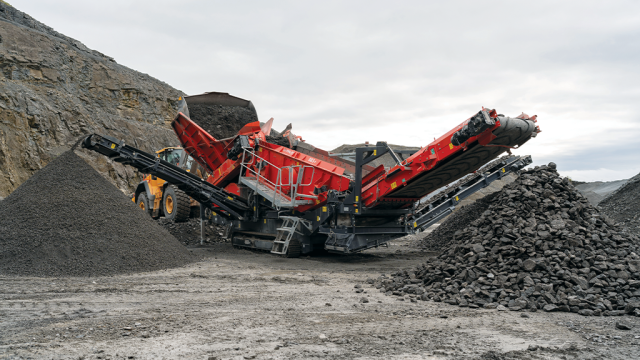
Mobile scalper screen plants are highly versatile, heavy-duty screening solutions designed to handle coarse, large material. They can also convert to fill a classifying screen role within a plant train. This ability to work in primary and secondary screening applications in the quarrying, mining, iron ore processing, construction and demolition waste, sand, gravel, compost, topsoil, and coal industries has been further improved by the latest equipment designs focused on maximizing their operational flexibility. Flexible power systems, configurability, screen media options, data availability, and accessibility all boost productivity, uptime, and utilization of mobile scalpers. Let's take a look at a couple of recent introductions.
Terex Finlay's 883+ Electric is an adaptable, user-focused screening solution
The electric power pack of Finlay's 883+ Electric heavy-duty scalping screen is designed to give operations efficient, flexible equipment that lowers costs and emissions while maintaining operational readiness — regardless of power availability.
The scalper can be connected directly to the grid or powered by a genset, maximizing its versatility. An electrical drive system powers the feeder, screenbox, and conveyors. Electric drive offers several advantages: lower noise levels around the plant, lower emissions, reduced fuel cost, and reduced maintenance cost and downtime.
Finlay says it has committed to providing adaptable, user-focused solutions. To that end, the 883+ Electric scalper features a feeder that was redesigned based on feedback from Finlay's distribution network and customers.
The new feeder offers hydraulically folding and locking extensions and can now be fed from the rear by a wheel loader, which gives operations added flexibility in material handling. The hopper is also manufactured from wear-resistant steel, with the option for hopper linings, improving durability.
Easy mobility is essential for operational flexibility. The 883+ Electric scalper is equipped with an on-board engine that powers the tracks, ensuring that operators can continue to move and position the equipment with minimal effort, regardless of power source availability.
Terex recently introduced the TRAC vibration analysis system for screening equipment. The company says that TRAC provides clearer insight into the performance, condition, and long-term integrity of screening equipment. It is available across the Finlay screening lineup.
This portable, multi-sensor system takes synchronised measurements from multiple points on the screen box. TRAC then delivers fast, repeatable insight into screen motion, balance, resonance, and bearing condition, helping identify potential issues before they affect performance, uptime, or structural integrity.
Complex vibration behaviour is communicated in a clear, visual format that gives plant operators actionable insight. Terex says it supports commissioning verification, troubleshooting, and ongoing condition assessment, enabling more informed maintenance decisions throughout the life of the machine.