That Resonant Hawaiian Sound Has Been Over a Century in the Making
Family-owned Kamaka Ukulele has perfected the production of the islands’ most essential musical instrument. In the hands of Jake Shimabukuro, a ukulele made by Kamaka Hawaii can sound like almost anything. Often referred to as the “Jimi Hendrix of the […]
 machineryasia
Family-owned Kamaka Ukulele has perfected the production of the islands’ most essential musical instrument.
In the hands of Jake Shimabukuro, a ukulele made by Kamaka Hawaii can sound like almost anything. Often referred to as the “Jimi Hendrix of the ukulele,” Shimabukuro can make four strings roar like a rock guitar, move with the intricacy of classical music or settle back into the warm, unmistakable tones of Hawaii.
A generation earlier, Israel “Iz” Kamakawiwoʻole showed how much emotion those same four strings could carry. His gentle ukulele accompaniment to “Somewhere Over the Rainbow/What a Wonderful World” helped carry the sound of Hawaii around the globe.
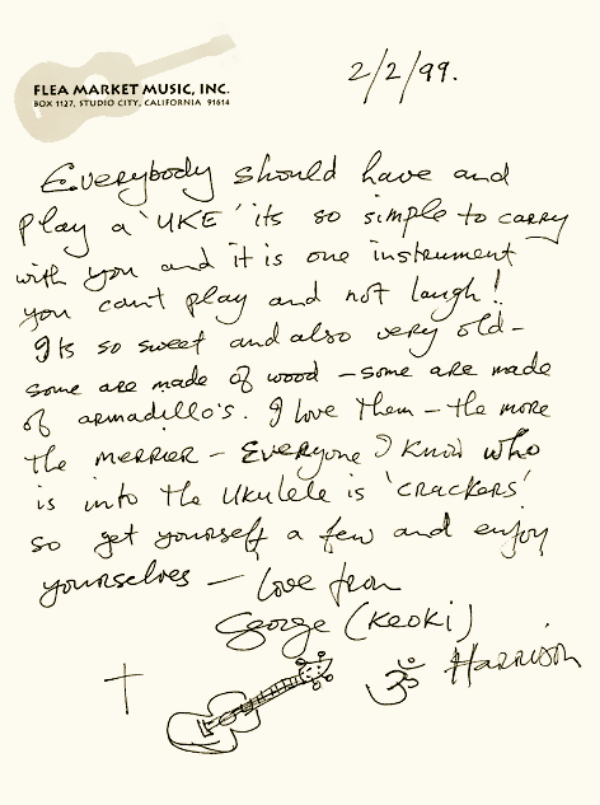
But Jake and Iz are hardly alone. Beatles legend George Harrison played Kamaka ukuleles while spending time on Maui and used the instrument for songwriting. Pearl Jam frontman Eddie Vedder became an enthusiastic Kamaka customer. Jimmy Fallon keeps a Kamaka at “The Tonight Show,” and even Tiny Tim, whose ukulele helped make him one of television’s most unlikely stars in the late 1960s, was part of the instrument’s long journey through American popular culture.
Different musicians, different generations and vastly different music. What ties them together is Kamaka, a family name that has appeared on Hawaiian-made ukuleles for 110 years.
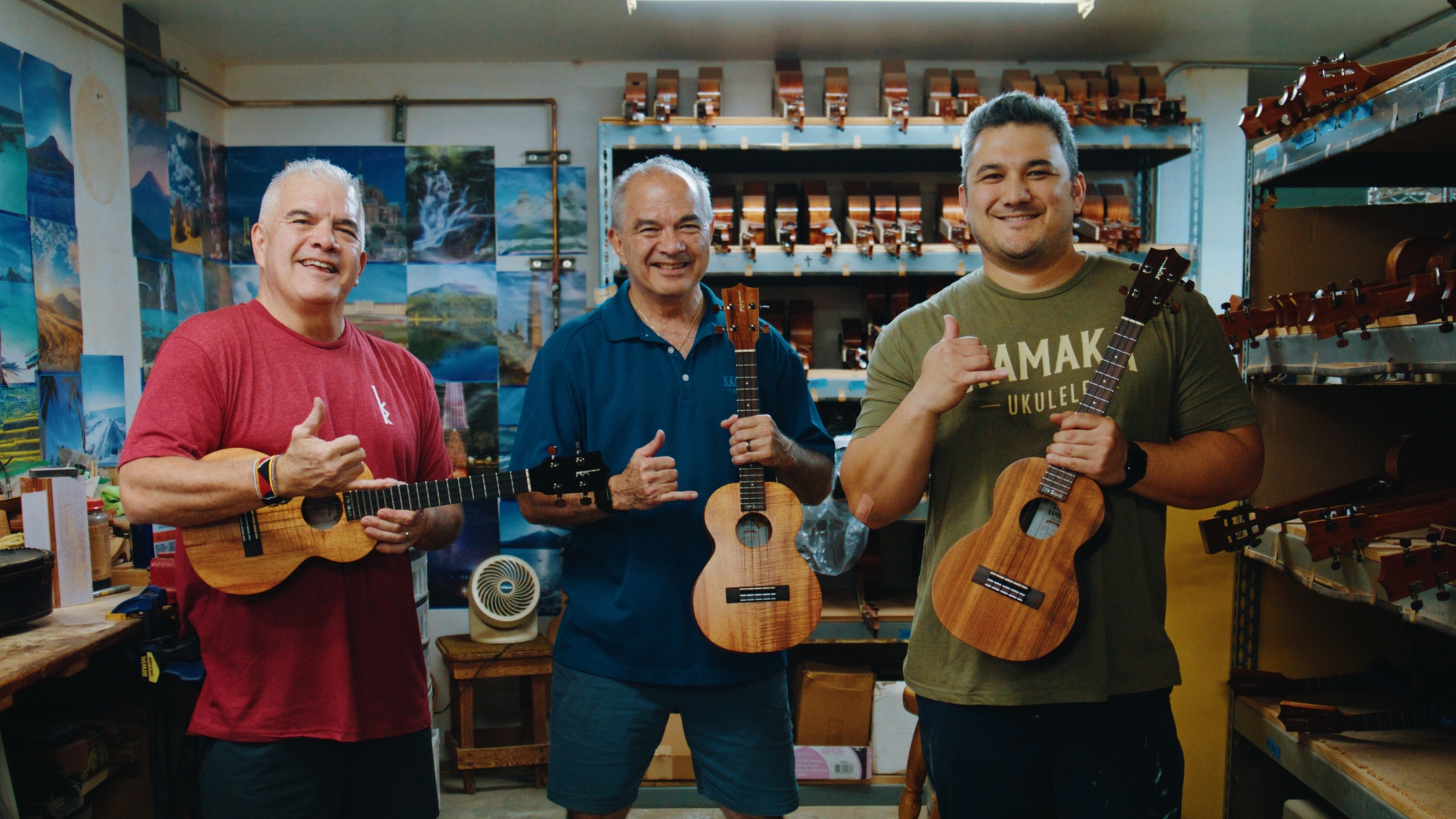
Beginning with Samuel Kamaka Sr., who started making instruments in his garage in 1916, four generations of the family have helped shape the sound and identity of the Hawaiian ukulele. Today, inside Kamaka Hawaii’s factory in Honolulu, on the island of Oahu, locally sourced koa wood is still bent, braced, sanded, finished and turned into instruments of heirloom quality.
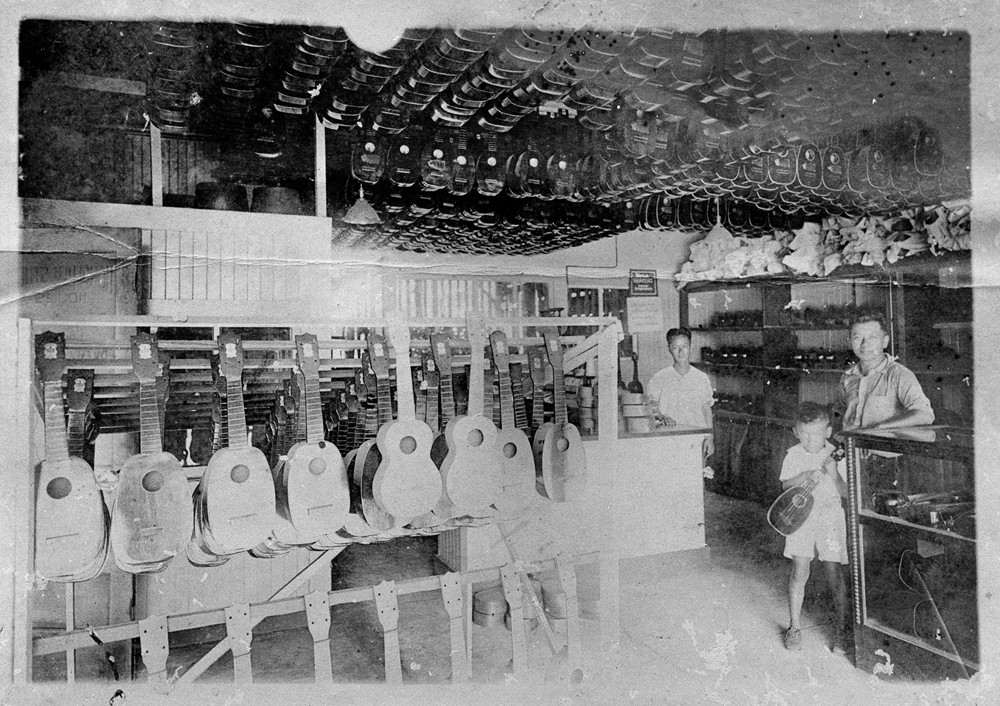
And despite all that has changed in 110 years, the Kamakas are still making them where the family business began in Honolulu.
“We will keep making the ukuleles here in Hawaii, in America,” said company president Chris Kamaka Sr. “I have been approached quite a bit from third-world companies and China companies that want to use our name to do a low-end ukulele, and I’ve always told them no, that is not what we want to do.”
Chris remembers coming around the shop as a child, sweeping floors and growing up with ukuleles throughout the house. He worked part time through high school and college before joining the business in 1972. His father, Samuel Jr., had taken over after Samuel Sr. died in 1953. Today Chris works alongside his brother Casey and other family members, while Chris’ son, Chris Jr., represents the fourth generation.
Kamaka Ukulele employs about 20 people, roughly 15 of whom are directly involved in making the instruments. The Kamaka Ukulele factory manufactures 150 to 200 ukes a month.
That Kamaka sound begins with wood.
Koa grows throughout the Hawaiian Islands, but the company primarily sources it from Hawaii Island, commonly called the Big Island, where Chris says the elevation produces particularly good wood. Casey typically travels there once or twice a year to select the company’s supply.
It arrives at the Oahu shop by barge, still green. Then Kamaka waits.
“It’s a slow process of air drying and curing,” Chris said. “We have to make sure we have enough as we move forward.”
Koa is coveted for furniture, flooring and other decorative uses, making exceptional pieces increasingly expensive. Some have relatively straight grain; others display the curls and waves that Kamaka reserves for higher-end ukuleles.
“Koa for us is not only a highly sought-after wood, it’s a beautiful wood,” Chris said. “It’s a good hardwood. Over the years it’s always been our go-to. It resonates well.”
Once sufficiently dried, the koa begins its transformation into a Kamaka.
The wood is cut into sets consisting of a top, back and sides. Each is numbered so the grain pattern remains consistent around the completed body. Craftsmen bend the sides and place them into molds, adding end blocks and mahogany kerfing, an interior lining that reinforces the body while providing additional gluing surface for the top and back. Those tops and backs are book matched so each side of the grain mirrors the other.
Bracing goes in. The body is glued together. Edges are trimmed and sides sanded. Mahogany becomes the neck, while most fingerboards are fashioned from rosewood, with ebony used on some higher-end models.
It is traditional instrument-making aided by decidedly modern machinery.
Kamaka operates three CNC machines. One carves necks, another cuts tops and backs, and a third makes fingerboards, bridges and braces. The machines provide precision and consistency, but they have not eliminated the hands that have defined Kamaka for generations.
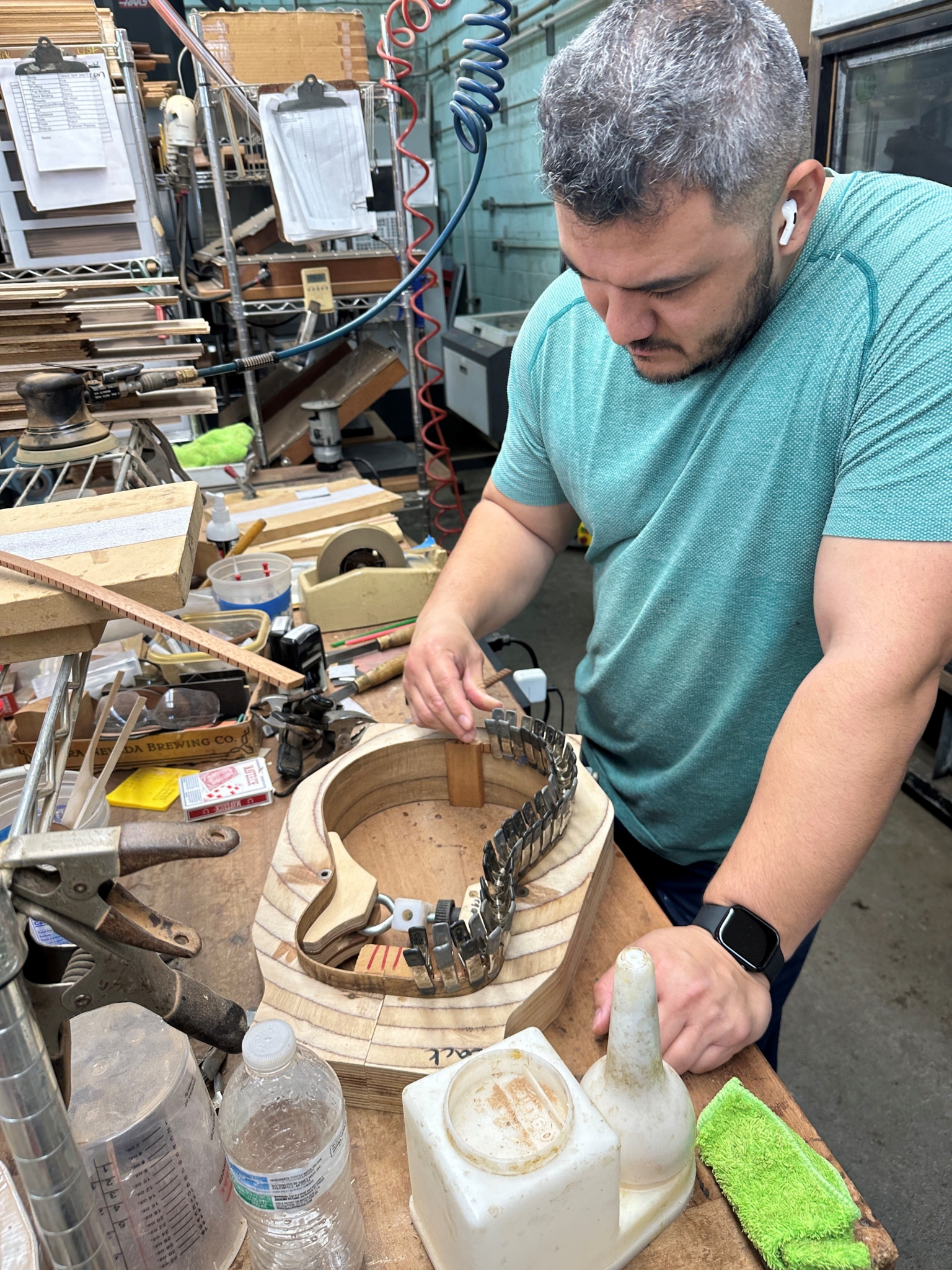
“It’s not like before when we just had a bandsaw and a drill press and a routing sander,” Chris said. “With the technology it’s a lot more consistent, but we still have a hands-on process, which to me is important for each instrument.”
Perhaps nowhere is that touch more important than on the top, the ukulele’s soundboard. Its thickness, bracing, sanding and finish all influence the vibrations that eventually become the Kamaka sound.
The company learned decades ago that craftsmen do not necessarily have to hear those vibrations to understand them.
Chris’ mother was an occupational therapist and asked Samuel Jr. to give hearing-impaired workers a chance in the factory. He taught them another way to evaluate an instrument.
“He tapped the top of the instrument and had them feel the vibration in their fingers as well as against their body,” Chris said.
Over a span of more than 50 years, Kamaka hired about a dozen hearing-impaired employees. Some worked there for decades. Their legacy remains part of the way Chris thinks about craftsmanship.
“I try and instill that in each of the guys and gals here, not only listening but also feeling the instrument,” he said.
After sanding, the neck and body are finished separately in clear lacquer through repeated stages of spraying and sanding. The neck is eventually both glued and bolted onto the body, making future repairs easier. The bridge and tuning heads are installed and strings go on.
Then every finished Kamaka gets one final inspection from Chris before leaving the factory.
The company makes four basic sizes: soprano, concert, tenor and baritone, along with variations that include five-, six- and eight-string instruments. The tenor is especially popular among professional players, while the larger baritone delivers a deeper, rounder tone.
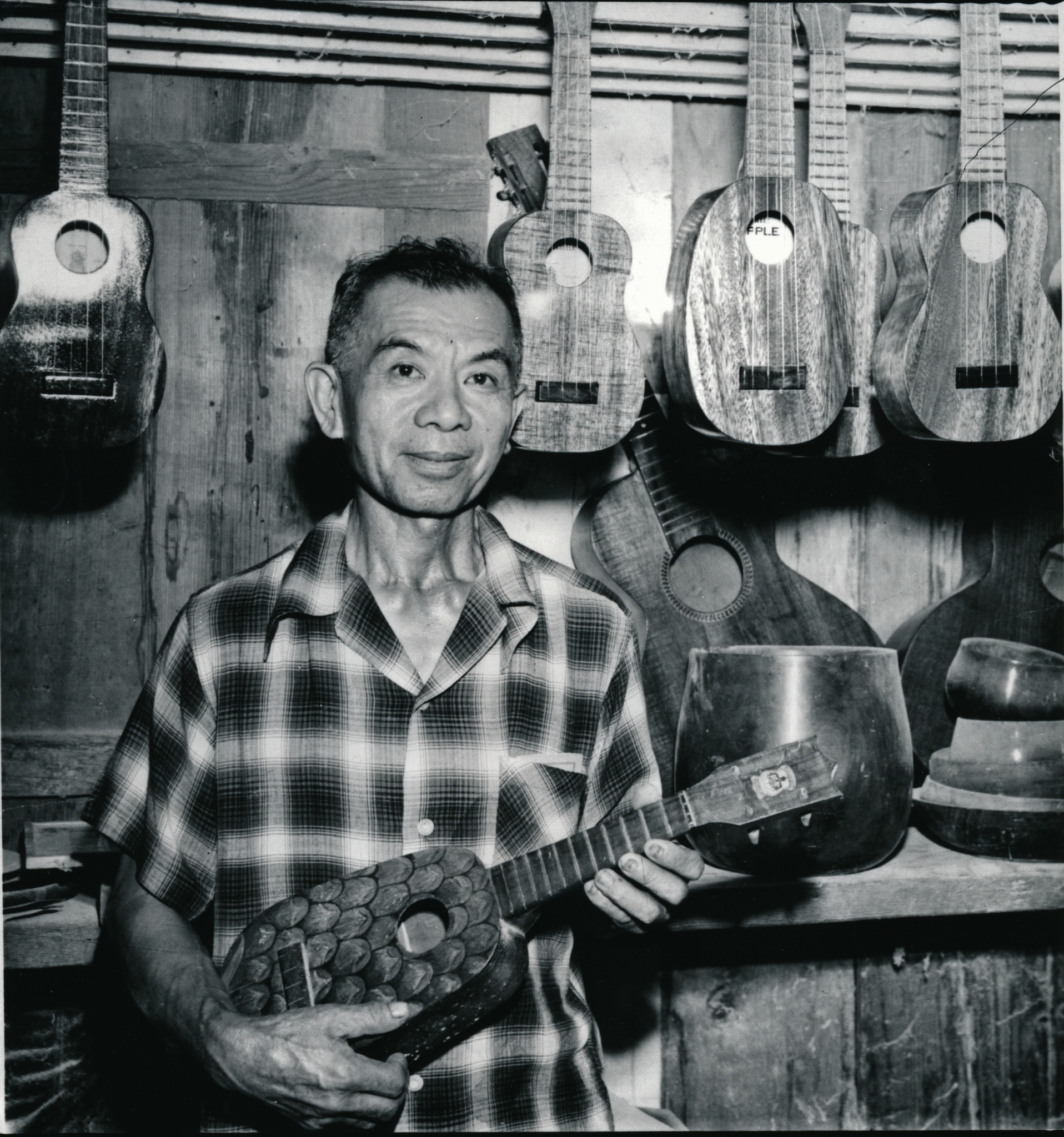
But one model belongs particularly to Kamaka history.
Samuel Sr. created the pineapple ukulele in the 1920s while experimenting with different shapes. Its oval body eliminated the narrow waist of the traditional figure-eight design and was easier to bend. Eventually, Samuel decided it looked like a pineapple. The name stuck.
Today, Kamaka’s koa ukuleles start at around $1,500. A lower-priced model developed partly for schools comes in just under $1,000, while the special Maile introduced for the company’s 110th anniversary can reach $10,000.
That puts Kamaka in an entirely different market from inexpensive, mass-produced imported ukuleles. Chris is comfortable there.
For him, the difference is apparent when visitors tour the Honolulu factory. Some arrive uncertain about spending that much on a ukulele. Then they see the koa, the craftsmen and the number of hands involved in building one.
“It is something they want to invest in and eventually pass it on in their family,” Chris said. “They see how much work is put into it and how much we really care about what we do. It makes a difference.”
Japan has become Kamaka’s largest market. The mainland United States remains steady, particularly along the West Coast, and Kamaka ukuleles travel to dealers around the world.
The name has gone global. The manufacturing has not.
Now Chris can see another generation preparing to protect that distinction. His son’s interest in continuing the family business, he said, is “a big relief.”
“We’ve been around awhile,” Chris said. “We’ve seen a lot. We’ve made our mistakes, but we’ve learned from them. We are fortunate to have a great crew here.”
And after 110 years, if the Kamaka family has its way, that name will continue to mean something extremely specific: an exquisite ukulele made in Hawaii, in America.
The Alliance for American Manufacturing does not receive a commission from purchases made through the above links, nor was the organization or author paid for favorable coverage.
Labeling Note: This story is intended to highlight companies that support American jobs and that make great products in the United States. We rely on the companies listed to provide accurate information regarding their domestic operations and their products. Each company featured is individually responsible for labeling and advertising their products according to applicable standards, such as the Federal Trade Commission’s “Made in USA” standard or California’s “Made in USA” labeling law. We do not review individual products for compliance or claim that because a company is listed in the guide that their products comply with specific labeling or advertising standards. Our focus is on supporting companies that create American jobs.
For more on the Federal Trade Commission’s standards for “Made in USA” claims and California’s “Made in USA” labeling law, please also read this guest post by Dustin Painter and Kristi Wolff of Kelly Drye & Warren, LLP.