Straddle Carrier Hybrid Deployment at HHLA and Konecranes Collaboration
HHLA and Konecranes cooperate to introduce hybrid straddle carriers for container handling at the Port of Hamburg. www.konecranes.com Hamburg container terminal operator HHLA and equipment supplier Konecranes are cooperating to integrate hybrid-drive straddle carriers into terminal operations, aiming to reduce fuel use and emissions while maintaining throughput and operational performance. The eight new hybrid Konecranes Noell NSC 644 EHY machines will support quay-to-yard transport, stacking, and landside truck and rail handling in port terminal environments. Context of the Cooperation Konecranes Oyj is a global manufacturer of material handling and lifting equipment, serving ports, terminals, and industrial sectors with cranes and straddle carriers. HHLA Container Terminal Tollerort GmbH operates container handling facilities at the Port of Hamburg, requiring high-capacity machines for intermodal operations. The cooperation addresses the operational challenge of reducing fuel consumption and CO₂ emissions from container transport and stacking equipment in an industry where throughput and reliability are critical. Terminal workflows at HHLA involve continuous movement of containers between ship berths, storage areas, and landside transport modes. Replacing older diesel-driven straddle carriers with hybrid units addresses both environmental regulatory pressures and terminal efficiency without disrupting established operational patterns. Technical Solution and Responsibilities The technical solution centres on the hybrid-drive version of the Konecranes Noell NSC 644 EHY Straddle Carrier, a machine tailored for container terminals that integrates a diesel generator set with an onboard high-capacity battery system. This configuration allows the battery to buffer energy during low-demand phases and supply peak power demands, reducing net diesel fuel use and tailpipe emissions relative to conventional diesel drives. The hybrid system operates without dedicated charging infrastructure, as the diesel genset autonomously manages battery state of charge and regenerative energy capture from motion and hoist loads. Konecranes is responsible for engineering, manufacturing, and delivering the NRSC 644 EHY units and ensuring modular drive architecture that can be upgraded to fully electric or hydrogen powertrains in the future—providing flexibility for evolving terminal energy strategies. HHLA’s role is to deploy and integrate the equipment into existing terminal processes, including fleet rotation and operator training where necessary. Deployment and Implementation The order, booked in the fourth quarter of 2025, schedules delivery and commissioning of the eight hybrid straddle carriers by the end of 2026 in Hamburg, Germany. Machines will enter service at HHLA’s Container Terminal Tollerort and replace older diesel-powered models. Integration with existing terminal infrastructure focuses on mechanical and control-system compatibility with current yard management and fleet utilization practices, without requiring significant changes to facility electrification or layout. The modular design of these carriers supports future retrofits to fully electric or hydrogen-fuelled drives, allowing the terminal to iteratively reduce fossil energy dependence as alternative power technologies mature. Applications and Operational Impact Target applications include horizontal container transport, storage stacking operations, and truck and rail handling—core activities in container terminal logistics. By combining internal combustion and battery buffering, hybrid straddle carriers aim to enhance fuel efficiency and reduce emissions per container moved while preserving lifting and travel performance. Operators benefit from a flexible platform that can adapt to decarbonisation pathways without wholesale fleet replacement. Expected Outcomes Although specific performance figures for this order were not disclosed, hybrid configurations are generally expected to lower fuel consumption and reduce CO₂ emissions relative to older diesel drives due to improved energy utilisation and regenerative effects inherent in hybrid power management. The cooperation thus contributes to HHLA’s environmental targets and Konecranes’ broader Ecolifting roadmap toward reduced tailpipe emissions in port operations. www.konecranes.com Powered by Induportals Media Publishing
 machineryasia
HHLA and Konecranes cooperate to introduce hybrid straddle carriers for container handling at the Port of Hamburg.
www.konecranes.com
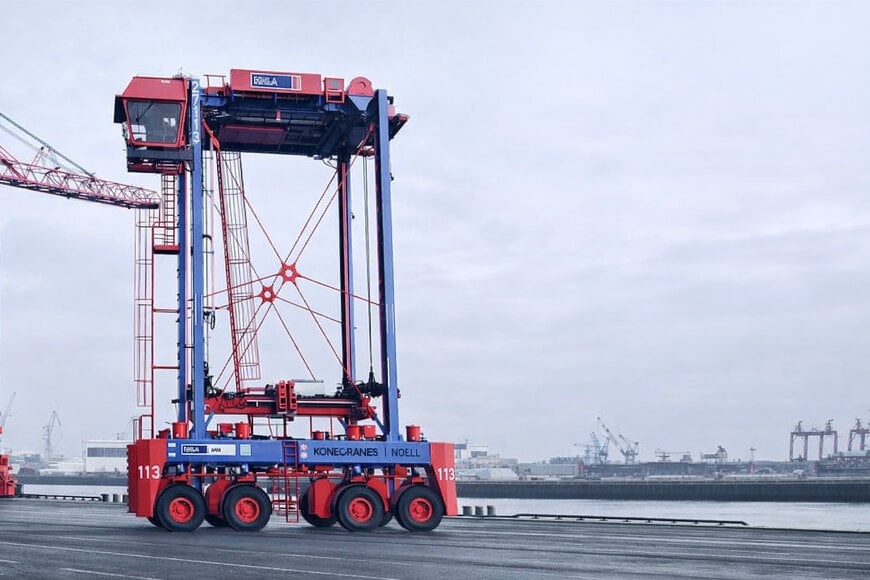
Hamburg container terminal operator HHLA and equipment supplier Konecranes are cooperating to integrate hybrid-drive straddle carriers into terminal operations, aiming to reduce fuel use and emissions while maintaining throughput and operational performance. The eight new hybrid Konecranes Noell NSC 644 EHY machines will support quay-to-yard transport, stacking, and landside truck and rail handling in port terminal environments.
Context of the Cooperation
Konecranes Oyj is a global manufacturer of material handling and lifting equipment, serving ports, terminals, and industrial sectors with cranes and straddle carriers. HHLA Container Terminal Tollerort GmbH operates container handling facilities at the Port of Hamburg, requiring high-capacity machines for intermodal operations. The cooperation addresses the operational challenge of reducing fuel consumption and CO₂ emissions from container transport and stacking equipment in an industry where throughput and reliability are critical.
Terminal workflows at HHLA involve continuous movement of containers between ship berths, storage areas, and landside transport modes. Replacing older diesel-driven straddle carriers with hybrid units addresses both environmental regulatory pressures and terminal efficiency without disrupting established operational patterns.
Technical Solution and Responsibilities
The technical solution centres on the hybrid-drive version of the Konecranes Noell NSC 644 EHY Straddle Carrier, a machine tailored for container terminals that integrates a diesel generator set with an onboard high-capacity battery system. This configuration allows the battery to buffer energy during low-demand phases and supply peak power demands, reducing net diesel fuel use and tailpipe emissions relative to conventional diesel drives. The hybrid system operates without dedicated charging infrastructure, as the diesel genset autonomously manages battery state of charge and regenerative energy capture from motion and hoist loads.
Konecranes is responsible for engineering, manufacturing, and delivering the NRSC 644 EHY units and ensuring modular drive architecture that can be upgraded to fully electric or hydrogen powertrains in the future—providing flexibility for evolving terminal energy strategies. HHLA’s role is to deploy and integrate the equipment into existing terminal processes, including fleet rotation and operator training where necessary.
Deployment and Implementation
The order, booked in the fourth quarter of 2025, schedules delivery and commissioning of the eight hybrid straddle carriers by the end of 2026 in Hamburg, Germany. Machines will enter service at HHLA’s Container Terminal Tollerort and replace older diesel-powered models. Integration with existing terminal infrastructure focuses on mechanical and control-system compatibility with current yard management and fleet utilization practices, without requiring significant changes to facility electrification or layout.
The modular design of these carriers supports future retrofits to fully electric or hydrogen-fuelled drives, allowing the terminal to iteratively reduce fossil energy dependence as alternative power technologies mature.
Applications and Operational Impact
Target applications include horizontal container transport, storage stacking operations, and truck and rail handling—core activities in container terminal logistics. By combining internal combustion and battery buffering, hybrid straddle carriers aim to enhance fuel efficiency and reduce emissions per container moved while preserving lifting and travel performance. Operators benefit from a flexible platform that can adapt to decarbonisation pathways without wholesale fleet replacement.
Expected Outcomes
Although specific performance figures for this order were not disclosed, hybrid configurations are generally expected to lower fuel consumption and reduce CO₂ emissions relative to older diesel drives due to improved energy utilisation and regenerative effects inherent in hybrid power management. The cooperation thus contributes to HHLA’s environmental targets and Konecranes’ broader Ecolifting roadmap toward reduced tailpipe emissions in port operations.
www.konecranes.com
Powered by
Induportals Media Publishing