Sennebogen Introduces New Material Handler for Large Handysize Vessels
The new 280-ton 880 G material handler enhances port operations by combining high load capacities with an energy-saving hybrid system for efficient bulk handling. www.sennebogen.com Sennebogen has expanded its port equipment portfolio with the 880 G, a 280-ton material handler designed to optimize bulk and general cargo handling on Handysize vessels up to 35,000 deadweight tonnage. This heavy-duty machine bridges the operational gap between existing mid-range and large-scale port equipment to streamline maritime logistics. Operational Flexibility and Reach Across Vessel Classes The material handler features a versatile working range spanning 23 to 38 meters, allowing port operators to deploy a single machine class across varying vessel dimensions. Short boom configurations are engineered for localized inland waterway vessels and diverse general cargo handling. Conversely, extended equipment configurations provide the outreach necessary for high-performance bulk material operations on larger ships up to the Panamax class. Powertrain Options and Energy Recuperation Technology To comply with regional emission standards and operational preferences, the system is available with multiple powertrain configurations. Operators can select a 500 kW diesel engine compliant with Stage V emissions standards, a Stage III variant for specific regulatory zones, or a zero-emission 460 kW electric motor. The machine integrates a hydraulic energy recovery system that captures kinetic energy during the lowering of the boom and stores it for subsequent lifting cycles, reducing overall operating energy costs by up to 50 percent. Structural Variations and Heavy Port Cab Engineering The machinery adapts to varied port infrastructures through multiple undercarriage configurations, including mobile wheeled units, crawler tracks, four-point pedestal mounts, and custom rail-mounted systems. These bases can be combined with portal or pylon structures to elevate the machine body. For terminal operator safety and precision, the updated port cab features hydraulic height adjustment to provide an unobstructed line of sight into ship holds and cargo handling zones. Control Systems and Environmental Durability The control architecture centers on an electronic pilot control system featuring customized joystick assignments and configurable operating modes to adapt performance to specific material weights. Because marine environments accelerate corrosion, the electrical cabinets are constructed from stainless steel, and the primary hydraulic and electrical lines are routed through protected structural channels. Safe machine access is achieved via an integrated stairway designed with a 50-degree incline, eliminating intermediate access hatches. Enclosed Uppercarriage and Maintenance Mechanics The uppercarriage design isolates critical internal components from weather elements. Maintenance points are illuminated and sheltered within an enclosed housing. Routine servicing is consolidated into a centralized service box that contains the primary lubrication pumps, hydraulic filtration systems, and main control units. The main valve block is recessed within the chassis for physical protection. Centralized maintenance hatches utilize an independent hydraulic opening mechanism that functions without external electrical power, and an integrated 300-kg capacity service crane facilitates internal component replacement. Additional Context: Technical Specifications and Competitive Benchmarking In the 250 to 300-ton operating weight class for port material handlers, the machine competes directly with heavy-duty units such as the Liebherr LH 150 Port and the Mantsinen 200. While the competitor models often rely on standard hydraulic accumulators for energy savings, the specialized hybrid recuperation system used here scales energy recovery across a wider 38-meter outreach. The 280-ton service weight provides a distinct structural stability advantage over lighter 150-ton class handlers when discharging heavy bulk materials from the center line of a 35,000 deadweight tonnage vessel. Edited by Evgeny Churilov, Induportals Media - Adapted by AI. www.sennebogen.com Powered by Induportals Media Publishing
 machineryasia
The new 280-ton 880 G material handler enhances port operations by combining high load capacities with an energy-saving hybrid system for efficient bulk handling.
www.sennebogen.com
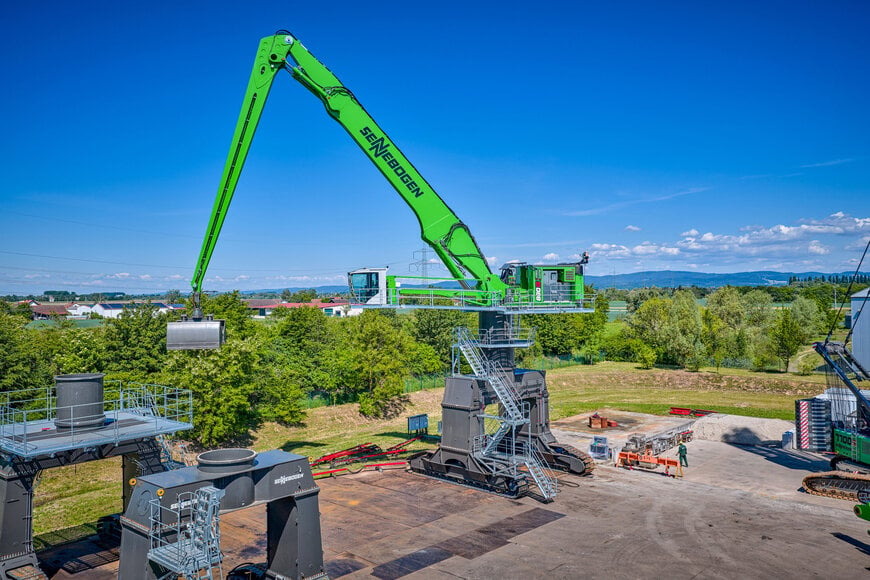
Sennebogen has expanded its port equipment portfolio with the 880 G, a 280-ton material handler designed to optimize bulk and general cargo handling on Handysize vessels up to 35,000 deadweight tonnage. This heavy-duty machine bridges the operational gap between existing mid-range and large-scale port equipment to streamline maritime logistics.
Operational Flexibility and Reach Across Vessel Classes
The material handler features a versatile working range spanning 23 to 38 meters, allowing port operators to deploy a single machine class across varying vessel dimensions. Short boom configurations are engineered for localized inland waterway vessels and diverse general cargo handling. Conversely, extended equipment configurations provide the outreach necessary for high-performance bulk material operations on larger ships up to the Panamax class.
Powertrain Options and Energy Recuperation Technology
To comply with regional emission standards and operational preferences, the system is available with multiple powertrain configurations. Operators can select a 500 kW diesel engine compliant with Stage V emissions standards, a Stage III variant for specific regulatory zones, or a zero-emission 460 kW electric motor. The machine integrates a hydraulic energy recovery system that captures kinetic energy during the lowering of the boom and stores it for subsequent lifting cycles, reducing overall operating energy costs by up to 50 percent.
Structural Variations and Heavy Port Cab Engineering
The machinery adapts to varied port infrastructures through multiple undercarriage configurations, including mobile wheeled units, crawler tracks, four-point pedestal mounts, and custom rail-mounted systems. These bases can be combined with portal or pylon structures to elevate the machine body. For terminal operator safety and precision, the updated port cab features hydraulic height adjustment to provide an unobstructed line of sight into ship holds and cargo handling zones.
Control Systems and Environmental Durability
The control architecture centers on an electronic pilot control system featuring customized joystick assignments and configurable operating modes to adapt performance to specific material weights. Because marine environments accelerate corrosion, the electrical cabinets are constructed from stainless steel, and the primary hydraulic and electrical lines are routed through protected structural channels. Safe machine access is achieved via an integrated stairway designed with a 50-degree incline, eliminating intermediate access hatches.
Enclosed Uppercarriage and Maintenance Mechanics
The uppercarriage design isolates critical internal components from weather elements. Maintenance points are illuminated and sheltered within an enclosed housing. Routine servicing is consolidated into a centralized service box that contains the primary lubrication pumps, hydraulic filtration systems, and main control units. The main valve block is recessed within the chassis for physical protection. Centralized maintenance hatches utilize an independent hydraulic opening mechanism that functions without external electrical power, and an integrated 300-kg capacity service crane facilitates internal component replacement.
Additional Context: Technical Specifications and Competitive Benchmarking
In the 250 to 300-ton operating weight class for port material handlers, the machine competes directly with heavy-duty units such as the Liebherr LH 150 Port and the Mantsinen 200. While the competitor models often rely on standard hydraulic accumulators for energy savings, the specialized hybrid recuperation system used here scales energy recovery across a wider 38-meter outreach. The 280-ton service weight provides a distinct structural stability advantage over lighter 150-ton class handlers when discharging heavy bulk materials from the center line of a 35,000 deadweight tonnage vessel.
Edited by Evgeny Churilov, Induportals Media - Adapted by AI.
www.sennebogen.com
Powered by
Induportals Media Publishing