Potain self-erecting crane reaches new heights on Norway mountaintop project
A Potain HDM 40 self-erecting tower crane was pulled to the top of Fløya mountain in Norway using an innovative ski system to build a new landmark restaurant on the mountain. www.manitowoc.com Contractor Hent deployed a Potain HDM 40 self-erecting crane on Fløya mountain in northern Norway to build a three-story restaurant at the summit station of the Fjellheisen cable car. Located 421 meters above sea level overlooking Tromsø, the remote and exposed site required specialized logistics and lifting equipment. Logistics and Site Transport Norwegian Potain dealer Kranor specified the Potain HDM 40 self-erecting crane for the project. To navigate the mountain terrain, the crane was fitted with custom-built twin-tip skis on its chassis and towed up Fløya mountain using two snow groomers. Andreas Jensen, regional manager at Kranor, stated that transporting the crane via skis and snow groomers represented a unique logistics achievement. Once positioned on site, the crane was secured to a concrete foundation to maintain stability against high wind loads. Construction Timeline and Site Applications The project encompasses constructing a facility three times the size of the previous structure, featuring an outdoor skywalk facing local fjords and Arctic landscape. Construction began last year, with completion scheduled for 2027. The Potain HDM 40 weighs 14 tonnes, provides a maximum lifting capacity of 4 tonnes, and lifts up to 1 tonne at its 35-meter maximum jib radius. On site, the crane handles timber structural sections and precast concrete slabs, which are delivered to the mountain location via helicopter. Equipment Fleet Operating History First manufactured in 2005, the HDM 40 remains in active operation across global fleets. Kranor operates a fleet of over 150 Potain self-erecting and top-slewing cranes from its base in Tromsø, including units with operational service lives exceeding 20 years. Additional Context This section details technical specifications not included in the original news release. Self-erecting hydraulic folding cranes utilize integrated hydraulic rams and wire rope rigging systems to unfold structural mast and jib assemblies directly from a towed transport chassis. Unlike top-slewing tower cranes that require external mobile cranes for assembly, self-erecting cranes feature automated hydraulic folding mechanisms that erect the vertical mast and unfold the horizontal articulated jib without heavy external lifting equipment. Operating tower cranes in exposed, high-altitude alpine environments introduces structural dynamic challenges related to extreme wind loading and ice accumulation. Crane stability designs for mountain installations incorporate ground-anchored concrete pad foundations or ballast tie-downs engineered to withstand high overturning moments caused by wind drag forces acting on the jib and mast lattice structures. High-altitude operations also require derating material handling schedules to account for rotorcraft delivery dynamics and rotor wash during precision aerial slinging of structural timber and concrete components. Edited by Romila DSilva, Induportals Editor, with AI assistance. www.manitowoc.com Powered by Induportals Media Publishing
 machineryasia
A Potain HDM 40 self-erecting tower crane was pulled to the top of Fløya mountain in Norway using an innovative ski system to build a new landmark restaurant on the mountain.
www.manitowoc.com
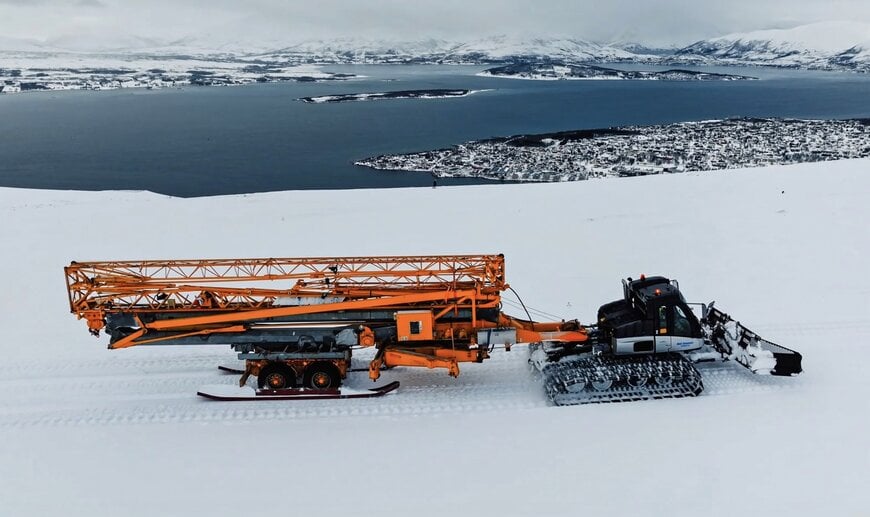
Contractor Hent deployed a Potain HDM 40 self-erecting crane on Fløya mountain in northern Norway to build a three-story restaurant at the summit station of the Fjellheisen cable car. Located 421 meters above sea level overlooking Tromsø, the remote and exposed site required specialized logistics and lifting equipment.
Logistics and Site Transport
Norwegian Potain dealer Kranor specified the Potain HDM 40 self-erecting crane for the project. To navigate the mountain terrain, the crane was fitted with custom-built twin-tip skis on its chassis and towed up Fløya mountain using two snow groomers.
Andreas Jensen, regional manager at Kranor, stated that transporting the crane via skis and snow groomers represented a unique logistics achievement. Once positioned on site, the crane was secured to a concrete foundation to maintain stability against high wind loads.
Construction Timeline and Site Applications
The project encompasses constructing a facility three times the size of the previous structure, featuring an outdoor skywalk facing local fjords and Arctic landscape. Construction began last year, with completion scheduled for 2027.
The Potain HDM 40 weighs 14 tonnes, provides a maximum lifting capacity of 4 tonnes, and lifts up to 1 tonne at its 35-meter maximum jib radius. On site, the crane handles timber structural sections and precast concrete slabs, which are delivered to the mountain location via helicopter.
Equipment Fleet Operating History
First manufactured in 2005, the HDM 40 remains in active operation across global fleets. Kranor operates a fleet of over 150 Potain self-erecting and top-slewing cranes from its base in Tromsø, including units with operational service lives exceeding 20 years.
Additional Context
This section details technical specifications not included in the original news release.
Self-erecting hydraulic folding cranes utilize integrated hydraulic rams and wire rope rigging systems to unfold structural mast and jib assemblies directly from a towed transport chassis. Unlike top-slewing tower cranes that require external mobile cranes for assembly, self-erecting cranes feature automated hydraulic folding mechanisms that erect the vertical mast and unfold the horizontal articulated jib without heavy external lifting equipment.
Operating tower cranes in exposed, high-altitude alpine environments introduces structural dynamic challenges related to extreme wind loading and ice accumulation. Crane stability designs for mountain installations incorporate ground-anchored concrete pad foundations or ballast tie-downs engineered to withstand high overturning moments caused by wind drag forces acting on the jib and mast lattice structures. High-altitude operations also require derating material handling schedules to account for rotorcraft delivery dynamics and rotor wash during precision aerial slinging of structural timber and concrete components.
Edited by Romila DSilva, Induportals Editor, with AI assistance.
www.manitowoc.com
Powered by
Induportals Media Publishing