Parker Expands Electric Vehicle Motor Platform Integration
Second-generation motor series supports vehicle electrification with improved installation flexibility, safety features, and durability across diverse mobile and off-highway applications. www.parker.com Electrification across mobile equipment sectors is increasing demand for compact, high-performance drivetrain components that can be integrated efficiently into diverse vehicle architectures. In this context, Parker Hannifin has introduced the second-generation GVM210 electric motor series, designed to support on- and off-highway vehicle electrification with updates in integration, safety, and durability. Supporting electrification across vehicle platforms The GVM210 Gen 2 series is developed for a wide range of applications, including material handling, construction, mining, agriculture, utility vehicles, and other specialized platforms. These use cases often involve varying duty cycles, environmental conditions, and system architectures, requiring motors that can adapt to different integration and control requirements. The updated platform builds on the existing GVM210 design, focusing on simplifying the transition from prototype development to series production. This reflects broader trends in the electric vehicle supply chain, where OEMs require scalable and standardized components that can be deployed across multiple vehicle categories. Installation and integration adjustments The second-generation design introduces connector options intended to improve installation flexibility. The motor supports pigtail connectors in 12-pin and 16-pin configurations, allowing alignment with different inverter and control system architectures. The 16-pin configuration enables integration of two PT1000 temperature sensors operating in a separate mode. This supports continuous thermal monitoring and protection, including during low-speed, high-torque operation where thermal stress can increase. These features allow OEMs to tailor motor feedback and protection strategies to specific duty cycles while reducing integration complexity. Safety mechanisms for high-voltage systems The GVM210 Gen 2 incorporates support for high-voltage interlock loop (HVIL) functionality through its power connector configuration. This mechanism ensures that electrical power is automatically disconnected if either the high-voltage or low-voltage connector is disengaged. Such interlock systems are increasingly required in electrified vehicle architectures to meet safety expectations, particularly in environments where maintenance access or connector handling may occur under operational conditions. Durability in electro-hydraulic applications For electro-hydraulic pump (EHP) systems operating in harsh environments, the motor includes design updates aimed at improving sealing and resistance to contamination. An optional O-ring integrated at the motor flange enhances sealing performance between the motor and pump interface. This configuration helps prevent leakage and reduces the risk of grease contamination from dust or debris, which is particularly relevant in construction, mining, and agricultural equipment exposed to particulate-heavy environments. These improvements support consistent operation and reduce maintenance requirements in demanding duty cycles. Implications for system integration The GVM210 Gen 2 series reflects a design approach focused on simplifying motor integration while maintaining compatibility with a range of control strategies and vehicle configurations. Enhancements in connector design, thermal monitoring, and safety interlocks contribute to reduced engineering effort and improved system reliability. By addressing installation, safety, and durability within a single platform, the motor series supports OEMs seeking to standardize components across electrified vehicle programs while maintaining performance across varied operating conditions. Edited by Aishwarya Mambet, Induportals Editor, with AI assistance. www.parker.com Powered by Induportals Media Publishing
 machineryasia
Second-generation motor series supports vehicle electrification with improved installation flexibility, safety features, and durability across diverse mobile and off-highway applications.
www.parker.com
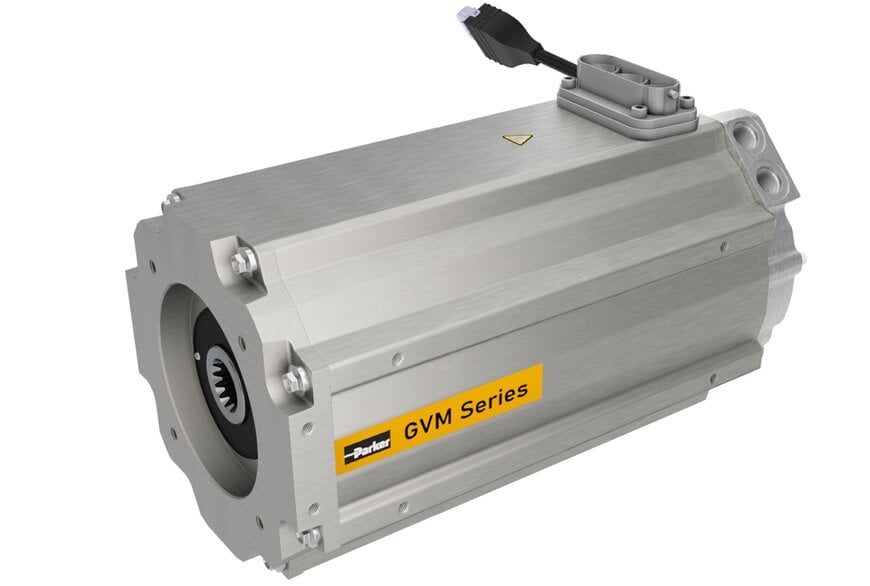
Electrification across mobile equipment sectors is increasing demand for compact, high-performance drivetrain components that can be integrated efficiently into diverse vehicle architectures. In this context, Parker Hannifin has introduced the second-generation GVM210 electric motor series, designed to support on- and off-highway vehicle electrification with updates in integration, safety, and durability.
Supporting electrification across vehicle platforms
The GVM210 Gen 2 series is developed for a wide range of applications, including material handling, construction, mining, agriculture, utility vehicles, and other specialized platforms. These use cases often involve varying duty cycles, environmental conditions, and system architectures, requiring motors that can adapt to different integration and control requirements.
The updated platform builds on the existing GVM210 design, focusing on simplifying the transition from prototype development to series production. This reflects broader trends in the electric vehicle supply chain, where OEMs require scalable and standardized components that can be deployed across multiple vehicle categories.
Installation and integration adjustments
The second-generation design introduces connector options intended to improve installation flexibility. The motor supports pigtail connectors in 12-pin and 16-pin configurations, allowing alignment with different inverter and control system architectures.
The 16-pin configuration enables integration of two PT1000 temperature sensors operating in a separate mode. This supports continuous thermal monitoring and protection, including during low-speed, high-torque operation where thermal stress can increase. These features allow OEMs to tailor motor feedback and protection strategies to specific duty cycles while reducing integration complexity.
Safety mechanisms for high-voltage systems
The GVM210 Gen 2 incorporates support for high-voltage interlock loop (HVIL) functionality through its power connector configuration. This mechanism ensures that electrical power is automatically disconnected if either the high-voltage or low-voltage connector is disengaged.
Such interlock systems are increasingly required in electrified vehicle architectures to meet safety expectations, particularly in environments where maintenance access or connector handling may occur under operational conditions.
Durability in electro-hydraulic applications
For electro-hydraulic pump (EHP) systems operating in harsh environments, the motor includes design updates aimed at improving sealing and resistance to contamination. An optional O-ring integrated at the motor flange enhances sealing performance between the motor and pump interface.
This configuration helps prevent leakage and reduces the risk of grease contamination from dust or debris, which is particularly relevant in construction, mining, and agricultural equipment exposed to particulate-heavy environments. These improvements support consistent operation and reduce maintenance requirements in demanding duty cycles.
Implications for system integration
The GVM210 Gen 2 series reflects a design approach focused on simplifying motor integration while maintaining compatibility with a range of control strategies and vehicle configurations. Enhancements in connector design, thermal monitoring, and safety interlocks contribute to reduced engineering effort and improved system reliability.
By addressing installation, safety, and durability within a single platform, the motor series supports OEMs seeking to standardize components across electrified vehicle programs while maintaining performance across varied operating conditions.
Edited by Aishwarya Mambet, Induportals Editor, with AI assistance.
www.parker.com
Powered by
Induportals Media Publishing