Oresi Italia deploys Bobcat machinery for agrivoltaic construction
Compact loaders, telehandlers and excavators supported continuous solar plant installation while preserving agricultural land use. www.bobcat.com Oresi Italia operates in electrical systems installation and civil engineering, with a focus on large-scale renewable energy projects. As part of a major agrivoltaic development in Loreo, Rovigo province, the company supported construction activities at one of Italy’s largest agro-photovoltaic plants. The project required intensive earthworks, continuous material handling, and precise lifting operations, while maintaining agricultural usability across the site. The installation spans approximately 65 hectares and integrates renewable electricity generation with ongoing farming. Site conditions included clay-loam soil typical of the Po Delta, prolonged periods of rainfall, and the need to coordinate multiple installation teams over a wide area. Operational challenges and project objectives The construction process involved several technical constraints: high daily volumes of delivered photovoltaic components, extensive trenching for electrical infrastructure, and accurate placement of elevated support structures. Equipment had to operate reliably on soft and unstable ground, sustain high utilization rates, and avoid interruptions that could delay sequential installation phases. Oresi Italia’s objectives focused on maintaining construction throughput, reducing logistical bottlenecks, ensuring safe handling of heavy assemblies, and supporting long-duration site operations with minimal downtime. Selecting compact equipment for mixed construction tasks To address these requirements, Oresi Italia deployed a mixed fleet of Bobcat compact construction machines covering excavation, transport, material staging, and lifting operations. The fleet included compact track loaders, telehandlers, mini-excavators, and an articulated wheel loader, selected for their compact footprint, low ground pressure, and ability to operate efficiently on unstable terrain. Using Bobcat equipment across multiple construction phases allowed the same machines to be reassigned as site needs evolved, reducing idle time and simplifying fleet management over the duration of the project. Excavation for electrical connections Early project stages centered on trenching for low-voltage cable ducts connecting photovoltaic modules to inverters. Bobcat mini-excavators were used to excavate channels with controlled depth and alignment, limiting soil disturbance while ensuring protection for electrical cabling. These trenches enabled direct current generated by the panels to be routed to inverters for conversion to medium-voltage alternating current before transmission to the grid. Material handling across a large site As installation intensified, material handling became the dominant operation. Bobcat compact track loaders equipped with forks were used daily to unload trucks carrying photovoltaic panels, support poles, torque tubes, motors, gearboxes, fasteners, electrical cables, and structural components. After unloading, materials were transported to temporary storage zones, catalogued, and staged according to installation sequence. The same Bobcat loaders then redistributed components to assembly teams distributed across the site, aligning supply with installation progress and preventing work stoppages. This continuous internal transport activity maintained construction rhythm even during periods of adverse weather. Lifting and positioning elevated structures Once ground-level assembly of panel support structures was completed, Bobcat telehandlers were used to lift entire assemblies weighing more than one tonne to a height of approximately two metres. The structures were then positioned and secured onto pre-installed support poles. These lifting operations required stable handling and precise placement on uneven terrain. The telehandlers were also used to position pallets of photovoltaic modules close to their final installation points, reducing secondary handling and manual repositioning. Continuous operation under demanding conditions Bobcat machines operated almost continuously for more than a year, including through a wet winter that significantly increased soil saturation. Despite sustained exposure to mud and intensive duty cycles, equipment performance remained consistent across excavation, transport, and lifting tasks. From an operational perspective, this reliability reduced scheduling risk on a project where civil works, electrical installation, and structural assembly were tightly interdependent. On-site support and coordination Fleet deployment was supported through ongoing coordination with a local Bobcat dealer, including regular site visits, performance monitoring, and technical assistance. This support helped ensure that machine availability and configuration remained aligned with changing construction phases and site conditions. Outcome for agrivoltaic developm
 machineryasia
Compact loaders, telehandlers and excavators supported continuous solar plant installation while preserving agricultural land use.
www.bobcat.com
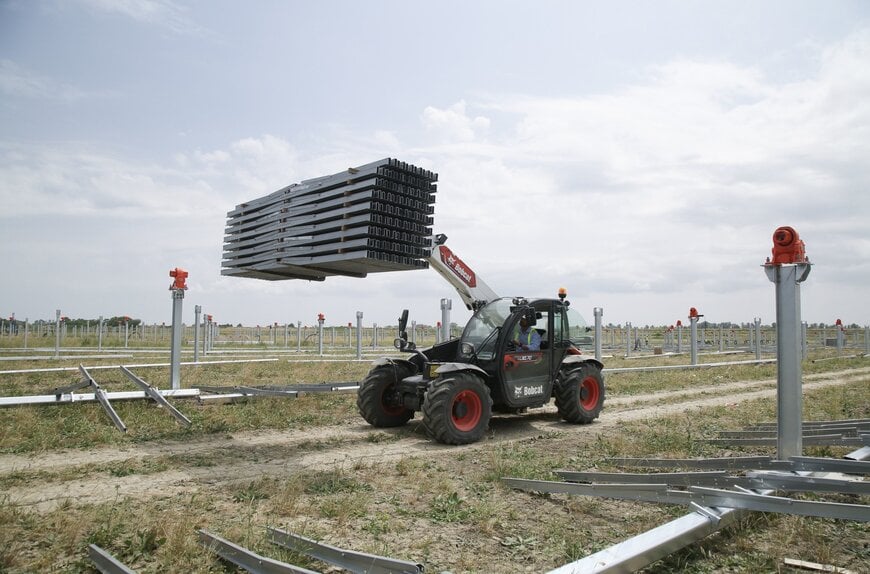
Oresi Italia operates in electrical systems installation and civil engineering, with a focus on large-scale renewable energy projects. As part of a major agrivoltaic development in Loreo, Rovigo province, the company supported construction activities at one of Italy’s largest agro-photovoltaic plants. The project required intensive earthworks, continuous material handling, and precise lifting operations, while maintaining agricultural usability across the site.
The installation spans approximately 65 hectares and integrates renewable electricity generation with ongoing farming. Site conditions included clay-loam soil typical of the Po Delta, prolonged periods of rainfall, and the need to coordinate multiple installation teams over a wide area.
Operational challenges and project objectives
The construction process involved several technical constraints: high daily volumes of delivered photovoltaic components, extensive trenching for electrical infrastructure, and accurate placement of elevated support structures. Equipment had to operate reliably on soft and unstable ground, sustain high utilization rates, and avoid interruptions that could delay sequential installation phases.
Oresi Italia’s objectives focused on maintaining construction throughput, reducing logistical bottlenecks, ensuring safe handling of heavy assemblies, and supporting long-duration site operations with minimal downtime.
Selecting compact equipment for mixed construction tasks
To address these requirements, Oresi Italia deployed a mixed fleet of Bobcat compact construction machines covering excavation, transport, material staging, and lifting operations. The fleet included compact track loaders, telehandlers, mini-excavators, and an articulated wheel loader, selected for their compact footprint, low ground pressure, and ability to operate efficiently on unstable terrain.
Using Bobcat equipment across multiple construction phases allowed the same machines to be reassigned as site needs evolved, reducing idle time and simplifying fleet management over the duration of the project.
Excavation for electrical connections
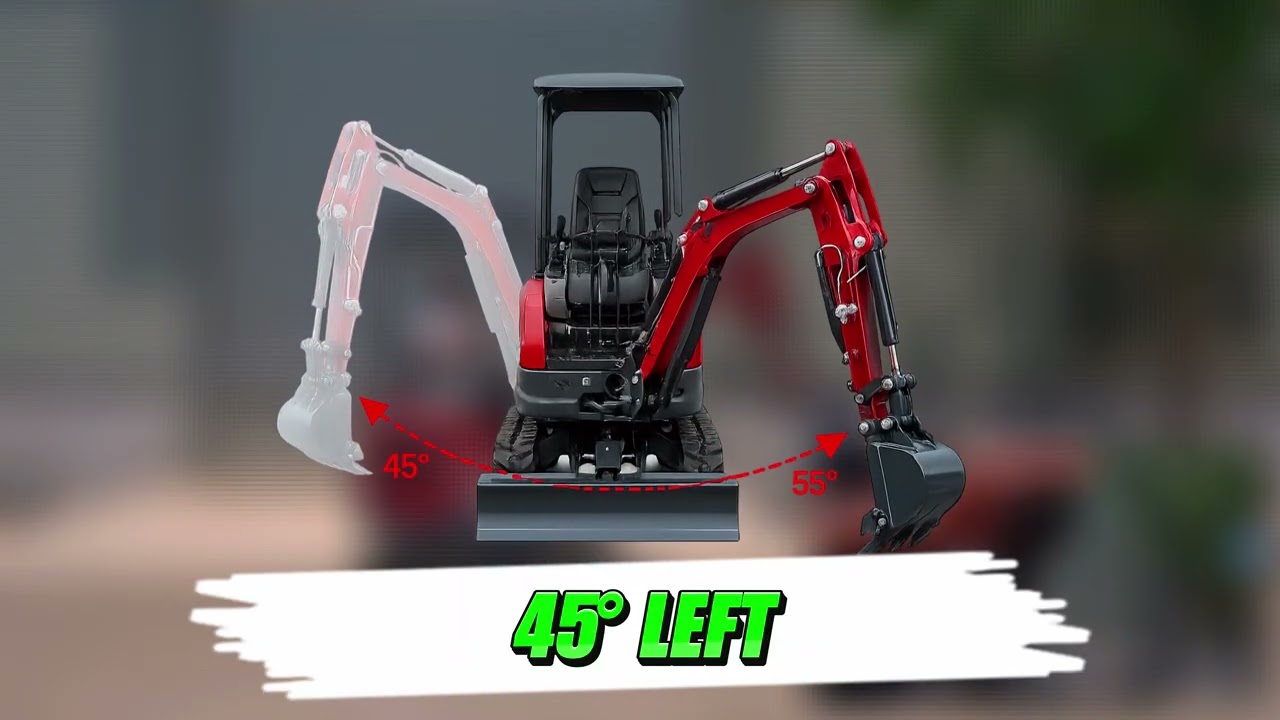
Early project stages centered on trenching for low-voltage cable ducts connecting photovoltaic modules to inverters. Bobcat mini-excavators were used to excavate channels with controlled depth and alignment, limiting soil disturbance while ensuring protection for electrical cabling.
These trenches enabled direct current generated by the panels to be routed to inverters for conversion to medium-voltage alternating current before transmission to the grid.
Material handling across a large site
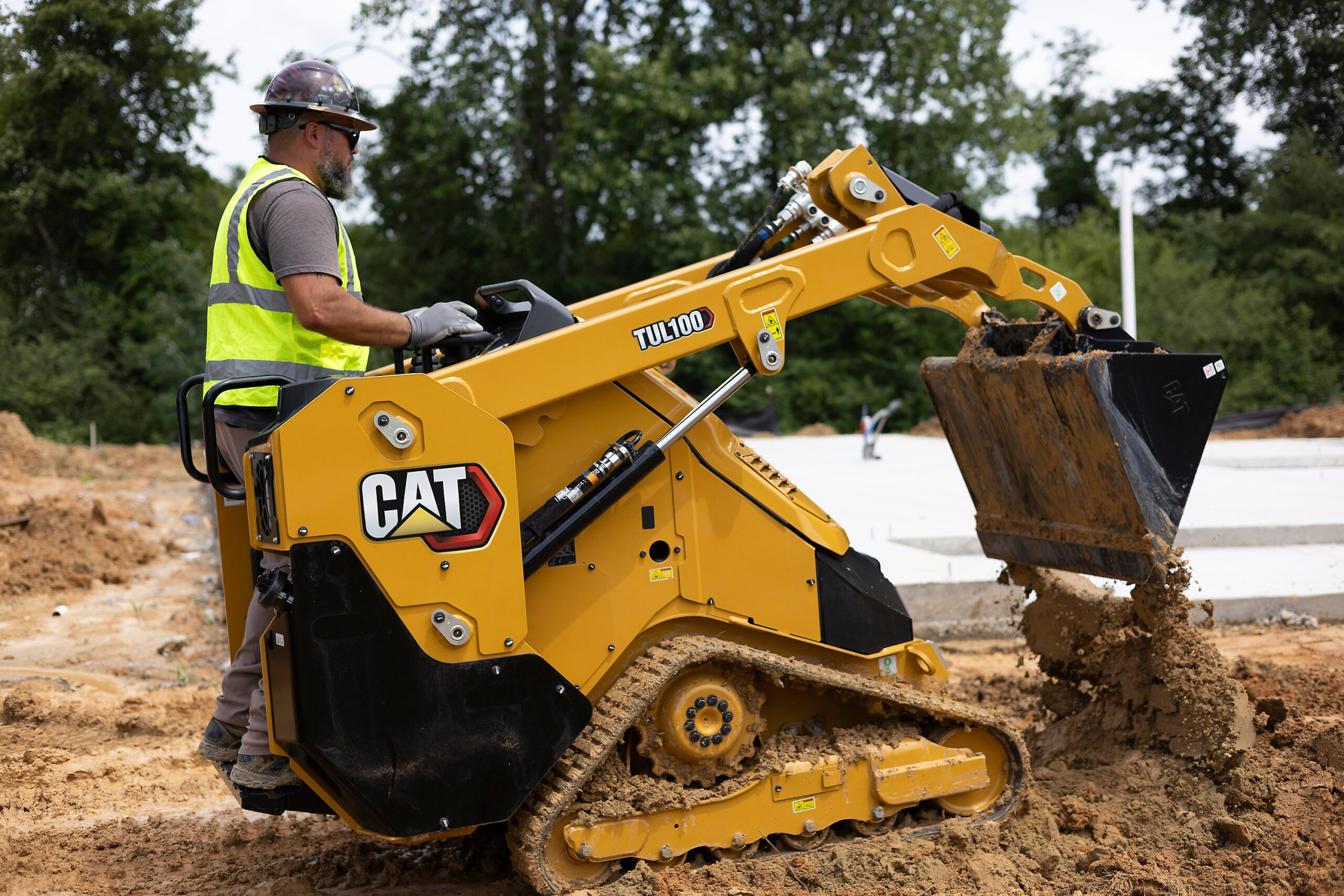
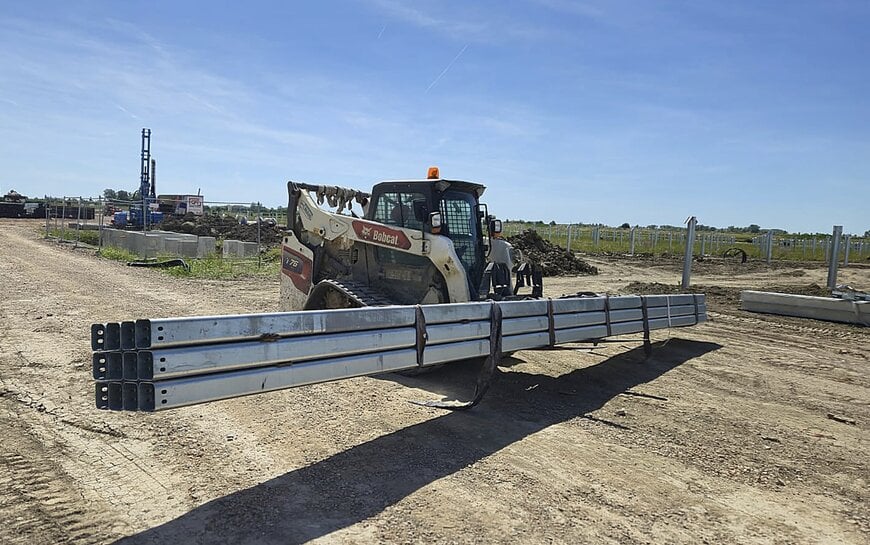
As installation intensified, material handling became the dominant operation. Bobcat compact track loaders equipped with forks were used daily to unload trucks carrying photovoltaic panels, support poles, torque tubes, motors, gearboxes, fasteners, electrical cables, and structural components.
After unloading, materials were transported to temporary storage zones, catalogued, and staged according to installation sequence. The same Bobcat loaders then redistributed components to assembly teams distributed across the site, aligning supply with installation progress and preventing work stoppages.
This continuous internal transport activity maintained construction rhythm even during periods of adverse weather.
Lifting and positioning elevated structures
Once ground-level assembly of panel support structures was completed, Bobcat telehandlers were used to lift entire assemblies weighing more than one tonne to a height of approximately two metres. The structures were then positioned and secured onto pre-installed support poles.
These lifting operations required stable handling and precise placement on uneven terrain. The telehandlers were also used to position pallets of photovoltaic modules close to their final installation points, reducing secondary handling and manual repositioning.
Continuous operation under demanding conditions
Bobcat machines operated almost continuously for more than a year, including through a wet winter that significantly increased soil saturation. Despite sustained exposure to mud and intensive duty cycles, equipment performance remained consistent across excavation, transport, and lifting tasks.
From an operational perspective, this reliability reduced scheduling risk on a project where civil works, electrical installation, and structural assembly were tightly interdependent.
On-site support and coordination
Fleet deployment was supported through ongoing coordination with a local Bobcat dealer, including regular site visits, performance monitoring, and technical assistance. This support helped ensure that machine availability and configuration remained aligned with changing construction phases and site conditions.
Outcome for agrivoltaic development
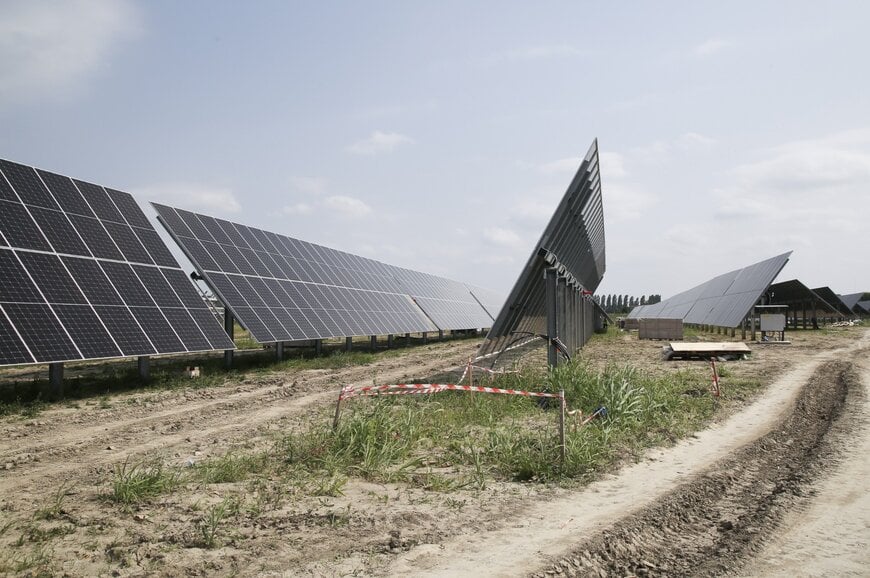
The use of Bobcat compact, multi-purpose construction machinery enabled Oresi Italia to manage a technically complex agrivoltaic installation across a large and environmentally sensitive site. The approach supported continuous material flow, precise installation of elevated photovoltaic structures, and stable operation under challenging soil and weather conditions.
By aligning equipment capabilities with each construction phase, the project progressed without major logistical disruption, contributing to the delivery of a 42 MWp agrivoltaic plant designed to generate an estimated 63 GWh of electricity annually while maintaining agricultural activity beneath the panels.
www.bobcat.com
Powered by
Induportals Media Publishing