Modular drive systems for crane and lifting technology
Böcker Kran- und Aufzugstechnik presents at DACH+HOLZ International a coordinated portfolio of electric, hybrid, and combustion drive systems for lifting and material-handling applications in construction. boecker.de As part of DACH+HOLZ International 2026, February 24 - 27, Böcker Kran- und Aufzugstechnik demonstrates how different drive concepts can be deployed within a unified system architecture to address varying operational conditions on construction sites. Context of the cooperation DACH+HOLZ International serves as a sector-specific platform where manufacturers and professional users from roofing, carpentry, and sheet-metal trades evaluate new technical solutions and assess their integration into existing workflows. Within this context, Böcker presents its drive technologies as part of a practical exchange between development, application, and operation. The systems on display address the need for flexible, low-emission, and high-performance lifting and transport solutions that can adapt to different site infrastructures and levels of energy availability. Technical solution and system approach Böcker follows a modular drive strategy that enables electric, hybrid, and conventional combustion systems within comparable machine platforms. Battery-electric cranes and lifts are designed for off-grid operation, combining dual battery capacity with electric winches to support full-day operation without external power supply. Hybrid configurations extend conventional petrol or diesel drives with additional electric modules. These plug-and-play concepts allow reduced-emission operating modes to be combined with the range and autonomy of traditional powertrains. Pure combustion solutions remain available for applications with high power demand or limited charging infrastructure and are optimized for fuel efficiency under continuous load. Deployment and demonstration The systems are presented both indoors and in the outdoor exhibition area to reflect real operating conditions. Exhibits include truck-mounted and trailer-mounted cranes with different drive configurations, as well as construction hoists for vertical material transport. A key focus is the comparability of performance parameters—such as lifting heights, outreach, rope speeds, and payloads—across drive types. This enables users to assess how drive selection affects productivity, noise levels, and energy consumption. Applications and use cases The drive systems are designed for use in building construction, refurbishment projects, and urban environments. Electric and hybrid solutions are particularly suited to noise-sensitive or emission-regulated sites, while combustion engines offer advantages for high-duty cycles and autonomous operation. From a technical perspective, the modular approach supports standardized maintenance and simplifies integration of the machines into diverse operational processes. Expected impact By combining multiple drive technologies within a consistent product architecture, Böcker enables requirement-based selection without fundamental changes to machine design or operating logic. This increases deployment flexibility, supports more efficient construction workflows, and provides a technical foundation for gradual adaptation to future energy and emissions requirements. www.boecker.com Powered by Induportals Media Publishing
 machineryasia
Böcker Kran- und Aufzugstechnik presents at DACH+HOLZ International a coordinated portfolio of electric, hybrid, and combustion drive systems for lifting and material-handling applications in construction.
boecker.de
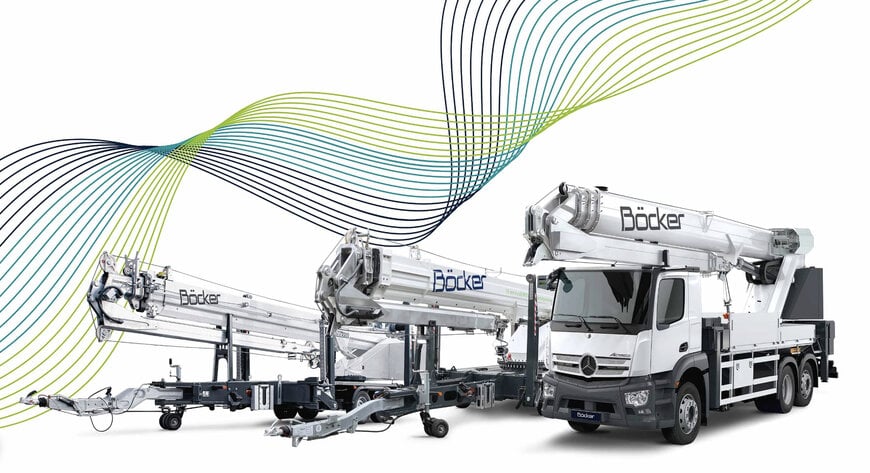
As part of DACH+HOLZ International 2026, February 24 - 27, Böcker Kran- und Aufzugstechnik demonstrates how different drive concepts can be deployed within a unified system architecture to address varying operational conditions on construction sites.
Context of the cooperation
DACH+HOLZ International serves as a sector-specific platform where manufacturers and professional users from roofing, carpentry, and sheet-metal trades evaluate new technical solutions and assess their integration into existing workflows. Within this context, Böcker presents its drive technologies as part of a practical exchange between development, application, and operation.
The systems on display address the need for flexible, low-emission, and high-performance lifting and transport solutions that can adapt to different site infrastructures and levels of energy availability.
Technical solution and system approach
Böcker follows a modular drive strategy that enables electric, hybrid, and conventional combustion systems within comparable machine platforms. Battery-electric cranes and lifts are designed for off-grid operation, combining dual battery capacity with electric winches to support full-day operation without external power supply.
Hybrid configurations extend conventional petrol or diesel drives with additional electric modules. These plug-and-play concepts allow reduced-emission operating modes to be combined with the range and autonomy of traditional powertrains. Pure combustion solutions remain available for applications with high power demand or limited charging infrastructure and are optimized for fuel efficiency under continuous load.
Deployment and demonstration
The systems are presented both indoors and in the outdoor exhibition area to reflect real operating conditions. Exhibits include truck-mounted and trailer-mounted cranes with different drive configurations, as well as construction hoists for vertical material transport.
A key focus is the comparability of performance parameters—such as lifting heights, outreach, rope speeds, and payloads—across drive types. This enables users to assess how drive selection affects productivity, noise levels, and energy consumption.
Applications and use cases
The drive systems are designed for use in building construction, refurbishment projects, and urban environments. Electric and hybrid solutions are particularly suited to noise-sensitive or emission-regulated sites, while combustion engines offer advantages for high-duty cycles and autonomous operation.
From a technical perspective, the modular approach supports standardized maintenance and simplifies integration of the machines into diverse operational processes.
Expected impact
By combining multiple drive technologies within a consistent product architecture, Böcker enables requirement-based selection without fundamental changes to machine design or operating logic. This increases deployment flexibility, supports more efficient construction workflows, and provides a technical foundation for gradual adaptation to future energy and emissions requirements.
www.boecker.com
Powered by
Induportals Media Publishing