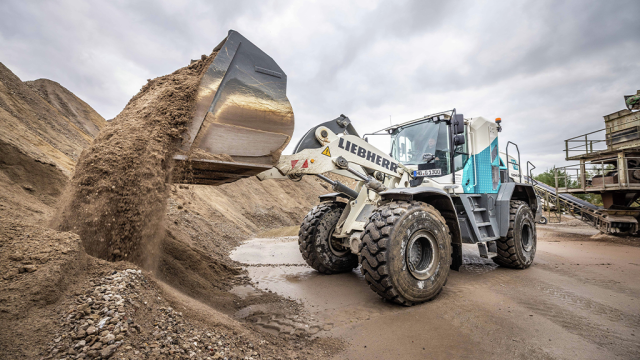
Liebherr L 566 H hydrogen wheel loader begins port trials
The prototype supports daily bulk material handling at Georg Grube GmbH within a regional green hydrogen ecosystem. www.liebherr.com Liebherr-Werk Bischofshofen GmbH has commenced real-world field trials of its hydrogen-powered L 566 H large wheel loader prototype at the bustling fishing port in Bremerhaven, Germany. Operating under harsh coastal conditions, the machine is currently supporting Georg Grube GmbH in the daily, high-capacity handling of bulk goods, including sand, gravel, and rock. This multi-year pilot project is a core component of the EU-funded ‘H2B:IMPACT’ initiative, which aims to validate hydrogen as an economically viable, low-emission alternative to conventional diesel powertrains in heavy-duty material handling. A closed-loop regional green hydrogen value chain The Bremerhaven deployment goes beyond machinery testing, serving as a proving ground for a fully integrated regional green hydrogen ecosystem. Wind turbines generate local electricity, which powers an electrolyzer operated by HY.City.Bremerhaven (an initiative by Green Fuels GmbH) to produce green hydrogen. This fuel is then transported to a dedicated refueling station commissioned at the Fraunhofer IWES Hydrogen Lab, where the wheel loader can be rapidly refueled after its demanding shifts. According to Günther Holzer, Technical Managing Director at Liebherr, the region provides the ideal infrastructure to test the heavy-duty machine without sacrificing the reliable performance required for tightly scheduled port logistics. By participating in this pilot, Georg Grube GmbH aims to actively shape the development of alternative drive systems, proving that hydrogen can deliver the same robust performance as traditional wheel loaders while eliminating local emissions. Additional Context: Energy density and the thermodynamics of heavy-duty hydrogen propulsion This section details the physical principles of hydrogen powertrains and heavy-equipment duty cycles not included in the original press release. In the heavy-duty construction equipment sector, particularly for large wheel loaders operating in continuous multi-shift port logistics, traditional battery-electric powertrains often face severe operational limitations. A wheel loader continuously performs highly dynamic, energy-intensive V-cycles (driving into a pile, lifting heavy bulk, reversing, and dumping). To sustain this grueling duty cycle for an entire 8-hour shift, a battery-electric loader would require a massive, excessively heavy lithium-ion battery pack, which drastically increases the machine's curb weight, compromises its payload capacity, and requires hours of charging downtime. Hydrogen offers a compelling solution due to its exceptionally high gravimetric energy density (120 MJ/kg, nearly three times that of diesel). Whether utilizing a modified Hydrogen Internal Combustion Engine (H2-ICE) that combusts hydrogen gas directly, or a Fuel Cell Electric Vehicle (FCEV) architecture, the machine can store vast amounts of energy in pressurized tanks (typically at 350 bar for heavy machinery). Crucially, the thermodynamic properties of pressurized gas transfer allow these high-capacity tanks to be completely refilled in roughly 10 to 15 minutes. This rapid refueling capability ensures that the wheel loader can maintain the continuous, high-availability utilization rates demanded by commercial port handling operations without the crippling downtime associated with megawatt-scale battery recharging. Edited by an industrial journalist, Lekshman Ramdas, with AI assistance. www.liebherr.com Powered by Induportals Media Publishing
 machineryasia
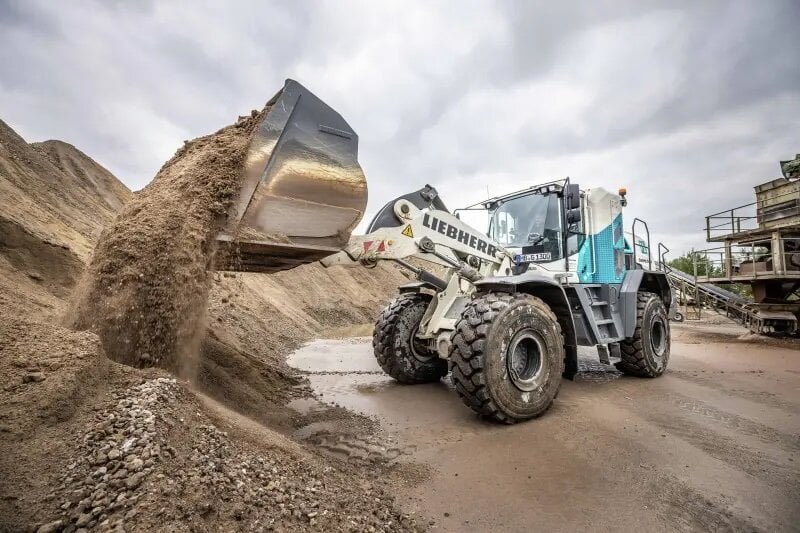
The prototype supports daily bulk material handling at Georg Grube GmbH within a regional green hydrogen ecosystem.
www.liebherr.com
Liebherr-Werk Bischofshofen GmbH has commenced real-world field trials of its hydrogen-powered L 566 H large wheel loader prototype at the bustling fishing port in Bremerhaven, Germany. Operating under harsh coastal conditions, the machine is currently supporting Georg Grube GmbH in the daily, high-capacity handling of bulk goods, including sand, gravel, and rock. This multi-year pilot project is a core component of the EU-funded ‘H2B:IMPACT’ initiative, which aims to validate hydrogen as an economically viable, low-emission alternative to conventional diesel powertrains in heavy-duty material handling.
A closed-loop regional green hydrogen value chain
The Bremerhaven deployment goes beyond machinery testing, serving as a proving ground for a fully integrated regional green hydrogen ecosystem. Wind turbines generate local electricity, which powers an electrolyzer operated by HY.City.Bremerhaven (an initiative by Green Fuels GmbH) to produce green hydrogen. This fuel is then transported to a dedicated refueling station commissioned at the Fraunhofer IWES Hydrogen Lab, where the wheel loader can be rapidly refueled after its demanding shifts.
According to Günther Holzer, Technical Managing Director at Liebherr, the region provides the ideal infrastructure to test the heavy-duty machine without sacrificing the reliable performance required for tightly scheduled port logistics. By participating in this pilot, Georg Grube GmbH aims to actively shape the development of alternative drive systems, proving that hydrogen can deliver the same robust performance as traditional wheel loaders while eliminating local emissions.
Additional Context: Energy density and the thermodynamics of heavy-duty hydrogen propulsion
This section details the physical principles of hydrogen powertrains and heavy-equipment duty cycles not included in the original press release.
In the heavy-duty construction equipment sector, particularly for large wheel loaders operating in continuous multi-shift port logistics, traditional battery-electric powertrains often face severe operational limitations. A wheel loader continuously performs highly dynamic, energy-intensive V-cycles (driving into a pile, lifting heavy bulk, reversing, and dumping). To sustain this grueling duty cycle for an entire 8-hour shift, a battery-electric loader would require a massive, excessively heavy lithium-ion battery pack, which drastically increases the machine's curb weight, compromises its payload capacity, and requires hours of charging downtime.
Hydrogen offers a compelling solution due to its exceptionally high gravimetric energy density (120 MJ/kg, nearly three times that of diesel). Whether utilizing a modified Hydrogen Internal Combustion Engine (H2-ICE) that combusts hydrogen gas directly, or a Fuel Cell Electric Vehicle (FCEV) architecture, the machine can store vast amounts of energy in pressurized tanks (typically at 350 bar for heavy machinery). Crucially, the thermodynamic properties of pressurized gas transfer allow these high-capacity tanks to be completely refilled in roughly 10 to 15 minutes. This rapid refueling capability ensures that the wheel loader can maintain the continuous, high-availability utilization rates demanded by commercial port handling operations without the crippling downtime associated with megawatt-scale battery recharging.
Edited by an industrial journalist, Lekshman Ramdas, with AI assistance.
www.liebherr.com
Powered by
Induportals Media Publishing