Kobelco Takes Control of CNH’s Construction Equipment Business in $1 Billion Deal, Reshaping the Global Market
CNH will sell a 70% stake in its construction equipment operations while retaining 30% in a new joint venture. The agreement brings CASE Construction Equipment, New Holland Construction and Eurocomach into a Kobelco-controlled structure, creating a broader international equipment business and allowing CNH to concentrate on agriculture. The global construction equipment industry is facing another […] Kobelco Takes Control of CNH’s Construction Equipment Business in $1 Billion Deal, Reshaping the Global Market published on The HeavyQuip Magazine.
 machineryasia
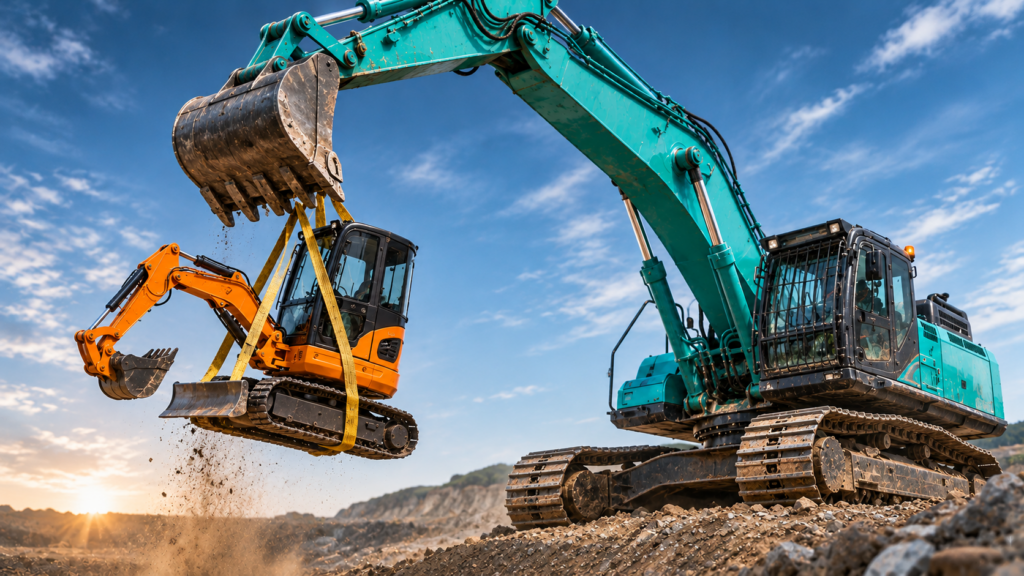
CNH will sell a 70% stake in its construction equipment operations while retaining 30% in a new joint venture. The agreement brings CASE Construction Equipment, New Holland Construction and Eurocomach into a Kobelco-controlled structure, creating a broader international equipment business and allowing CNH to concentrate on agriculture.
The global construction equipment industry is facing another significant realignment. On November 9, 2026, CNH announced an agreement to sell a 70% interest in its construction equipment operations to Japan’s Kobelco Construction Machinery, part of the Kobe Steel Group.
The transaction values the business at an enterprise value of approximately $1 billion, with CNH expecting to receive around $700 million in cash, subject to customary adjustments. The company will retain a 30% equity interest in the new joint venture.
For the industry, however, the deal is about considerably more than the transfer of a majority shareholding. It brings CASE Construction Equipment, New Holland Construction and Eurocomach into a Kobelco-controlled business, potentially changing the competitive landscape in earthmoving equipment, machinery distribution and aftermarket services.
It also brings two former industrial partners back together, although under very different ownership arrangements.
CNH’s decision to transfer majority control of its construction equipment business to Kobelco brings together two manufacturers with a complicated industrial history. Behind the $1 billion agreement lie years of fluctuating construction equipment performance, a partnership that began in 2002 and ended a decade later, and a broader strategic shift that will see CNH concentrate on agricultural machinery.
The transaction is expected to close by the end of 2027, subject to regulatory approvals and other customary conditions. Both shareholders will be subject to a three-year lock-up period.
CNH intends to use the net cash proceeds to reduce debt and strengthen its balance sheet. Humayun Chishti, currently President of CNH’s Construction segment, is expected to continue leading the joint venture as chief executive after completion.
For Kobelco, the agreement represents an opportunity to expand its geographical presence, industrial capabilities and product portfolio. For CNH, it represents another major step towards becoming a more focused agricultural equipment and precision technology group.
The Financial Pressures Behind CNH Construction’s Strategic Shift
Although the transaction is presented as a strategic partnership, CNH Construction’s recent financial performance provides important context.
The business has faced a difficult operating environment, including weakening equipment demand in several markets, inventory adjustments across dealer networks, lower shipment volumes and rising manufacturing costs.
CNH Chief Executive Officer Gerrit Marx described the choice of Kobelco as the result of a broader strategic review.
“We undertook a comprehensive process to evaluate how best to position our Construction Equipment business, and it was clear that Kobelco is the right long-term steward.”
According to CNH’s published annual results, construction equipment net sales declined from $3.932 billion in 2023 to $3.053 billion in 2024, a reduction of approximately 22%.
The decline continued in 2025, when sales fell to $2.956 billion. Over the same two-year period, adjusted operating profitability deteriorated considerably.
CNH Construction: Financial Performance, 2023–2025
| Financial indicator | 2023 | 2024 | 2025 |
|---|---|---|---|
| Net sales | $3.932bn | $3.053bn | $2.956bn |
| Adjusted EBIT | $238m | $169m | $68m |
| Adjusted EBIT margin | 6.1% | 5.5% | 2.3% |
The figures illustrate the scale of the challenge. Between 2023 and 2025, CNH Construction lost approximately one-quarter of its annual sales, while adjusted EBIT declined by more than 70%.
In 2024, CNH attributed the reduction in construction sales primarily to lower shipments across its markets, weaker industry demand and dealer destocking. North American construction sales declined from $2.253 billion in 2023 to $1.633 billion in 2024. Although global industry volumes improved in several equipment categories, CNH reported continued channel destocking and lower shipments in North America. Higher manufacturing costs, particularly those associated with tariffs, also affected profitability.
Indeed, the final quarter of 2025 demonstrated how fragile margins had become. Construction sales increased 19% year over year to $853 million, yet adjusted EBIT declined to just $5 million, equivalent to a margin of 0.6%.
These financial pressures do not establish that CNH was forced to sell the business. They do, however, help explain the strategic attraction of transferring majority ownership to a specialised construction equipment manufacturer with a complementary industrial base.
A Construction Business That Struggled to Match Its Global Ambitions
CNH Construction has long operated in a competitive market dominated by major international manufacturers, including Caterpillar, Komatsu, Volvo Construction Equipment, Hitachi Construction Machinery (now LANDCROSS) and several expanding Asian equipment groups.
Competing in this environment requires sustained investment in product engineering, manufacturing efficiency, distribution, dealer support and increasingly sophisticated digital technologies.
For a diversified company such as CNH, which has simultaneously pursued substantial investments in agricultural machinery, automation and precision farming, balancing those priorities presents a strategic challenge.
Construction machinery is also a cyclical, capital-intensive business. Manufacturers need to maintain production capacity and support extensive dealer networks even when contractors postpone equipment purchases or rental fleets slow their replacement programmes.
CNH’s recent results suggest that construction equipment was producing relatively modest operating returns compared with the resources and scale required to compete internationally. Nevertheless, the business retains substantial strengths, including established equipment brands, manufacturing expertise, specialised product ranges and access to important regional markets.
From Kobelco’s perspective, these assets may offer a stronger foundation for future expansion than developing equivalent capabilities and distribution channels from scratch.
A Complicated History: CNH and Kobelco Were Partners Before
One of the most interesting aspects of the 2026 agreement is that CNH and Kobelco have already experienced a long industrial partnership.
In March 2001, CNH Global, Kobe Steel and Kobelco Construction Machinery announced plans for a worldwide alliance in construction equipment. The agreement was finalised in January 2002, creating a broad industrial relationship involving excavator development, manufacturing, distribution and cross-shareholdings.
At that time, CNH was pursuing a stronger global position in hydraulic excavators, an equipment category in which Kobelco possessed significant technical expertise. The arrangement also reshaped CNH’s existing relationships in Europe.
CNH and Hitachi Construction Machinery agreed to terminate their European alliance, leading to the restructuring of Fiat-Hitachi activities and the establishment of Fiat-Kobelco Construction Machinery.
The original ownership structure is particularly revealing. CNH acquired a 10% shareholding in Kobelco Construction Machinery in Japan, subsequently increasing that position to 20%. It also acquired a majority stake in Kobelco America.
In Europe, Fiat-Kobelco was established with CNH holding 75%, Kobelco 20% and Sumitomo Corporation 5%. The first partnership largely reflected CNH’s ambition to strengthen its global construction equipment operations through access to Japanese excavator technology.
More than two decades later, the relationship is being rebuilt under almost the opposite ownership configuration, with Kobelco preparing to assume majority control of CNH’s construction business.
Why the Original Alliance Ended in 2012
On December 26, 2012, Kobe Steel, Kobelco Construction Machinery and CNH Global announced that they would not renew their agreement, which was due to expire at the end of that year. The companies explained that the market environment had changed over the preceding decade and that they had mutually decided to operate their construction equipment businesses independently.
One consequence was the removal of geographical restrictions that had previously limited Kobelco’s commercial activities outside Asia Pacific, and since January 2013, Kobelco was able to develop its own distribution presence in Europe, North America, South America and other international markets.
CNH, meanwhile, continued to manufacture and market excavators incorporating Kobelco technology under new licensing and supply arrangements. The companies also unwound their reciprocal shareholdings, pointing to changing market conditions and the decision to pursue independent growth.
The separation nevertheless illustrates a longstanding difficulty in global equipment alliances: coordinating product development, brand identities and regional distribution strategies when partners also have competing commercial ambitions.
The new joint venture will have a different ownership structure, but some of those underlying questions will return as Kobelco seeks to integrate a much broader range of equipment brands and businesses.
Eurocomach: A More Recent Investment Now Enters the Picture
Another historical detail makes the transaction particularly relevant to the European compact equipment market.
In 2021, CNH announced the acquisition of a 90% stake in Italian manufacturer Sampierana, the company behind the Eurocomach compact excavator brand, with arrangements to acquire the remaining 10% over the following years.
The original transaction carried a debt-free and cash-free consideration of approximately €101.8 million for the full business, subject to adjustments.
The acquisition was intended to strengthen CNH’s position in compact excavators, an important segment for urban construction, utilities, landscaping and equipment rental.
Only five years after that initial agreement, Eurocomach is now included among the brands moving into the proposed Kobelco-controlled joint venture.
For Kobelco, this could provide access to additional European compact equipment expertise and an established specialist brand.
Why Kobelco Wants CNH’s Construction Business
Kobelco has built its international reputation primarily around hydraulic excavators, cranes and specialised technologies. CNH’s construction equipment business adds a broader portfolio of earthmoving and general-purpose machinery.
The combination will cover excavators, wheel loaders, crawler dozers, motor graders, backhoe loaders, skid steer loaders, compact track loaders and other product categories.
This complementarity matters because a broad portfolio gives manufacturers and dealers more opportunities to serve contractors working across multiple applications, from infrastructure and roadbuilding to utilities and compact urban jobsites.
CNH also brings established sales and service networks in North America, Europe and Latin America, regions where Kobelco sees opportunities for further expansion.
According to CNH’s 2025 annual report, its construction business generated approximately $1.5 billion in North American sales, $717 million in Europe, the Middle East and Africa, and $552 million in South America.
The combined industrial group could therefore achieve a more balanced international presence, while potentially expanding access to spare parts, technical services and customer support.
However, the companies have not announced detailed manufacturing synergies, cost-saving targets or plans to rationalise overlapping product ranges.
Digital Technology and Aftermarket Services Could Become Major Priorities
The transaction is not limited to traditional machinery manufacturing.
Kobelco has identified opportunities to combine CNH’s global navigation satellite system technologies and other capabilities with its own construction digital solutions, including the K-DIVE remote-operation system.
The companies also intend to expand aftermarket services by drawing on a larger installed equipment base and broader distribution networks.
For contractors and fleet owners, these areas are increasingly important. Machine uptime, replacement-parts availability, remote diagnostics and effective maintenance support all influence total cost of ownership.
The potential to combine complementary technologies could also support future work in machine assistance, remote operation and jobsite productivity.
For now, those developments remain strategic objectives rather than confirmed product launches. No specific joint technology roadmap or commercial introduction schedule has been disclosed.
What Changes for Dealers, Contractors and Rental Companies?
Both manufacturers have emphasised continuity during the transaction process.
CNH also maintains that the new structure should benefit its established dealer and customer networks.
“We are confident that this is the right next step for CNH, our dealers, customers, and colleagues,”
said Gerrit Marx, Chief Executive Officer of CNH.
For dealers and fleet operators, the practical outcome will depend on continuity of service, product availability and the commercial decisions taken after closing.
Kobelco has stated that its current replacement-parts arrangements, warranties, aftermarket services and customer contact points remain unchanged, as CNH indicates that the new joint venture’s products will continue to be supported through existing service channels.
CNH Capital will remain within CNH and continue providing financing, leasing, rental programmes and insurance services to customers and dealers of the construction equipment business.
For rental companies and fleet managers, the most important long-term considerations will include product availability, residual values, parts support, machine reliability and the stability of local dealerships.
For dealers, meanwhile, any future changes to territories, brand representation or product sourcing could have significant implications for investment and customer relationships.
No detailed dealer-network restructuring plan has been announced.
CNH Turns Towards Agriculture While Kobelco Takes on a Broader Challenge
From CNH’s perspective, the agreement is consistent with a longer strategic transformation.
The company has invested heavily in precision agriculture, automation and digital technologies, including its acquisition of Raven Industries in 2021. The separation of Iveco Group in 2022 further simplified the broader industrial structure.
For CNH, the agreement forms part of a longer process of industrial restructuring and portfolio simplification.
“This transaction significantly advances CNH’s portfolio simplification and sharpens our focus on agriculture in line with our Path to 2030,”
said Suzanne Heywood, Chair of the CNH Board of Directors. Her comments reinforce the company’s intention to concentrate investment and management resources on agricultural machinery and precision farming technologies.
Reducing its exposure to construction equipment will allow CNH to concentrate more directly on agricultural machinery and the technologies supporting future farming operations.
For Kobelco, the opportunity is substantial but not without risk.
The Japanese manufacturer will gain access to established brands, international distribution networks and a broader range of machines. At the same time, it will inherit a business whose recent financial results reveal significant profitability challenges.
Restoring margins, maintaining investment, managing existing dealerships and coordinating product development will therefore be central to the joint venture’s success.
A Familiar Partnership, but a Different Industrial Future
The historical contrast is striking. In 2002, CNH invested in Kobelco to strengthen its excavator technology and global construction equipment position. In 2012, the two companies ended their alliance to pursue independent strategies. In 2026, they are preparing to join forces once again, this time with Kobelco holding the controlling interest.
The agreement reflects a changing balance of industrial priorities. CNH is choosing a sharper focus on agriculture and precision technology, while Kobelco is preparing to expand beyond its traditional strengths through a much larger construction equipment operation.
The transaction is expected to close by the end of 2027, subject to regulatory approvals. Until then, the companies remain separate businesses.
For the wider construction equipment industry, the central question is whether the new partnership can turn an established but financially pressured operation into a more competitive global manufacturer.
Its ultimate success will be measured not simply by the $1 billion enterprise valuation, but by the performance of its machines, the stability of its dealer networks and the quality of support delivered to contractors and fleet owners around the world.
Kobelco Takes Control of CNH’s Construction Equipment Business in $1 Billion Deal, Reshaping the Global Market published on The HeavyQuip Magazine.