[Job Story] Rebuilding Lahaina: Hydraulic Breakers Take on Volcanic Rock
As reconstruction continues following the 2023 Maui wildfires, contractors are relying on excavators, hydraulic breakers and specialised groundworks equipment to prepare sites and install essential infrastructure. Rebuilding communities after a major wildfire involves more than clearing damaged structures. In Lahaina, Hawaii, where the August 2023 fires destroyed thousands of buildings and displaced residents across Maui […] [Job Story] Rebuilding Lahaina: Hydraulic Breakers Take on Volcanic Rock published on The HeavyQuip Magazine.
 machineryasia
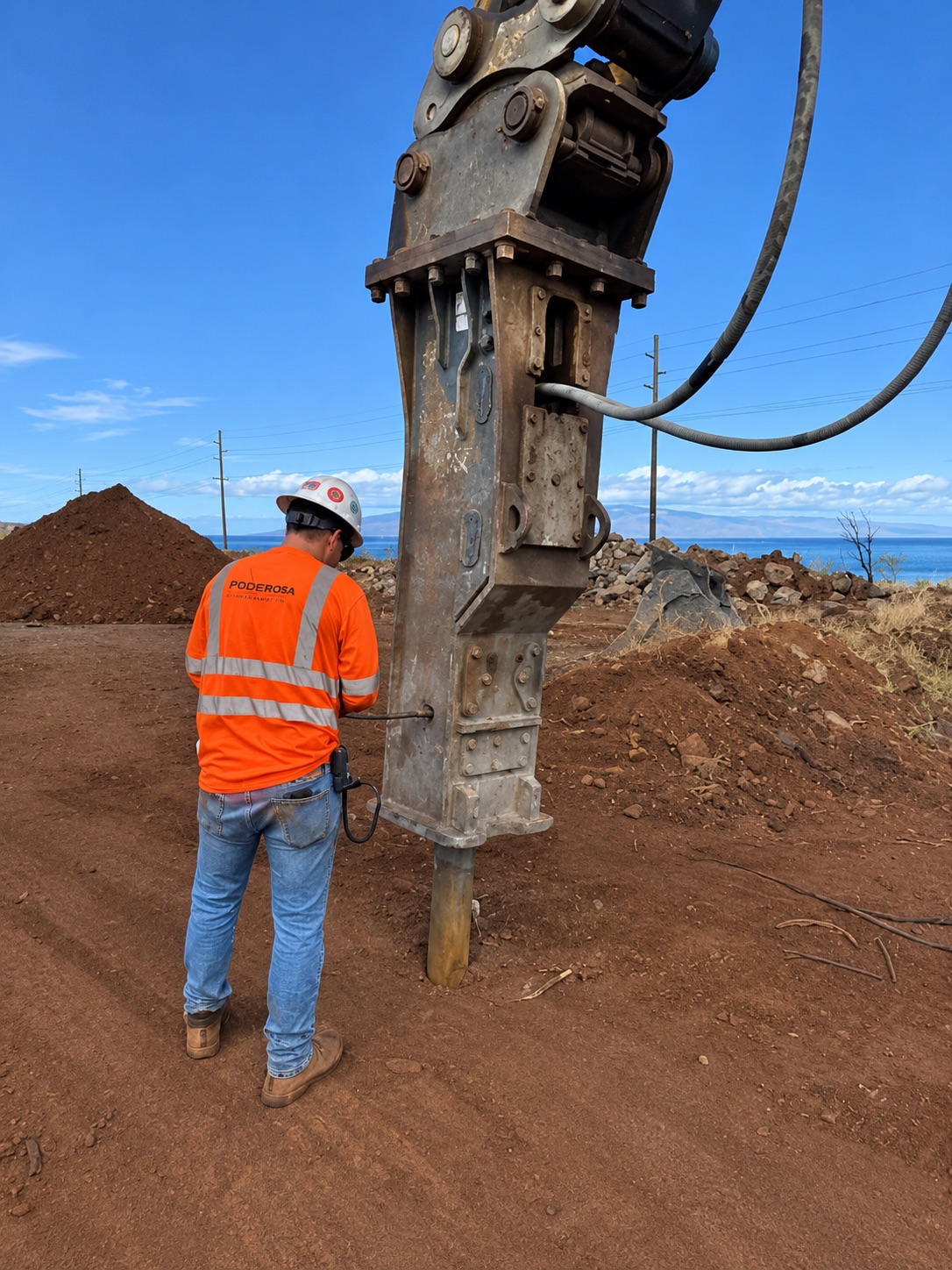
As reconstruction continues following the 2023 Maui wildfires, contractors are relying on excavators, hydraulic breakers and specialised groundworks equipment to prepare sites and install essential infrastructure.
Rebuilding communities after a major wildfire involves more than clearing damaged structures. In Lahaina, Hawaii, where the August 2023 fires destroyed thousands of buildings and displaced residents across Maui County, reconstruction has also brought a significant geological challenge: working through the island’s hard volcanic rock.
The conditions have made hydraulic breakers an important part of site preparation and underground utility installation. Among the equipment deployed during recovery operations were STRIKER TNB Series hydraulic breakers supplied by Toku America, working alongside excavators and other construction machinery.
Volcanic Ground Adds Complexity to Reconstruction
Hawaii’s basalt formations present demanding conditions for earthmoving and excavation. The hardness and abrasive characteristics of volcanic rock can limit the effectiveness of conventional digging techniques, particularly when preparing trenches for utilities or excavating foundations.
For contractors, selecting suitable attachments is therefore an important consideration. Hydraulic breakers allow excavators to fracture resistant rock before material is removed, although performance depends on ground conditions, carrier compatibility and operating practices. These challenges were particularly relevant to the development of temporary housing infrastructure in Lahaina.
According to information provided by Toku America, a Federal Emergency Management Agency (FEMA) project involved preparing a 34-acre state-owned site for 167 temporary modular housing units. The work included constructing supporting infrastructure and preparing the ground for concrete foundations.
Site development reportedly took 13 months, with contractors using heavy John Deere excavators, mechanical ripping techniques and hydraulic breakers to work through the rocky terrain.
Hydraulic Breakers in Ground Preparation and Utility Installation
Several medium- and large-sized TOKU hydraulic breakers were used in the cleanup and reconstruction activities, including equipment from the STRIKER TNB range. Among the models highlighted by Toku America are the TNB-7J, TNB-151K and TNB-30K, designed for different excavator weight classes and rock-breaking applications.
The breakers use an accumulator-free hydraulic design with two moving parts, according to TOKU. Other features include a long-stroke piston, a flow-through control valve, dual tool-retaining pins and a cushioning chamber intended to manage impact forces and reduce recoil. While these characteristics are designed to support durability and energy transfer, actual operating efficiency and maintenance requirements depend on application conditions, hydraulic settings and correct operating procedures.
The work in Lahaina highlights the importance of matching breaker capacity to excavator size and rock characteristics, particularly on projects involving extensive utility trenching and infrastructure preparation.
Dealer Support and Operator Training
Equipment availability and maintenance support can be especially important in geographically isolated markets such as Hawaii, where replacement parts and specialist technical assistance may involve longer supply routes.
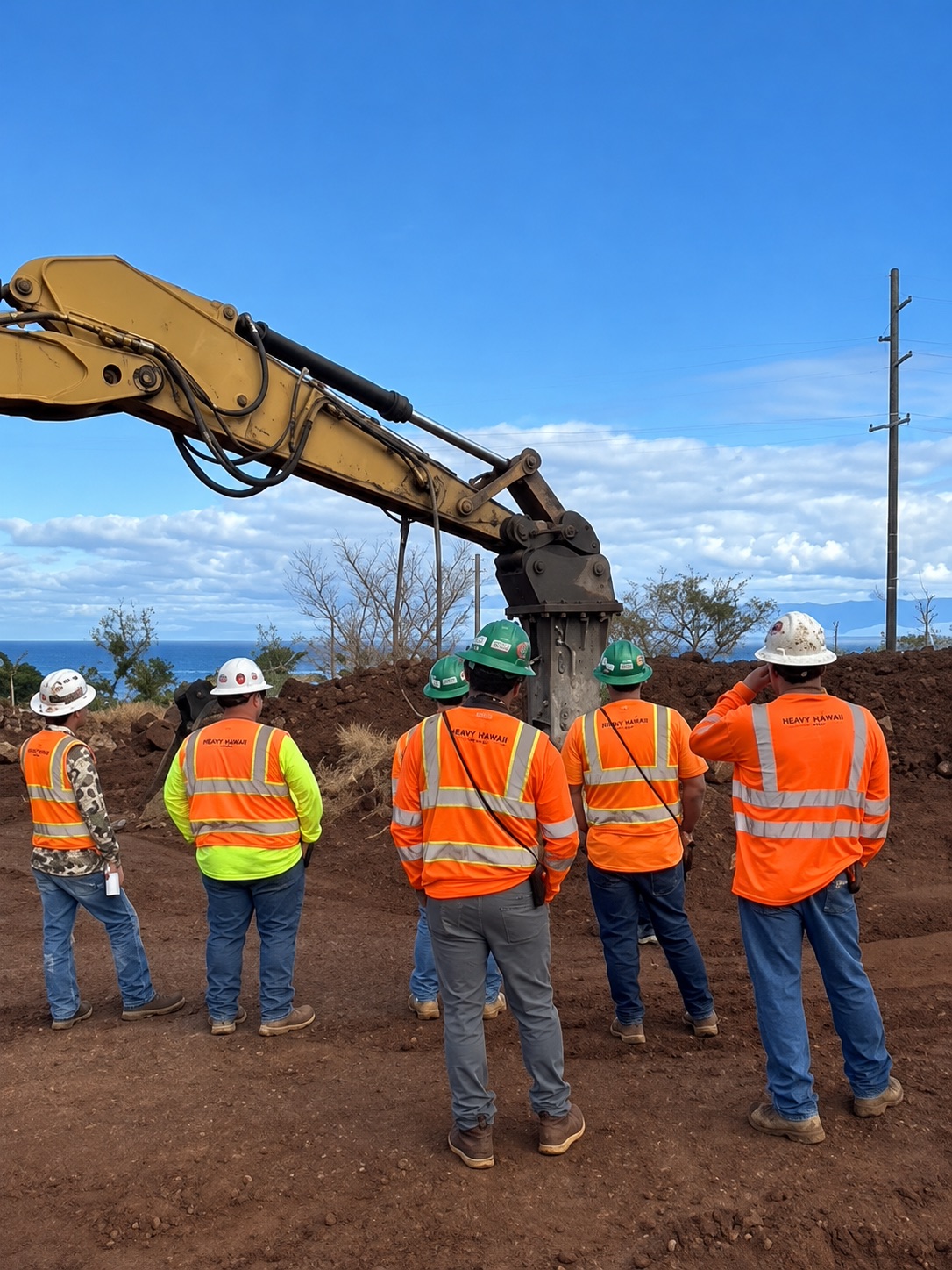
Papé Machinery, a John Deere dealer operating in Hawaii, was among the equipment partners involved in the project, while Goodfellow Bros. participated in the wider reconstruction effort as a civil construction contractor. Alongside equipment supply, TOKU organised three-day operator training sessions at Lahaina and other Hawaiian jobsites.
The sessions covered pre-operation inspections, correct breaker operation, lubrication, daily maintenance checks and storage procedures. Training also addressed equipment setup and the importance of maintaining suitable hydraulic oil flow.
“We coordinated the training at key jobsites with managers and operators to make the daily checks. For a demanding project like this it was imperative to make sure the TOKU breakers have a long life with minimal repair and downtime.”
Said Eric Fu, Territory Manager at Papé Machinery.
The training programme also involved independent excavator specialist Joel Escalante, who developed a quick-reference guide for breaker operators. Beyond initial equipment selection, such support can help contractors reduce avoidable wear and manage maintenance requirements during prolonged groundworks operations.
Equipment Longevity Matters on Remote Jobsites
The Lahaina project also illustrates the role of attachment service life in fleet management. Toku America reports that some of the hydraulic breakers deployed during reconstruction were more than 20 years old and remained supported by replacement parts.
For contractors operating in remote locations, continued parts availability can influence the economics of retaining and rebuilding existing attachments rather than replacing them. However, the company has not provided comparative data on operating costs, downtime or productivity during the Lahaina works.
Reconstruction Beyond the Initial Cleanup
More than three years after the August 2023 wildfires, Lahaina’s recovery remains a long-term undertaking, involving housing, infrastructure and the restoration of affected communities.
The use of hydraulic breakers during site preparation represents one aspect of that wider effort. Although the equipment is relatively conventional within the construction industry, the conditions in Hawaii demonstrate how geology, machine selection and technical support can shape the execution of rebuilding projects.
As reconstruction progresses, reliable groundworks equipment and access to qualified service personnel will remain practical considerations for contractors working across Maui’s demanding volcanic landscape.
[Job Story] Rebuilding Lahaina: Hydraulic Breakers Take on Volcanic Rock published on The HeavyQuip Magazine.