Liebherr Demonstrates MK Mobile Construction Cranes Worldwide
On-site demonstrations showed how electrified, compact crane designs address space, noise, and emissions constraints on modern construction sites. www.liebherr.com Stop in Peru: numerous trade fair visitors come to Perumin to find out more about Liebherr's innovative mobile construction crane concept. Liebherr has completed an international roadshow showcasing its MK mobile construction crane concept, with demonstrations held across Eastern Europe and South America. Organised by the Liebherr plant in Ehingen, the tour focused on explaining how mobile construction cranes address space, time, and emissions constraints in modern construction environments. Demonstrating the crane concept directly on site Between October and mid-November, the roadshow visited Poland, Czechia, Hungary, and Romania, with presentations held at Liebherr branches, active construction sites, and customer facilities. Additional demonstrations took place earlier in the year in Chile and Peru. The crane concept was also shown at major mining and construction exhibitions, including Expomin and Perumin, where visitors could observe its operation in realistic working conditions. These live demonstrations were designed to clarify practical use cases rather than theoretical specifications, supported by direct technical discussions with Liebherr specialists. Flexibility through the taxi crane principle At the core of the MK concept is the taxi crane principle, which allows rapid deployment and relocation between multiple construction sites within a single working day. The crane can be assembled and operated by a single person, reducing personnel requirements. Its vertical tower design and compact footprint make it suitable for space-constrained urban environments, where conventional tower cranes may be impractical. Typical applications demonstrated during the roadshow included general handling tasks, building construction, and the installation of photovoltaic systems. Practical demonstration of the MK 88 Plus during the roadshow in Czechia - customers experience flexibility and ease of use at first hand. Electrified operation for urban construction constraints The MK mobile construction cranes operate fully electrically, supporting emission-free and low-noise use. Power can be supplied via on-site electrical infrastructure, an integrated generator, or external energy storage systems such as the Liduro Power Port, enabling self-sufficient operation. This approach addresses increasing regulatory and environmental constraints in city centres while also reducing operating costs linked to fuel consumption and noise mitigation measures. Positioning between tower and mobile cranes By combining the rapid mobility of mobile cranes with the vertical reach and precision typically associated with stationary tower cranes, the MK concept is positioned to bridge a gap between these two crane categories. During the roadshow, Liebherr staff assembled and operated the cranes themselves to demonstrate the simplicity of the setup process and everyday handling, reinforcing the concept’s focus on operational efficiency. The roadshow illustrated how mobile, electrically powered construction cranes can support evolving construction requirements, particularly in urban and infrastructure projects where flexibility, reduced emissions, and fast deployment are increasingly decisive factors. www.liebherr.com Powered by Induportals Media Publishing
 machineryasia
On-site demonstrations showed how electrified, compact crane designs address space, noise, and emissions constraints on modern construction sites.
www.liebherr.com
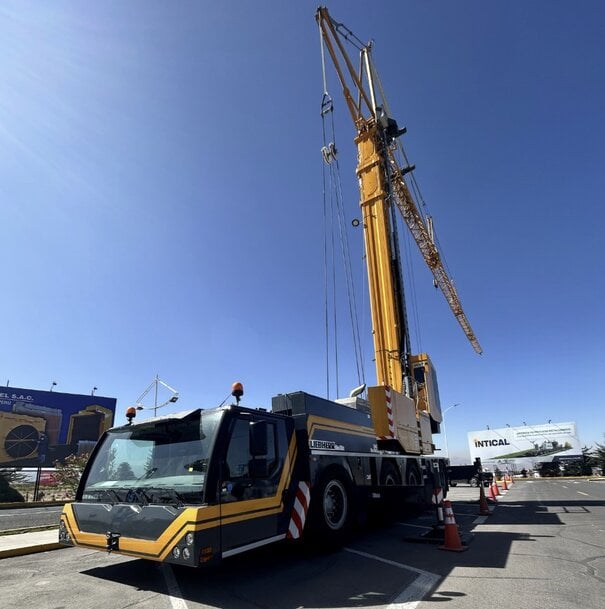
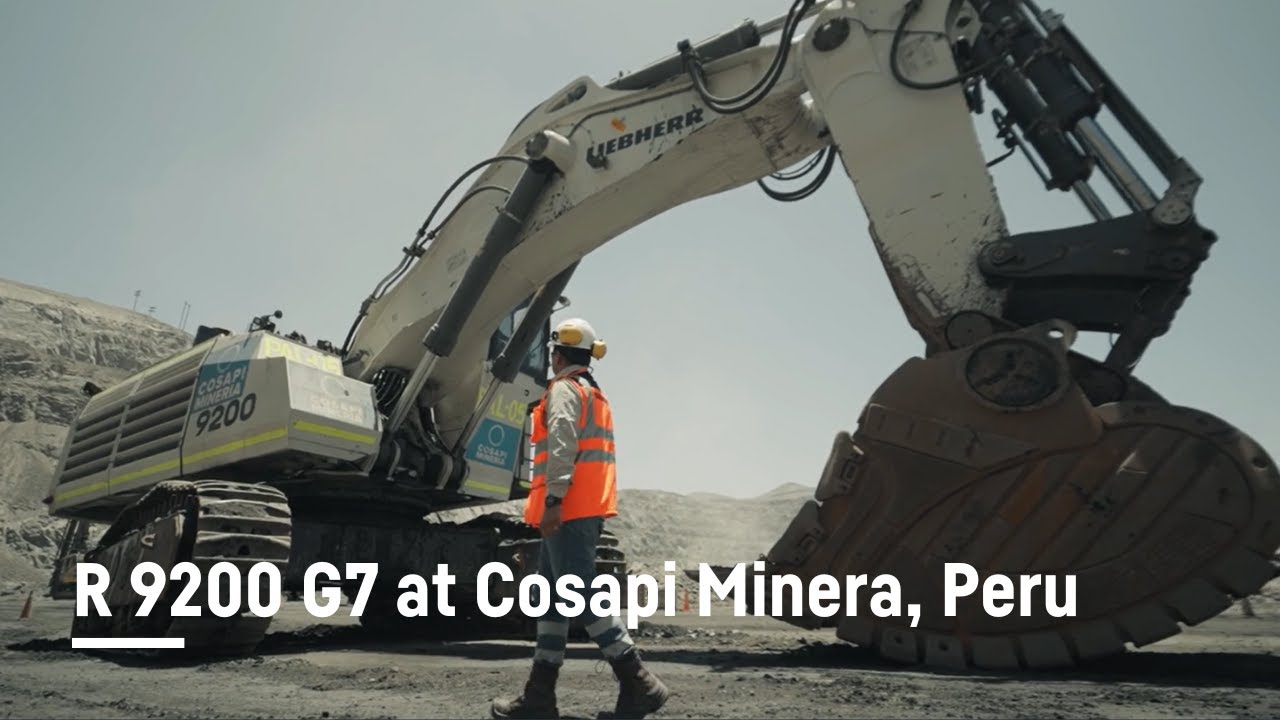
Stop in Peru: numerous trade fair visitors come to Perumin to find out more about Liebherr's innovative mobile construction crane concept.
Liebherr has completed an international roadshow showcasing its MK mobile construction crane concept, with demonstrations held across Eastern Europe and South America. Organised by the Liebherr plant in Ehingen, the tour focused on explaining how mobile construction cranes address space, time, and emissions constraints in modern construction environments.
Demonstrating the crane concept directly on site
Between October and mid-November, the roadshow visited Poland, Czechia, Hungary, and Romania, with presentations held at Liebherr branches, active construction sites, and customer facilities. Additional demonstrations took place earlier in the year in Chile and Peru. The crane concept was also shown at major mining and construction exhibitions, including Expomin and Perumin, where visitors could observe its operation in realistic working conditions. These live demonstrations were designed to clarify practical use cases rather than theoretical specifications, supported by direct technical discussions with Liebherr specialists.
Flexibility through the taxi crane principle
At the core of the MK concept is the taxi crane principle, which allows rapid deployment and relocation between multiple construction sites within a single working day. The crane can be assembled and operated by a single person, reducing personnel requirements. Its vertical tower design and compact footprint make it suitable for space-constrained urban environments, where conventional tower cranes may be impractical. Typical applications demonstrated during the roadshow included general handling tasks, building construction, and the installation of photovoltaic systems.
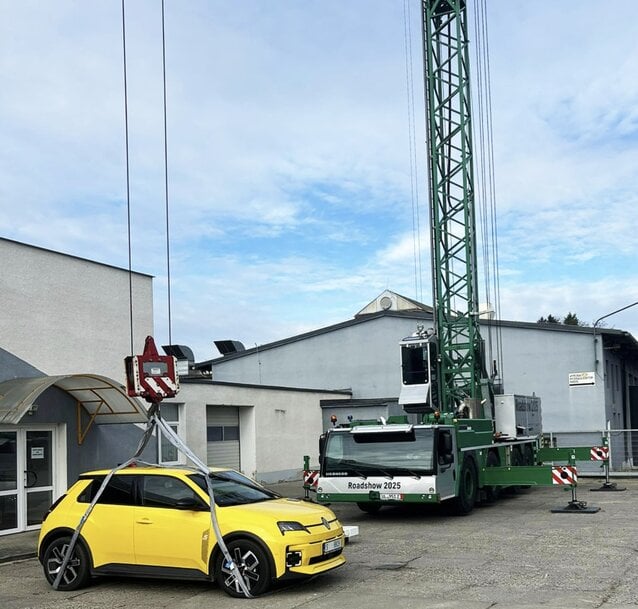
Practical demonstration of the MK 88 Plus during the roadshow in Czechia - customers experience flexibility and ease of use at first hand.
Electrified operation for urban construction constraints
The MK mobile construction cranes operate fully electrically, supporting emission-free and low-noise use. Power can be supplied via on-site electrical infrastructure, an integrated generator, or external energy storage systems such as the Liduro Power Port, enabling self-sufficient operation. This approach addresses increasing regulatory and environmental constraints in city centres while also reducing operating costs linked to fuel consumption and noise mitigation measures.
Positioning between tower and mobile cranes
By combining the rapid mobility of mobile cranes with the vertical reach and precision typically associated with stationary tower cranes, the MK concept is positioned to bridge a gap between these two crane categories. During the roadshow, Liebherr staff assembled and operated the cranes themselves to demonstrate the simplicity of the setup process and everyday handling, reinforcing the concept’s focus on operational efficiency.
The roadshow illustrated how mobile, electrically powered construction cranes can support evolving construction requirements, particularly in urban and infrastructure projects where flexibility, reduced emissions, and fast deployment are increasingly decisive factors.
www.liebherr.com
Liebherr has completed an international roadshow showcasing its MK mobile construction crane concept, with demonstrations held across Eastern Europe and South America. Organised by the Liebherr plant in Ehingen, the tour focused on explaining how mobile construction cranes address space, time, and emissions constraints in modern construction environments.
Demonstrating the crane concept directly on site
Between October and mid-November, the roadshow visited Poland, Czechia, Hungary, and Romania, with presentations held at Liebherr branches, active construction sites, and customer facilities. Additional demonstrations took place earlier in the year in Chile and Peru. The crane concept was also shown at major mining and construction exhibitions, including Expomin and Perumin, where visitors could observe its operation in realistic working conditions. These live demonstrations were designed to clarify practical use cases rather than theoretical specifications, supported by direct technical discussions with Liebherr specialists.
Flexibility through the taxi crane principle
At the core of the MK concept is the taxi crane principle, which allows rapid deployment and relocation between multiple construction sites within a single working day. The crane can be assembled and operated by a single person, reducing personnel requirements. Its vertical tower design and compact footprint make it suitable for space-constrained urban environments, where conventional tower cranes may be impractical. Typical applications demonstrated during the roadshow included general handling tasks, building construction, and the installation of photovoltaic systems.
Practical demonstration of the MK 88 Plus during the roadshow in Czechia - customers experience flexibility and ease of use at first hand.
Electrified operation for urban construction constraints
The MK mobile construction cranes operate fully electrically, supporting emission-free and low-noise use. Power can be supplied via on-site electrical infrastructure, an integrated generator, or external energy storage systems such as the Liduro Power Port, enabling self-sufficient operation. This approach addresses increasing regulatory and environmental constraints in city centres while also reducing operating costs linked to fuel consumption and noise mitigation measures.
Positioning between tower and mobile cranes
By combining the rapid mobility of mobile cranes with the vertical reach and precision typically associated with stationary tower cranes, the MK concept is positioned to bridge a gap between these two crane categories. During the roadshow, Liebherr staff assembled and operated the cranes themselves to demonstrate the simplicity of the setup process and everyday handling, reinforcing the concept’s focus on operational efficiency.
The roadshow illustrated how mobile, electrically powered construction cranes can support evolving construction requirements, particularly in urban and infrastructure projects where flexibility, reduced emissions, and fast deployment are increasingly decisive factors.
www.liebherr.com
Powered by
Induportals Media Publishing