Hydraulic Electrification Improves Excavator Energy Efficiency
Danfoss, Staad B.V., and the UK Government collaborate to validate a digital hydraulics architecture for battery-electric construction equipment. www.danfoss.com Danfoss, Staad B.V., and the UK Government have collaborated on a project to evaluate how digital hydraulic technology can improve the efficiency of large battery-electric excavators. The project focused on integrating a digital displacement hydraulic system into a 30-ton electric excavator for construction, mining, and quarrying applications, where machine runtime remains a key challenge for electrification. Project Partners and Technical Objectives The project was supported through the UK Government's Red Diesel Replacement Phase 2 Competition, part of the £1 billion Net Zero Innovation Portfolio administered by the Department for Energy Security & Net Zero. Danfoss received £4.29 million in funding, representing approximately 65% of eligible project costs, while providing the remaining investment. Danfoss led the hydraulic system development and integration activities. Staad B.V. was responsible for converting a conventional diesel-powered excavator into a battery-electric machine. The project used a Develon DX300LC-7 crawler excavator as the development platform. The objective was to reduce energy consumption in heavy construction equipment through improved hydraulic efficiency rather than relying solely on larger battery systems. Digital Hydraulics Architecture and System Integration The excavator was converted to battery-electric operation using a Danfoss Editron electric drivetrain consisting of an EM-PMI375 permanent magnet synchronous motor, an EC-C1200 inverter, an MC050 controller, and three 140 kWh battery packs. Danfoss replaced the conventional swashplate hydraulic pump with a digital displacement pump and motor system featuring ten independently controllable outputs. These outputs power the machine's primary hydraulic functions, including boom, arm, bucket, and swing operations. A digital valve manifold dynamically reallocates hydraulic flow to the functions requiring it, reducing flow-sharing losses commonly found in traditional hydraulic systems. In addition, a dedicated hydraulic H-bridge valve was developed for boom control, enabling independent metering, pressure amplification, cavitation protection, and energy recovery during lowering operations. The control architecture coordinates the hydraulic system, electric drivetrain, and auxiliary subsystems in real time, creating an integrated electrohydraulic platform for construction equipment. Validation Testing and Performance Results Performance validation was conducted using grading tests and digging-and-dumping-in-air tests according to the JCMAS standard, equivalent to ISO/AWI TS 11152-2. Compared with the baseline battery-electric excavator, the modified machine reduced battery energy consumption by 49.2% during grading operations and by 31% during digging-and-dumping operations. Cycle times remained largely unchanged. Using a representative duty cycle consisting of 30% grading and 70% digging operations, the digital hydraulics system reduced overall battery energy consumption by 35%. The resulting efficiency improvement increased operating time by 53% using the same battery capacity. The results also indicate that a comparable operating range could be achieved with two battery packs instead of three, potentially reducing battery requirements while maintaining machine productivity. Applications in Construction Equipment Electrification The project demonstrates how digital hydraulics can address a major limitation of battery-electric heavy equipment: the energy losses associated with conventional hydraulic architectures. By recovering energy from machine movements and reducing throttling losses, the system improves overall energy utilization without increasing battery capacity. Such approaches are relevant for construction, mining, quarrying, and other industries seeking to reduce emissions while maintaining equipment performance. Expected Impact on Industrial Electrification The validated architecture forms part of Danfoss' phased digital hydraulics strategy, which progresses from pump replacement solutions to more advanced flow management and energy recovery systems, providing a pathway for improving machine efficiency across existing and future electric equipment platforms. Edited by Aishwarya Mambet, Induportals Editor, with AI assistance. www.danfoss.com Powered by Induportals Media Publishing
 machineryasia
Danfoss, Staad B.V., and the UK Government collaborate to validate a digital hydraulics architecture for battery-electric construction equipment.
www.danfoss.com
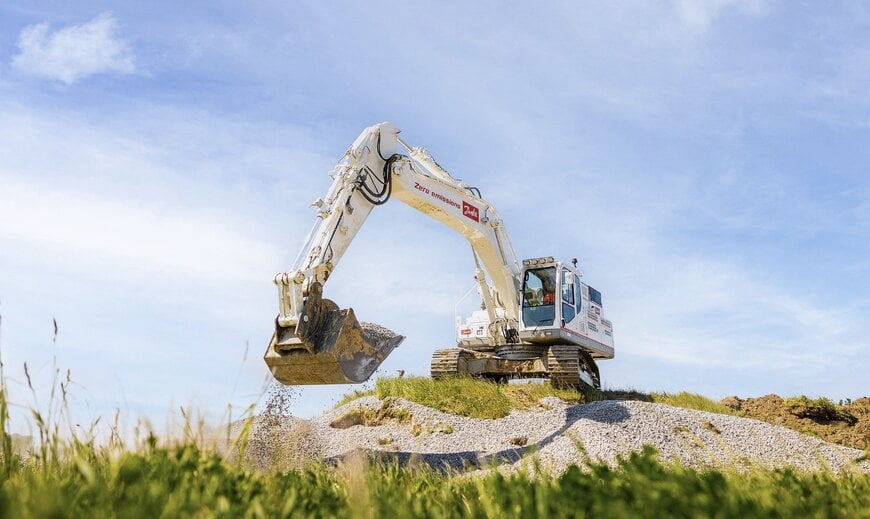
Danfoss, Staad B.V., and the UK Government have collaborated on a project to evaluate how digital hydraulic technology can improve the efficiency of large battery-electric excavators. The project focused on integrating a digital displacement hydraulic system into a 30-ton electric excavator for construction, mining, and quarrying applications, where machine runtime remains a key challenge for electrification.
Project Partners and Technical Objectives
The project was supported through the UK Government's Red Diesel Replacement Phase 2 Competition, part of the £1 billion Net Zero Innovation Portfolio administered by the Department for Energy Security & Net Zero. Danfoss received £4.29 million in funding, representing approximately 65% of eligible project costs, while providing the remaining investment.
Danfoss led the hydraulic system development and integration activities. Staad B.V. was responsible for converting a conventional diesel-powered excavator into a battery-electric machine. The project used a Develon DX300LC-7 crawler excavator as the development platform.
The objective was to reduce energy consumption in heavy construction equipment through improved hydraulic efficiency rather than relying solely on larger battery systems.
Digital Hydraulics Architecture and System Integration
The excavator was converted to battery-electric operation using a Danfoss Editron electric drivetrain consisting of an EM-PMI375 permanent magnet synchronous motor, an EC-C1200 inverter, an MC050 controller, and three 140 kWh battery packs.
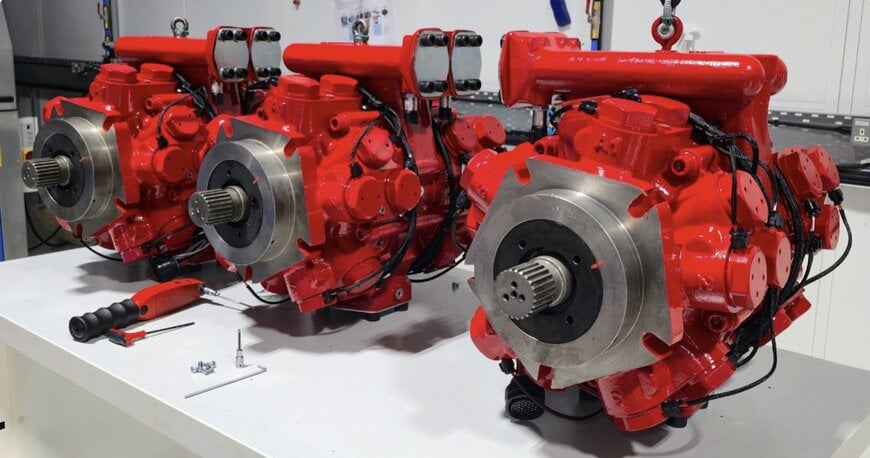
Danfoss replaced the conventional swashplate hydraulic pump with a digital displacement pump and motor system featuring ten independently controllable outputs. These outputs power the machine's primary hydraulic functions, including boom, arm, bucket, and swing operations.
A digital valve manifold dynamically reallocates hydraulic flow to the functions requiring it, reducing flow-sharing losses commonly found in traditional hydraulic systems. In addition, a dedicated hydraulic H-bridge valve was developed for boom control, enabling independent metering, pressure amplification, cavitation protection, and energy recovery during lowering operations.
The control architecture coordinates the hydraulic system, electric drivetrain, and auxiliary subsystems in real time, creating an integrated electrohydraulic platform for construction equipment.
Validation Testing and Performance Results
Performance validation was conducted using grading tests and digging-and-dumping-in-air tests according to the JCMAS standard, equivalent to ISO/AWI TS 11152-2.
Compared with the baseline battery-electric excavator, the modified machine reduced battery energy consumption by 49.2% during grading operations and by 31% during digging-and-dumping operations. Cycle times remained largely unchanged.
Using a representative duty cycle consisting of 30% grading and 70% digging operations, the digital hydraulics system reduced overall battery energy consumption by 35%. The resulting efficiency improvement increased operating time by 53% using the same battery capacity.
The results also indicate that a comparable operating range could be achieved with two battery packs instead of three, potentially reducing battery requirements while maintaining machine productivity.
Applications in Construction Equipment Electrification
The project demonstrates how digital hydraulics can address a major limitation of battery-electric heavy equipment: the energy losses associated with conventional hydraulic architectures.
By recovering energy from machine movements and reducing throttling losses, the system improves overall energy utilization without increasing battery capacity. Such approaches are relevant for construction, mining, quarrying, and other industries seeking to reduce emissions while maintaining equipment performance.
Expected Impact on Industrial Electrification
The validated architecture forms part of Danfoss' phased digital hydraulics strategy, which progresses from pump replacement solutions to more advanced flow management and energy recovery systems, providing a pathway for improving machine efficiency across existing and future electric equipment platforms.
Edited by Aishwarya Mambet, Induportals Editor, with AI assistance.
www.danfoss.com
Powered by
Induportals Media Publishing