Holcim UK Calls on Construction Sector to Prioritise Material Reuse
Holcim UK, manufacturer and supplier of sustainable construction and building materials, has called on the construction sector to place greater emphasis on preserving the value of existing materials and reducing the emissions associated with their use. The company urged the industry to integrate material reuse into standard practices, arguing that this could help reduce waste, […] Holcim UK Calls on Construction Sector to Prioritise Material Reuse published on The HeavyQuip Magazine.
 machineryasia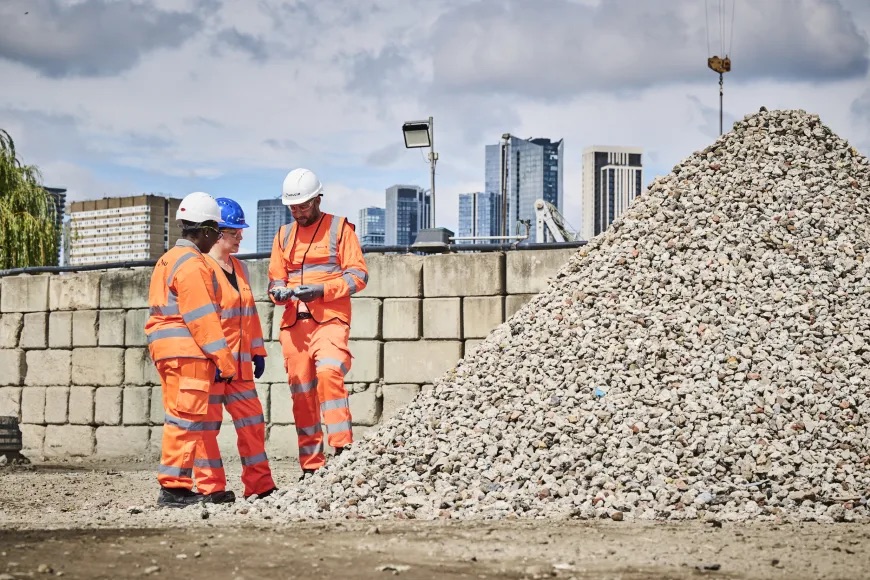
Holcim UK, manufacturer and supplier of sustainable construction and building materials, has called on the construction sector to place greater emphasis on preserving the value of existing materials and reducing the emissions associated with their use.
The company urged the industry to integrate material reuse into standard practices, arguing that this could help reduce waste, limit carbon emissions and make better use of resources already embedded in buildings and infrastructure.
In the latest episode of The Material Mix podcast, Danielle Dawson, Innovation Manager at Holcim UK, highlighted the need for more consistent criteria for retaining, recovering, and reusing construction materials.
In the UK, construction and demolition activities generate around 32% of total waste by volume. Despite this, many buildings are still demolished while retaining materials with economic value and a significant amount of embodied carbon. According to Dawson, the sector still tends to treat as waste materials that have already required extraction, processing, transport and installation, without fully recognising their remaining value throughout the lifecycle of buildings.
Helen Fairclough, lecturer in structural engineering at the University of Sheffield, noted that the value of materials already contained within buildings is often only partly considered in decision-making.
“There is significant value in the materials within our buildings, and that value can be maintained over the lifecycle of those assets. The question is how we design and manage buildings so that materials retain their usefulness beyond a single use,”
Said Fairclough.
Concrete, aggregates and structural components can retain their performance and usefulness well beyond the functional life of the asset in which they were installed. Yet at the demolition stage, they are still often handled as residual materials, an approach receiving increasing attention across the sector.
The UK government’s target to reduce greenhouse gas emissions by 87% from 1990 levels by 2040 is drawing greater attention to how materials are sourced, used and recovered. At the same time, rising costs are prompting developers and asset owners to assess more closely the resources and value that can be lost through demolition and reconstruction.

Kim Gault, Principal Sustainability Consultant at Cundall, said the principles of circularity are now widely understood across the industry, although their implementation continues to progress at different speeds and levels of maturity.
“The urgency is not new, but it is still not fully reflected in the way the industry operates. Policy is not always as responsive as it needs to be, and updates can lag behind market developments. In practice, much of the change is being driven by clients, particularly through ESG requirements,”
Said Gault.
In a circular model, buildings are assessed before demolition to identify elements that can be retained. Recoverable materials can then be directed towards new uses where technical and operational conditions allow.
Design approaches are also increasingly considering how structures can be adapted over time rather than fully replaced. In this context, recycled aggregates and reclaimed materials are already being used in a range of projects, supported by more reliable sorting and processing methods.
Dawson said that performance concerns are no longer the main obstacle.
“Questions about quality have largely been addressed. Technology has advanced, and we are now producing materials from recycled sources that meet the same standards as traditional products. In many cases, we can make a high-quality product from what was previously treated as waste,”
Explained Dawson.
The regulatory framework is also beginning to reflect this approach. In London, major developments must submit a Circular Economy Statement, setting out the use and potential reuse of materials from the early stages of a project. However, significant differences remain between regions, local authorities and the criteria applied.
Holcim UK has previously supported mandatory verification and independent certification in circular procurement processes, arguing that clearer criteria are needed to assess the practices being adopted and promote more consistent implementation.
Holcim UK Calls on Construction Sector to Prioritise Material Reuse published on The HeavyQuip Magazine.