High-Speed Hydraulic Efficiency for Servo-Driven Machines
Danfoss Power Solutions introduces a medium-pressure axial piston pump optimized for regenerative servo-hydraulic applications, combining compact design, high power density, and system-level energy savings. www.danfoss.com Injection molding, die casting, vertical presses, plastics processing, test stands, and mobile machinery are among the primary application areas targeted by the latest medium-pressure axial piston pump released by Danfoss Power Solutions. The newly introduced Vickers® by Danfoss PVMX pump is engineered for servo-hydraulic systems that require high efficiency, fast dynamic response, and compact hydraulic layouts. Initially launched in a 28-cc displacement, the pump is designed to improve energy efficiency and system flexibility compared with conventional fixed-speed hydraulic architectures. The unit operates at a continuous pressure of up to 350 bar, supporting higher power density while enabling smaller actuators and reduced mechanical stress across the hydraulic circuit. A rated speed of up to 3,800 rpm aligns with the operating range of modern servo motors used in high-cycle industrial machinery. Under measured conditions, noise levels reach as low as 72 dB(A) at 280 bar and 3,000 rpm, supporting use in acoustically sensitive production environments. Two-Quadrant Operation and Motion Control Benefits The pump is designed for two-quadrant operation, allowing bidirectional flow without the need for complex directional valve assemblies. Flow reversal can be achieved either by changing the servo motor direction or by using the pump’s over-center capability. This enables controlled deceleration, fast actuator retraction, and pressure relief cycles within a simplified hydraulic architecture. These characteristics are particularly relevant for servo-hydraulic systems where precise motion control and fast cycling are required. Regenerative Energy Recovery in Servo-Hydraulic Systems In servo-hydraulic processes such as injection molding and die casting, the pump supports regenerative operation during phases such as mold retraction or gravity-assisted movement. In these operating states, reverse flow from the actuator mechanically drives the pump, which in turn drives the electric motor in generator mode. The recovered electrical energy is returned to the drive system, reducing net power demand and lowering heat generation. This regeneration capability supports true energy recovery rather than dissipative braking. Measured Energy Efficiency Gains When compared with traditional fixed-speed pump systems, servo-driven configurations using this axial piston pump can achieve energy savings of up to 80%, depending on duty cycle. These savings result from several verifiable factors: elimination of idle losses through on-demand operation, higher operating speeds that enable smaller electric motors, partial recovery of energy during deceleration, and reduced cooling loads due to lower thermal losses. Together, these effects directly reduce electrical consumption and operating costs. High-Speed Design for Compact Servo Architectures The 3,800-rpm operating capability represents a 35% speed increase over previous generations of Vickers by Danfoss medium-pressure pumps. This higher speed supports next-generation servo motor-driven layouts that favor compact power units, downsized drives, and simplified hydraulic assemblies. Improved controllability at higher speeds supports tighter process tolerances in high-precision forming and plastics applications. Standards Compliance and System Integration The pump is built to ISO and SAE interface standards and supports multiple control strategies, including pressure compensation, load sensing, and dual displacement. The design includes multiple mounting flanges, porting arrangements, shaft options, and through-drive configurations. This allows OEMs to integrate or retrofit the pump into existing platforms with minimal system redesign and reduced qualification time. With its combination of high-pressure capability, regenerative servo-hydraulic functionality, and compact high-speed design, the new axial piston pump is positioned as a system-level efficiency component for electrically driven industrial machinery. www.danfoss.com Powered by Induportals Media Publishing
 machineryasia
Danfoss Power Solutions introduces a medium-pressure axial piston pump optimized for regenerative servo-hydraulic applications, combining compact design, high power density, and system-level energy savings.
www.danfoss.com
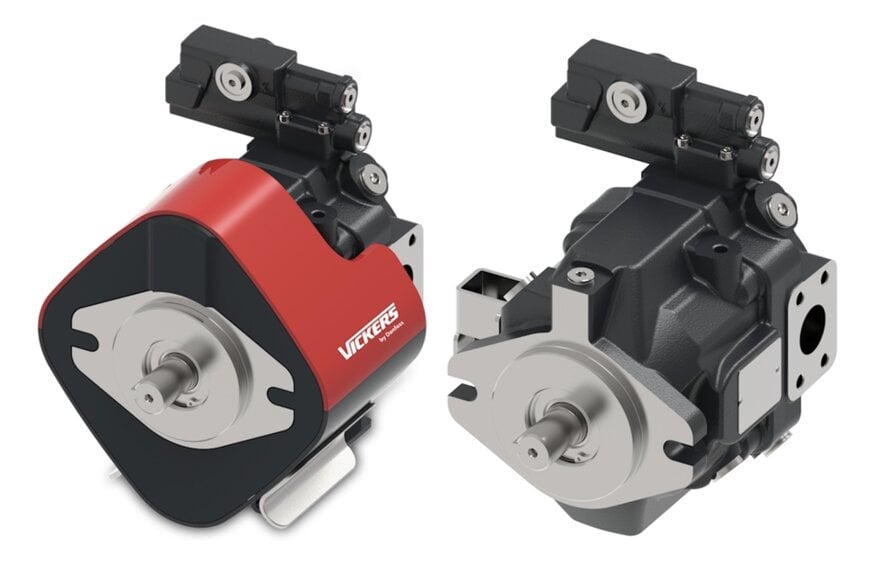
Injection molding, die casting, vertical presses, plastics processing, test stands, and mobile machinery are among the primary application areas targeted by the latest medium-pressure axial piston pump released by Danfoss Power Solutions. The newly introduced Vickers® by Danfoss PVMX pump is engineered for servo-hydraulic systems that require high efficiency, fast dynamic response, and compact hydraulic layouts.
Initially launched in a 28-cc displacement, the pump is designed to improve energy efficiency and system flexibility compared with conventional fixed-speed hydraulic architectures. The unit operates at a continuous pressure of up to 350 bar, supporting higher power density while enabling smaller actuators and reduced mechanical stress across the hydraulic circuit. A rated speed of up to 3,800 rpm aligns with the operating range of modern servo motors used in high-cycle industrial machinery. Under measured conditions, noise levels reach as low as 72 dB(A) at 280 bar and 3,000 rpm, supporting use in acoustically sensitive production environments.
Two-Quadrant Operation and Motion Control Benefits
The pump is designed for two-quadrant operation, allowing bidirectional flow without the need for complex directional valve assemblies. Flow reversal can be achieved either by changing the servo motor direction or by using the pump’s over-center capability. This enables controlled deceleration, fast actuator retraction, and pressure relief cycles within a simplified hydraulic architecture. These characteristics are particularly relevant for servo-hydraulic systems where precise motion control and fast cycling are required.
Regenerative Energy Recovery in Servo-Hydraulic Systems
In servo-hydraulic processes such as injection molding and die casting, the pump supports regenerative operation during phases such as mold retraction or gravity-assisted movement. In these operating states, reverse flow from the actuator mechanically drives the pump, which in turn drives the electric motor in generator mode. The recovered electrical energy is returned to the drive system, reducing net power demand and lowering heat generation. This regeneration capability supports true energy recovery rather than dissipative braking.
Measured Energy Efficiency Gains
When compared with traditional fixed-speed pump systems, servo-driven configurations using this axial piston pump can achieve energy savings of up to 80%, depending on duty cycle. These savings result from several verifiable factors: elimination of idle losses through on-demand operation, higher operating speeds that enable smaller electric motors, partial recovery of energy during deceleration, and reduced cooling loads due to lower thermal losses. Together, these effects directly reduce electrical consumption and operating costs.
High-Speed Design for Compact Servo Architectures
The 3,800-rpm operating capability represents a 35% speed increase over previous generations of Vickers by Danfoss medium-pressure pumps. This higher speed supports next-generation servo motor-driven layouts that favor compact power units, downsized drives, and simplified hydraulic assemblies. Improved controllability at higher speeds supports tighter process tolerances in high-precision forming and plastics applications.
Standards Compliance and System Integration
The pump is built to ISO and SAE interface standards and supports multiple control strategies, including pressure compensation, load sensing, and dual displacement. The design includes multiple mounting flanges, porting arrangements, shaft options, and through-drive configurations. This allows OEMs to integrate or retrofit the pump into existing platforms with minimal system redesign and reduced qualification time.
With its combination of high-pressure capability, regenerative servo-hydraulic functionality, and compact high-speed design, the new axial piston pump is positioned as a system-level efficiency component for electrically driven industrial machinery.
www.danfoss.com
Powered by
Induportals Media Publishing