Europe’s Equipment Makers Look Beyond Recovery
At the CECE Congress in London, European equipment makers called for a strong industrial base, closer EU-UK ties and a better pitch to young talent. Europe’s Equipment Makers Look Beyond Recovery published on The HeavyQuip Magazine.
 machineryasia
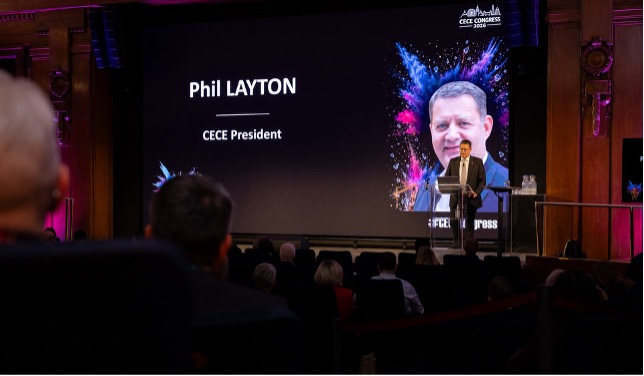
At the CECE Congress 2026, hosted by the UK’s Construction Equipment Association, 200 delegates discussed competitiveness, EU-UK alignment and an industry that admits it is failing to reach young people.
After the sharp downturn of 2024, Europe’s construction equipment market has been recovering. The sector’s message at this year’s CECE Congress was that a better order book does not solve the structural problem. Around 200 delegates from Europe and beyond met in London for two days under the theme “Create. Innovate. Inspire.”, with the Committee for European Construction Equipment calling for a stronger industrial policy and a more competitive single market.
CECE describes 2025 as a year of recovery and 2026 as one of continued confidence, with manufacturers responding to uncertainty, supply chain pressure, and shifting demand through investment and innovation. The policy ask on top of that is explicit. “Our message is clear: Europe needs a strong industrial base. It needs a competitive single market with proper market surveillance to ensure compliance and fair competition,” said CECE President Phil Layton in his opening speech. “European manufacturers need policies that support innovation, enable investment and strengthen global competitiveness.”
The reference to market surveillance is not a detail. For European OEMs, uneven enforcement of product rules is a competitiveness issue as much as a safety one, and CECE says it will keep working with EU institutions and national associations to steer pending legislation.
A congress in London, an argument for the Channel
Holding the event in London, hosted by the UK’s Construction Equipment Association, gave the EU-UK relationship a prominent place on the agenda. Lord Richard Harrington, Chairman of Make UK, argued that the UK remains a strong European industrial partner despite Brexit. Construction and mining machinery makers operate globally and benefit from aligned technical requirements, and CECE and the CEA plan to keep pushing for regulatory convergence across the Channel.
The room seemed to agree. In a live poll, an overwhelming majority of attendees said they expected a much closer industrial relationship between the EU and the UK within five years.
The technical and economic sessions covered safety and digitalisation, the global market outlook, equipment demand and financing, and industrial cooperation between India and Europe, with contributions from Simon Bailey of Safety Shield Global and DLL’s Maja Josifovska and Phil King.
Apprentices tell the industry what it is getting wrong
The most pointed session involved three young people already working in the sector: Oliver Garnham of JCB in the UK, Ole Thomas of Kiesel Group in Germany and Diana Novikova of Agoria in Belgium. Their advice was practical. Companies should work more closely with schools, be more present on social media and show what manufacturing jobs actually involve, while dropping outdated perceptions and recruitment habits.
The audience did not argue. Asked in a poll whether the construction machinery sector does enough to engage the next generation, delegates agreed that it does not.
The closing keynote came from Stewart Hill, a former British Army officer and brain injury survivor, who spoke about rebuilding cognitive capability after a life-changing injury and argued that a company’s real competitive advantage lies in its people’s minds, not in AI. It was a fitting end to a congress whose two big themes, industrial policy and talent, both come down to whether Europe can keep the people and the factories that make its machines.
Europe’s Equipment Makers Look Beyond Recovery published on The HeavyQuip Magazine.