America Chose Independence. Let’s Keep it That Way.
A journey through U.S. industrial history makes it clear how important manufacturing capacity remains to this country.
 machineryasia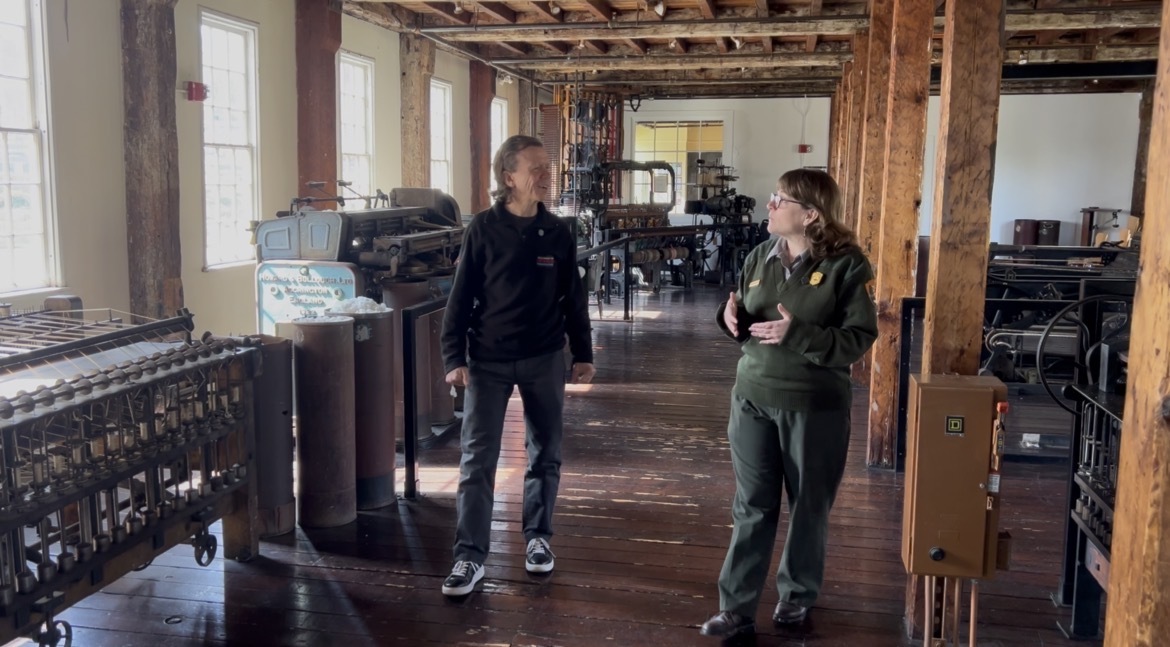
A journey through U.S. industrial history makes it clear how important manufacturing capacity remains to this country.
There are many meaningful ways to celebrate the story of America’s 250 years of independence. Through watching documentaries and reading our foundational documents. Through fireworks, flags, fairs and parades. Through celebrating our achievements and pushing ourselves to keep getting better. Or possibly, as I have over the past few weeks, road-tripping to take in an America found beyond the big screens and social shares.
I set out to learn more about three distinct stories that weave together the story of one of the most important aspects of the American experience: our transformation into an economic powerhouse. If we want a more complete picture about our nation’s story, we should explore the chapter that encompasses the mill floor, the blast furnace and the assembly line. Manufacturing is not a side note in the American story; it is one of the central threads running through our independence, our freedom, our security and our economic growth.
That became clearer to me during three recent visits for our podcast The Manufacturing Report’s American Manufacturing 250 series: to Old Slater Mill in Pawtucket, Rhode Island; to the Carrie Blast Furnaces outside Pittsburgh; and to Detroit, the city whose factories helped make America the Arsenal of Democracy. Each carries its own triumphs, contradictions and warnings. Taken together, they help explain how a young nation became an industrial power and why our manufacturing capacity matters so much today.
I had wanted to visit Old Slater Mill (opened in 1793) in Pawtucket for many years, so I was happy to have the chance in April. The biggest takeaway from that visit is unmistakable: Independence meant little if America could not produce for itself. A republic that relied entirely on others for the essentials of everyday life would always be constrained. Manufacturing gave the country a path toward self-reliance, diversification and growth. It helped turn political independence into practical independence.
If Old Slater Mill tells us about the origins of American industrial ambition, the Carrie Blast Furnaces (1884) tell us what that ambition became. Standing in the shadow of those furnaces, it is hard not to feel the massive scale of the industrialization of America. The remaining furnaces tower over the Monongahela River, reminders of an industrial system that helped build the modern United States.
Carrie supplied iron to Homestead Steel Works, which for years was the largest steel mill in the world. The steel that came from places like Homestead went into bridges, railroads, skyscrapers, ships, factories and homes. It made possible the infrastructure of a rising industrial power.
Carrie and Homestead are also reminders that we must do more to avert plant closures and the loss of industrial capacity in America. When these facilities closed, the consequences were not abstract. They were felt in neighborhoods, tax bases, schools, churches, main streets and families. A shuttered mill is never just a business story. It is a community story.
Detroit offers another lesson, one that should be obvious but too often must be relearned: National security depends on manufacturing strength.
Before the United States entered World War II, President Franklin Delano Roosevelt called on the nation to build “every machine, every arsenal, every factory” needed for defense. The transformation that followed was astonishing. Civilian factories became defense plants. Automakers built airplanes, tanks, engines and weapons. Millions of workers entered the industrial workforce, including women and Black Americans who had long been excluded from many of the best industrial jobs.
The Arsenal of Democracy (1941-1945) did not win World War II by itself. But without this industrial base, victory would have been much harder, and perhaps impossible on the timeline history required.
This is not merely a history lesson. The same principle applies today. A country that cannot make semiconductors, ships, steel, batteries, medicines, machinery or critical defense components is a country that has chosen dependence. Sometimes dependence is hidden in ordinary times, but it becomes painfully visible in a crisis.
The pandemic exposed some of these vulnerabilities. So have supply chain shocks, geopolitical tensions and the rise of heavily subsidized industrial competitors. It would be impossible to recreate the Arsenal of Democracy overnight. Industrial readiness must be built before it is needed. You cannot summon a skilled workforce, a supplier network or a modern factory overnight.
Three cities. Three eras. One throughline.
As America marks 250 years, we should celebrate our history without sanding off its rough edges. Manufacturing helped build the country, but it also reflected the country’s flaws. It generated wealth and opportunity, but too often excluded people from them. It powered freedom abroad but sometimes denied dignity at home. It created remarkable growth, but also left painful scars when communities were abandoned.
That honest accounting should not diminish the importance of manufacturing. It should deepen it. If making things has been so central to our national life for 250 years, then the question before us is not whether manufacturing still matters. It is whether we will choose to make it matter in the right ways.
That means investing in the skills of workers. It means enforcing trade rules so that American producers and workers are not asked to compete against predatory practices abroad. It means making sure that new industrial investments create good jobs and lasting community benefits. It means celebrating the next factory opening as much as we delight in the latest viral video or marvel at artificial intelligence.
The sites I visited are historic, but they are not dead. Old Slater Mill asks whether we will value self-reliance. Carrie asks whether we will remember the people and communities that industrial strength depends upon. Detroit asks whether we will be ready when history again demands more from us.
America’s next 250 years will not be shaped by nostalgia. They will be shaped by choices. We can choose to rebuild and renew our industrial base. We can choose to make things in ways that honor workers, strengthen communities and protect the country. We can choose to see manufacturing not as something from the past, but as one of the foundations of our future.
For 250 years, American manufacturing has helped turn the ideals of independence into something tangible. It has built what we needed, defended what we cherished and powered the growth that made so much else possible. The work is unfinished. But if these places teach us anything, it is that America is strongest when it remembers how to make, and when it remembers who does the making.