36-Tonne Compact-Tail-Swing Excavators for Urban Infrastructure
Volvo CE has released an upgraded heavy construction machinery platform in Japan, featuring advanced electro-hydraulics and AI-assisted safety systems for restricted sites. www.volvoce.com Volvo CE introduces the New Generation ECR355 to the Japanese market, deploying a 36-tonne compact-tail-swing excavator engineered to improve productivity and maneuverability within confined urban and infrastructure development environments. The machine integrates AI-based safety monitoring and advanced electro-hydraulic controls to meet the operational demands of heavy civil construction in restricted spatial footprints. Hardware Architecture and Electro-Hydraulic Optimization The core of the new excavator is the proprietary D8M engine, paired with a redesigned main control valve and an advanced electro-hydraulic control system. This mechanical configuration yields a 7% increase in fuel efficiency compared to previous hardware iterations. To lower maintenance frequency and operational costs, the engineering architecture extends hydraulic oil and return filter service intervals to a maximum of 3,000 hours. Sensor Integration and Spatial Awareness Algorithms Operating heavy construction machinery in high-density areas necessitates rigorous functional safety mechanisms. The equipment utilizes the proprietary Smart View system, which incorporates People and Obstacle Classification. By fusing data from 360-degree cameras, high-precision radar, and AI-based object recognition algorithms, the system delivers real-time spatial awareness alerts to operators, mechanically mitigating the risk of collisions on restricted jobsites. Ergonomics and Semi-Automated Control Interfaces The physical dimensions of the conventional cab have been expanded, providing 20% more interior volume than preceding short-tail-swing models, while an upgraded air-conditioning system increases cooling capacity by 50%. Operators interface with the machine via electronic joysticks and a second-generation Co-Pilot system, visualized through a 12.8-inch Full HD display. For precision tasks, the integrated Active Control software provides semi-automatic digging assistance to maintain consistency. The machine maintains an operating weight between 35,500 kg and 39,400 kg. Deployment in Steep Terrain and Urban Infrastructure The official introduction occurred at the CSPI-EXPO, marking the initial deployment of the hardware to Takayama Kenzai Kogyo Co., Ltd., facilitated by authorized dealers Nishio T&M Co., Ltd. and Daiichi Toyo Co., Ltd. Field application data from similar previous-generation models utilized on steep residential development projects in Nara Prefecture demonstrated that combining a compact tail swing with a crane specification allows single-machine lifting and excavation. This approach reduced fuel consumption by 20% to 30% relative to standard 20-tonne class excavators performing identical tasks. Addressing the deployment, Ramarajan Rangarajan, Head of Productivity & Retail Development for Region Asia, noted that integrating electro-hydraulics and AI-assisted safety systems into a heavy-duty platform drives down daily operating costs while maximizing machine utilization on highly restricted jobsites. Additional Context This section details technical specifications and competitive benchmarking not included in the original news release. In the 35-tonne compact-radius excavator market, the New Generation ECR355 competes directly with equipment such as the Caterpillar 335. Both machines occupy a specific niche for heavy lifting and earthmoving in confined urban infrastructure development, sharing similar operating weights (approximately 35,000 to 36,000 kg) and standard electro-hydraulic controls. However, competitive differentiation typically focuses on integrated safety and grade-assist technologies. While standard industry models often rely on standard 2D grading and camera arrays, the inclusion of radar-fused AI object classification provides a measurable advantage in active collision avoidance. Furthermore, the 3,000-hour hydraulic service interval aligns with the broader heavy machinery industry's shift toward extending maintenance cycles to reduce the total cost of ownership. Edited by Aishwarya Mambet, Induportals Editor, with AI assistance. www.volvoce.com Powered by Induportals Media Publishing
 machineryasia
Volvo CE has released an upgraded heavy construction machinery platform in Japan, featuring advanced electro-hydraulics and AI-assisted safety systems for restricted sites.
www.volvoce.com
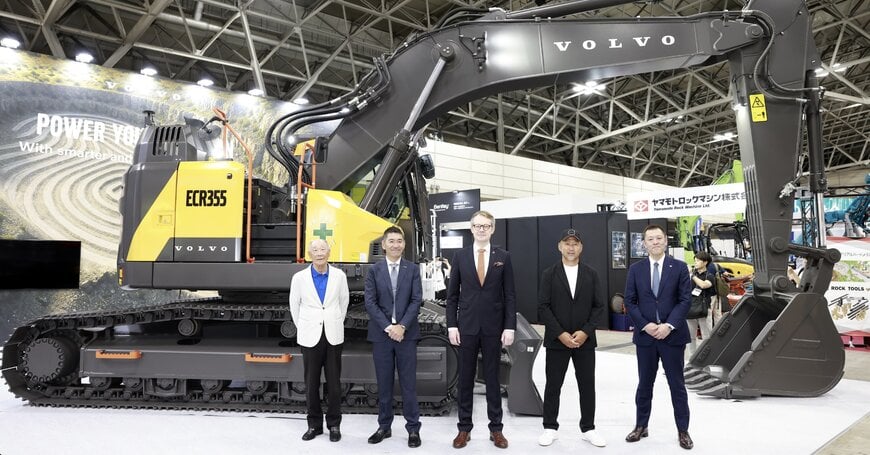
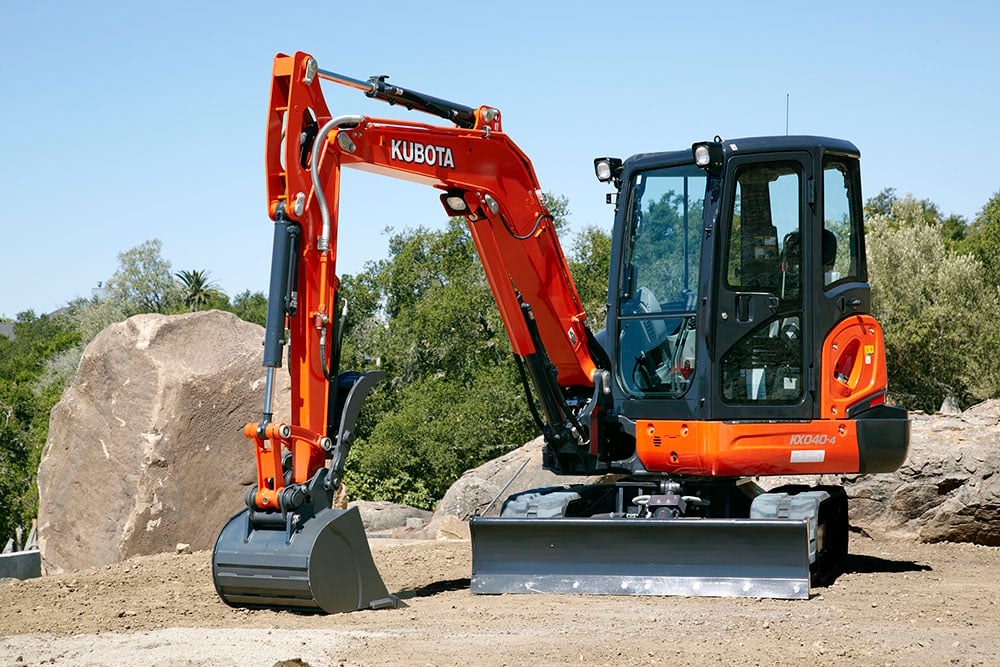
Volvo CE introduces the New Generation ECR355 to the Japanese market, deploying a 36-tonne compact-tail-swing excavator engineered to improve productivity and maneuverability within confined urban and infrastructure development environments. The machine integrates AI-based safety monitoring and advanced electro-hydraulic controls to meet the operational demands of heavy civil construction in restricted spatial footprints.
Hardware Architecture and Electro-Hydraulic Optimization
The core of the new excavator is the proprietary D8M engine, paired with a redesigned main control valve and an advanced electro-hydraulic control system. This mechanical configuration yields a 7% increase in fuel efficiency compared to previous hardware iterations. To lower maintenance frequency and operational costs, the engineering architecture extends hydraulic oil and return filter service intervals to a maximum of 3,000 hours.
Sensor Integration and Spatial Awareness Algorithms
Operating heavy construction machinery in high-density areas necessitates rigorous functional safety mechanisms. The equipment utilizes the proprietary Smart View system, which incorporates People and Obstacle Classification. By fusing data from 360-degree cameras, high-precision radar, and AI-based object recognition algorithms, the system delivers real-time spatial awareness alerts to operators, mechanically mitigating the risk of collisions on restricted jobsites.
Ergonomics and Semi-Automated Control Interfaces
The physical dimensions of the conventional cab have been expanded, providing 20% more interior volume than preceding short-tail-swing models, while an upgraded air-conditioning system increases cooling capacity by 50%. Operators interface with the machine via electronic joysticks and a second-generation Co-Pilot system, visualized through a 12.8-inch Full HD display. For precision tasks, the integrated Active Control software provides semi-automatic digging assistance to maintain consistency. The machine maintains an operating weight between 35,500 kg and 39,400 kg.
Deployment in Steep Terrain and Urban Infrastructure
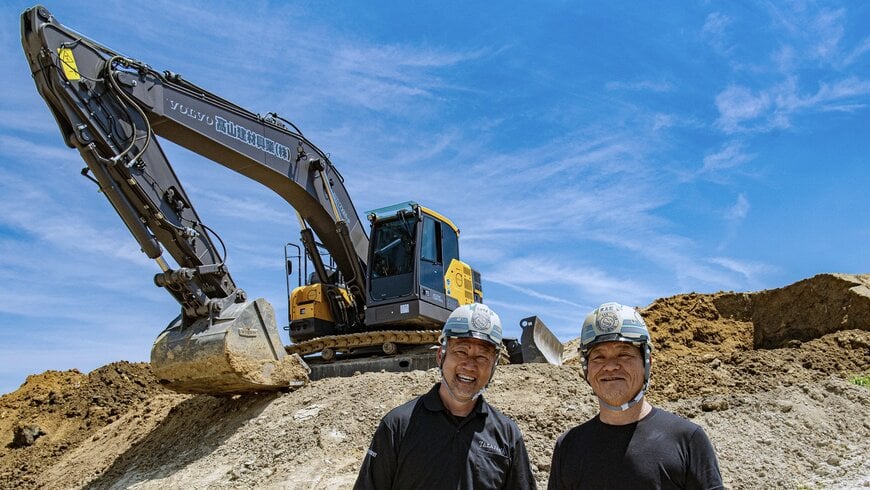
The official introduction occurred at the CSPI-EXPO, marking the initial deployment of the hardware to Takayama Kenzai Kogyo Co., Ltd., facilitated by authorized dealers Nishio T&M Co., Ltd. and Daiichi Toyo Co., Ltd. Field application data from similar previous-generation models utilized on steep residential development projects in Nara Prefecture demonstrated that combining a compact tail swing with a crane specification allows single-machine lifting and excavation. This approach reduced fuel consumption by 20% to 30% relative to standard 20-tonne class excavators performing identical tasks. Addressing the deployment, Ramarajan Rangarajan, Head of Productivity & Retail Development for Region Asia, noted that integrating electro-hydraulics and AI-assisted safety systems into a heavy-duty platform drives down daily operating costs while maximizing machine utilization on highly restricted jobsites.
Additional Context
This section details technical specifications and competitive benchmarking not included in the original news release.
In the 35-tonne compact-radius excavator market, the New Generation ECR355 competes directly with equipment such as the Caterpillar 335. Both machines occupy a specific niche for heavy lifting and earthmoving in confined urban infrastructure development, sharing similar operating weights (approximately 35,000 to 36,000 kg) and standard electro-hydraulic controls. However, competitive differentiation typically focuses on integrated safety and grade-assist technologies. While standard industry models often rely on standard 2D grading and camera arrays, the inclusion of radar-fused AI object classification provides a measurable advantage in active collision avoidance. Furthermore, the 3,000-hour hydraulic service interval aligns with the broader heavy machinery industry's shift toward extending maintenance cycles to reduce the total cost of ownership.
Edited by Aishwarya Mambet, Induportals Editor, with AI assistance.
www.volvoce.com
Powered by
Induportals Media Publishing