Volvo CE Tests EC500 Electric Excavator in Demanding Norwegian Sites
Customer trials evaluate battery and grid-powered performance across quarrying, road construction and tunneling ahead of planned commercial launch in 2027. www.volvoce.com Volvo Construction Equipment (Volvo CE) is advancing heavy machinery electrification by testing its first pre-build EC500 Electric excavator in Norway. This customer-collaborative testing phase evaluates a 50-tonne class hybrid battery and grid-connected system across demanding quarrying, road building, and tunneling applications to finalize the machine for serial production. Dual-Power Integration in the 50-Tonne Class The EC500 Electric is engineered to match the mechanical output of conventional 50-tonne excavators while introducing an adaptive electrical power system. Utilizing a 35-meter cable reel, the machine operates directly from a 400V grid connection while simultaneously utilizing an onboard battery system. The battery configuration supports two to three hours of autonomous operation, allowing the equipment to disconnect from the grid for relocation, material loading, or blasting site clearance. This dual-power architecture minimizes the need for continuous high-capacity grid infrastructure at the job site. Industrial Grid Management and Peak Shaving Relying strictly on grid power for heavy machinery can strain local electrical infrastructure. To address this, the EC500 Electric incorporates intelligent grid energy management systems that utilize the onboard battery for peak shaving. By drawing on stored energy during high-load operations, the machine stabilizes the power demand placed on the site electrical grid. This mechanism ensures that the machine adapts to variable grid conditions without compromising the hydraulic and mechanical forces required for heavy earthmoving and quarrying. Operational Data Collection and Deployment Timeline The current testing program in Norway embeds the pre-build machine in real-world job sites to capture telemetry, operator feedback, and practical site integration data. Engineering teams are utilizing this data to evaluate machine behavior, battery charging cycles, and grid integration under heavy duty cycles. This field data dictates the final calibration of the electric and hydraulic systems. The machine is scheduled for commercial availability in the spring of 2027, with serial deliveries expected by the end of 2027. Additional Context: This section details technical specifications and competitive benchmarking not included in the original product announcement Within the 50-tonne industrial excavator market, electrification is primarily emerging as an alternative to established diesel platforms. Conventional internal combustion machines in this category, such as the Komatsu PC450LC-7, operate with weights near 45,000 kilograms and diesel engines producing 330 horsepower. High-reach demolition variants like the Liebherr R 960 Demolition Litronic rely on 250 kW engines and function at operating weights between 77,300 and 97,700 kilograms. The Volvo EC500 Electric matches these heavy-duty requirements with a 250 kW electric motor, an operating weight of 49,006 kilograms, and a bucket capacity of 3.03 cubic meters. By utilizing an integrated 400V grid connection and onboard energy storage, this electrical architecture provides equivalent 50-tonne lifting capacities and breakout forces while eliminating direct combustion emissions and reducing aggregate energy consumption at the work site. Edited by Natania Lyngdoh, Induportals editor, assisted by AI. www.volvoce.com Powered by Induportals Media Publishing
 machineryasia
Customer trials evaluate battery and grid-powered performance across quarrying, road construction and tunneling ahead of planned commercial launch in 2027.
www.volvoce.com
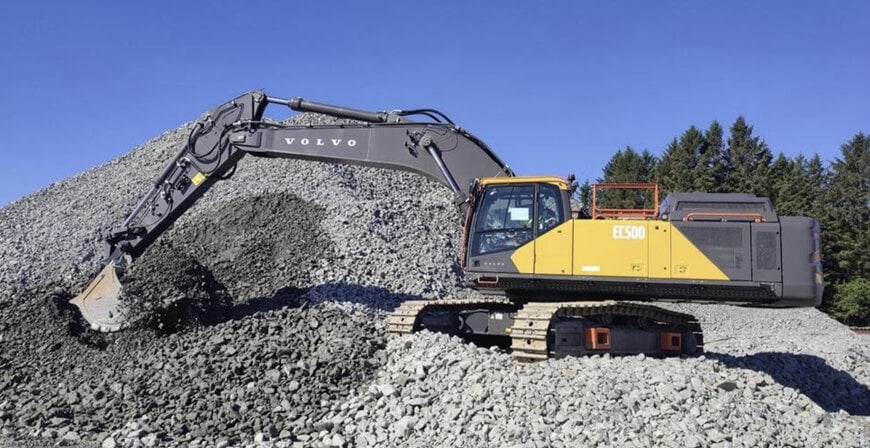
Volvo Construction Equipment (Volvo CE) is advancing heavy machinery electrification by testing its first pre-build EC500 Electric excavator in Norway. This customer-collaborative testing phase evaluates a 50-tonne class hybrid battery and grid-connected system across demanding quarrying, road building, and tunneling applications to finalize the machine for serial production.
Dual-Power Integration in the 50-Tonne Class
The EC500 Electric is engineered to match the mechanical output of conventional 50-tonne excavators while introducing an adaptive electrical power system. Utilizing a 35-meter cable reel, the machine operates directly from a 400V grid connection while simultaneously utilizing an onboard battery system. The battery configuration supports two to three hours of autonomous operation, allowing the equipment to disconnect from the grid for relocation, material loading, or blasting site clearance. This dual-power architecture minimizes the need for continuous high-capacity grid infrastructure at the job site.

Industrial Grid Management and Peak Shaving
Relying strictly on grid power for heavy machinery can strain local electrical infrastructure. To address this, the EC500 Electric incorporates intelligent grid energy management systems that utilize the onboard battery for peak shaving. By drawing on stored energy during high-load operations, the machine stabilizes the power demand placed on the site electrical grid. This mechanism ensures that the machine adapts to variable grid conditions without compromising the hydraulic and mechanical forces required for heavy earthmoving and quarrying.
Operational Data Collection and Deployment Timeline
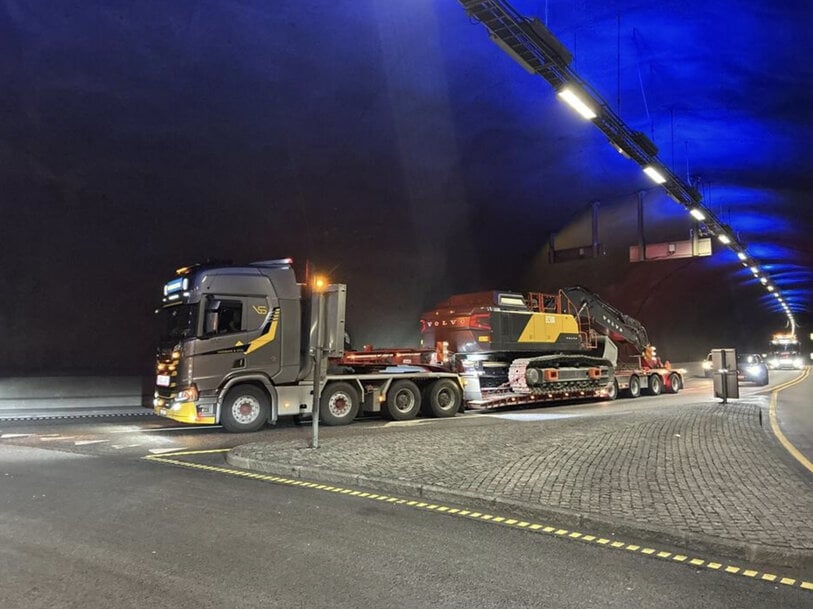
The current testing program in Norway embeds the pre-build machine in real-world job sites to capture telemetry, operator feedback, and practical site integration data. Engineering teams are utilizing this data to evaluate machine behavior, battery charging cycles, and grid integration under heavy duty cycles. This field data dictates the final calibration of the electric and hydraulic systems. The machine is scheduled for commercial availability in the spring of 2027, with serial deliveries expected by the end of 2027.
Additional Context:
This section details technical specifications and competitive benchmarking not included in the original product announcement
Within the 50-tonne industrial excavator market, electrification is primarily emerging as an alternative to established diesel platforms. Conventional internal combustion machines in this category, such as the Komatsu PC450LC-7, operate with weights near 45,000 kilograms and diesel engines producing 330 horsepower. High-reach demolition variants like the Liebherr R 960 Demolition Litronic rely on 250 kW engines and function at operating weights between 77,300 and 97,700 kilograms. The Volvo EC500 Electric matches these heavy-duty requirements with a 250 kW electric motor, an operating weight of 49,006 kilograms, and a bucket capacity of 3.03 cubic meters. By utilizing an integrated 400V grid connection and onboard energy storage, this electrical architecture provides equivalent 50-tonne lifting capacities and breakout forces while eliminating direct combustion emissions and reducing aggregate energy consumption at the work site.
Edited by Natania Lyngdoh, Induportals editor, assisted by AI.
www.volvoce.com
Powered by
Induportals Media Publishing