Van der Spek deploys Liebherr mobile energy storage for cranes
Nine battery systems replace diesel generator use in early-phase construction, stabilizing tower crane peak loads where grid capacity is limited. www.liebherr.com In the construction equipment rental and dealer market, electrification is increasingly driven by tighter urban noise and emission limits and by practical constraints such as limited grid availability during early construction phases. In Belgium, construction machinery dealer Van der Spek has expanded its rental fleet with nine mobile Liebherr energy storage systems (LPO 100) to support low-emission construction sites and provide a generator alternative for crane operations. Limited grid power and stricter site regulations Tower cranes, especially on large projects, can create short-duration power and voltage peaks during lifting operations. In early construction phases, local grid connections are often undersized or unavailable, and contractors typically cover the gap using diesel generators. In dense urban environments, this approach is increasingly constrained by noise restrictions and local emissions rules. Van der Spek’s decision is also linked to regulatory momentum in nearby markets. The company observes that its subsidiary in France is already seeing stronger demand due to more advanced construction-site emissions rules, with Belgium and the Netherlands expected to follow a similar trajectory. Choosing battery-based power instead of diesel generators Van der Spek invested in nine Liebherr LPO 100 mobile energy storage systems as part of a long-term strategy to modernize its rental fleet of around 650 machines and support customers moving toward low-emission construction solutions. Each unit provides a gross energy capacity of 94 kWh, positioned as a practical alternative to diesel generators for temporary site power. Beyond emissions reduction, the systems are intended to address operational constraints typical of generator-based setups by reducing logistics and simplifying deployment. How the systems are being deployed Several units are already in operation on construction sites in the region, while additional systems are being offered through Van der Spek’s rental fleet. The primary initial application is tower crane support, where the battery system can deliver stable site power while covering short peak demands. The approach targets contractors that need a repeatable “plug-in” power module for early-stage projects without waiting for grid upgrades or deploying generator fuel logistics. Field use case: stabilizing a Liebherr 550 EC-H tower crane A practical deployment example comes from construction company Schoukensbouw, which acquired two of the energy storage systems for use on a construction site in Tubize. With a peak output of up to 110 kVA, one storage system is used to cover the energy and voltage peaks of a Liebherr 550 EC-H tower crane during heavy lifting operations. This peak-handling role is central in crane electrification because it reduces the need to oversize grid connections or rely on generators to ride through short load spikes. Results and operational impact Mobile storage allows crane operations to be supported with a stable, on-site electrical supply while avoiding local CO₂ emissions associated with diesel generation. The systems are also described as operating almost silently, which makes them better suited for urban work zones where acoustic impact can limit permitted operating hours. From a site-operations standpoint, replacing generator setups can also reduce logistical effort, especially where fueling and servicing generators creates recurring downtime and coordination overhead. Next steps: scaling the energy and service portfolio Beyond construction sites, Van der Spek identifies additional use potential in event technology, the military sector, and emergency power supply, positioning mobile storage as a multi-sector asset rather than a single-use construction product. The company plans to expand its portfolio of energy storage systems, related technology, and services in 2026, aiming to strengthen its role in sustainable power solutions for the Belgian construction industry. www.liebherr.com Powered by Induportals Media Publishing
 machineryasia
Nine battery systems replace diesel generator use in early-phase construction, stabilizing tower crane peak loads where grid capacity is limited.
www.liebherr.com
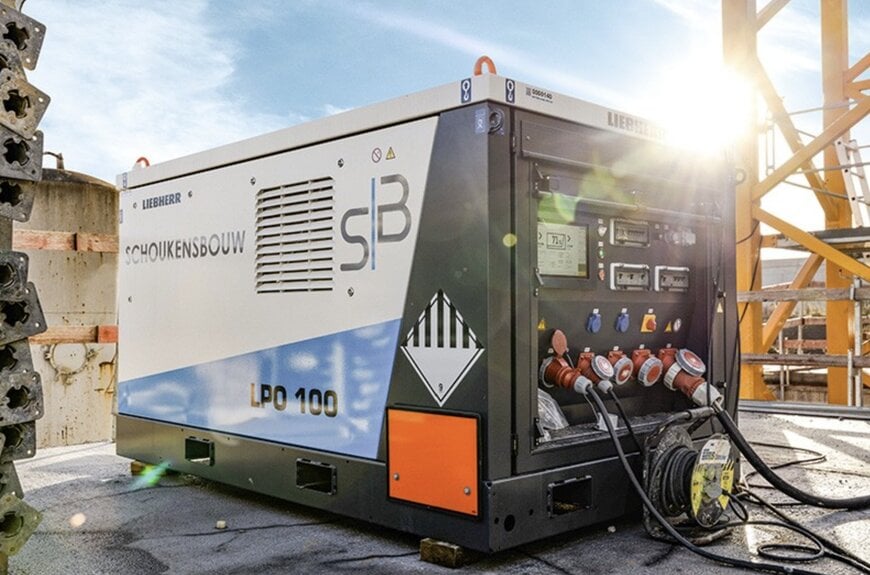
In the construction equipment rental and dealer market, electrification is increasingly driven by tighter urban noise and emission limits and by practical constraints such as limited grid availability during early construction phases. In Belgium, construction machinery dealer Van der Spek has expanded its rental fleet with nine mobile Liebherr energy storage systems (LPO 100) to support low-emission construction sites and provide a generator alternative for crane operations.
Limited grid power and stricter site regulations
Tower cranes, especially on large projects, can create short-duration power and voltage peaks during lifting operations. In early construction phases, local grid connections are often undersized or unavailable, and contractors typically cover the gap using diesel generators. In dense urban environments, this approach is increasingly constrained by noise restrictions and local emissions rules.
Van der Spek’s decision is also linked to regulatory momentum in nearby markets. The company observes that its subsidiary in France is already seeing stronger demand due to more advanced construction-site emissions rules, with Belgium and the Netherlands expected to follow a similar trajectory.
Choosing battery-based power instead of diesel generators
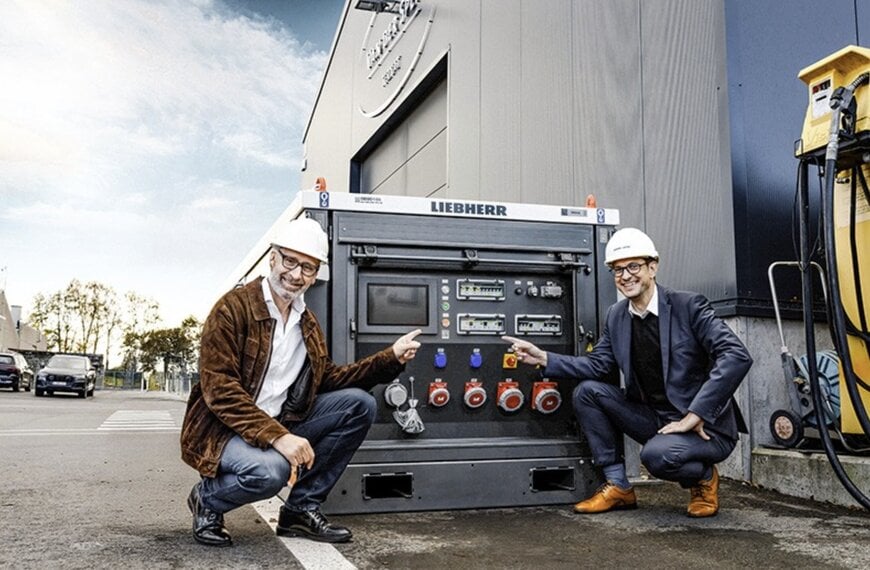
Van der Spek invested in nine Liebherr LPO 100 mobile energy storage systems as part of a long-term strategy to modernize its rental fleet of around 650 machines and support customers moving toward low-emission construction solutions.
Each unit provides a gross energy capacity of 94 kWh, positioned as a practical alternative to diesel generators for temporary site power. Beyond emissions reduction, the systems are intended to address operational constraints typical of generator-based setups by reducing logistics and simplifying deployment.
How the systems are being deployed
Several units are already in operation on construction sites in the region, while additional systems are being offered through Van der Spek’s rental fleet. The primary initial application is tower crane support, where the battery system can deliver stable site power while covering short peak demands.
The approach targets contractors that need a repeatable “plug-in” power module for early-stage projects without waiting for grid upgrades or deploying generator fuel logistics.
Field use case: stabilizing a Liebherr 550 EC-H tower crane
A practical deployment example comes from construction company Schoukensbouw, which acquired two of the energy storage systems for use on a construction site in Tubize.
With a peak output of up to 110 kVA, one storage system is used to cover the energy and voltage peaks of a Liebherr 550 EC-H tower crane during heavy lifting operations. This peak-handling role is central in crane electrification because it reduces the need to oversize grid connections or rely on generators to ride through short load spikes.
Results and operational impact
Mobile storage allows crane operations to be supported with a stable, on-site electrical supply while avoiding local CO₂ emissions associated with diesel generation. The systems are also described as operating almost silently, which makes them better suited for urban work zones where acoustic impact can limit permitted operating hours.
From a site-operations standpoint, replacing generator setups can also reduce logistical effort, especially where fueling and servicing generators creates recurring downtime and coordination overhead.
Next steps: scaling the energy and service portfolio
Beyond construction sites, Van der Spek identifies additional use potential in event technology, the military sector, and emergency power supply, positioning mobile storage as a multi-sector asset rather than a single-use construction product.
The company plans to expand its portfolio of energy storage systems, related technology, and services in 2026, aiming to strengthen its role in sustainable power solutions for the Belgian construction industry.
www.liebherr.com
Powered by
Induportals Media Publishing