This Massachusetts Apparel Maker Draws on Deep Roots to Drive its Progress
The Merrow Group, parent of Whalerknits, not only runs its its own vertically integrated factory but produces apparel manufacturing equipment.
 machineryasia
The Merrow Group, parent of Whalerknits, not only runs its its own vertically integrated factory but produces apparel manufacturing equipment.
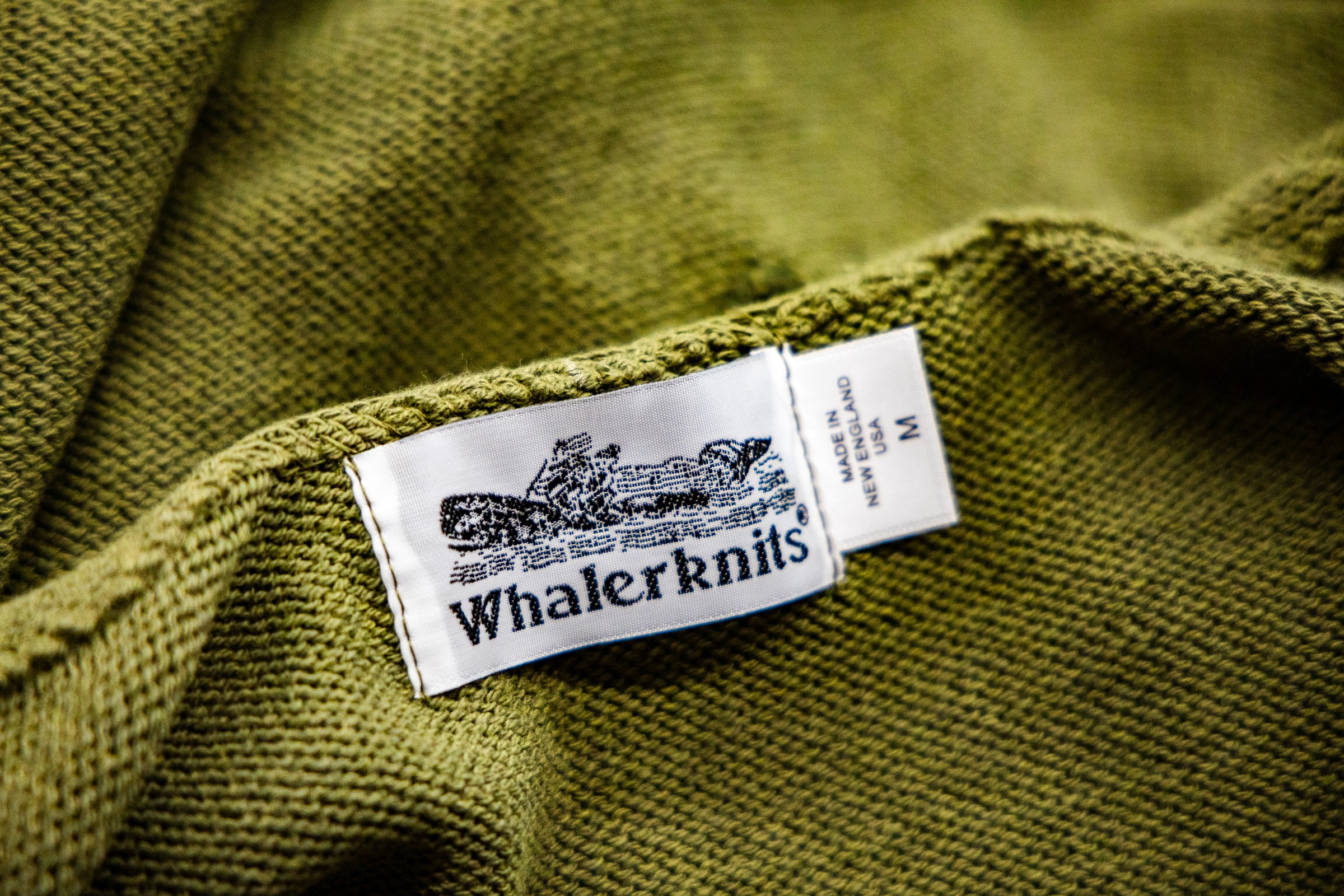
In Fall River, Mass., a sweater designed to last a lifetime is knit, sewn, inspected and shipped from the same factory where many of the machines that make it are built. That’s not nostalgia, that’s Whalerknits.
The heritage knitwear brand, now part of the Merrow Group, is proving that American manufacturing can still thrive. The company makes its products under one roof, stands behind them for life and refuses to sacrifice craftsmanship for scale.
For Charlie Merrow, CEO of the Merrow Group, the mission extends far beyond clothing. It is about preserving generations of manufacturing expertise while building a business that can compete for generations to come.
“We want a Whalerknit sweater to be found by a college student in a thrift store in 50 years and for him to think it’s just as cool as the person who bought it,” Merrow said. “We want to make vintage stuff.”
That philosophy is rooted in the history of a brand that began in 1975 in nearby New Bedford, Massachusetts. Originally developed for commercial fishermen, Whalerknits specialized in rugged knitwear designed to withstand the harsh realities of life offshore. Early products incorporated water-repellent technologies that helped keep maritime workers warm and dry.
The technical coatings eventually disappeared, but the sweaters and the company behind them endured. When the Merrow Group acquired Fall River Knitting Mill in 2022, Merrow and his brother Owen saw more than a manufacturing company. They saw an opportunity to revive a piece of American textile history.
The acquisition of the historic knitting mill brought with it decades of design archives dating back to the middle of the twentieth century.
“We went through the archives and pulled up these incredibly cool designs from the ’40s, ’50s and the ’60s,” Merrow said. “Then we rebuilt Whalerknits around those designs.”
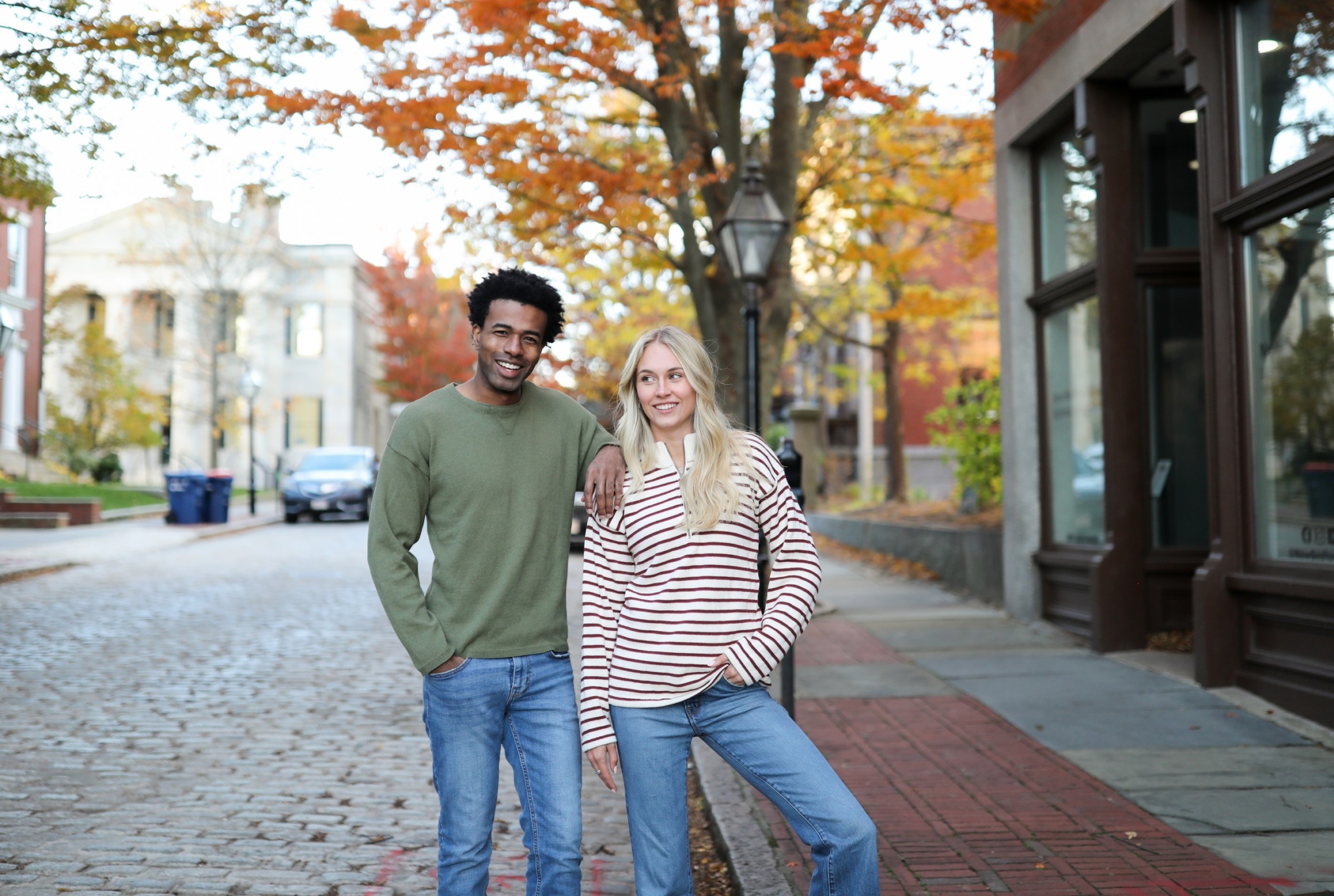
Today, those original patterns form the backbone of the collection. While countless brands claim inspiration from mid-century Americana, Whalerknits uses authentic designs developed during the heyday of New England textile manufacturing.
“What you get from us that’s really different, you get the actual design from the 1950s,” Merrow said. “We are not copying something. We are using the original patterns from the ’50s and the ’60s.
“People buy them and call us up and use language like, ‘I’m going to keep this forever.’”
That reaction is exactly the point.
At a time when much of the apparel industry revolves around rapidly changing trends, Whalerknits is intentionally building products meant to last for decades. Its sweaters are made from natural fibers, including 100% cotton and 100% wool. The styles are classic, the construction is durable and the objective is permanence.
“There is something timeless about it,” Merrow said. “Our goal by mandate is not to replace the good stuff. It’s to keep on building it.”
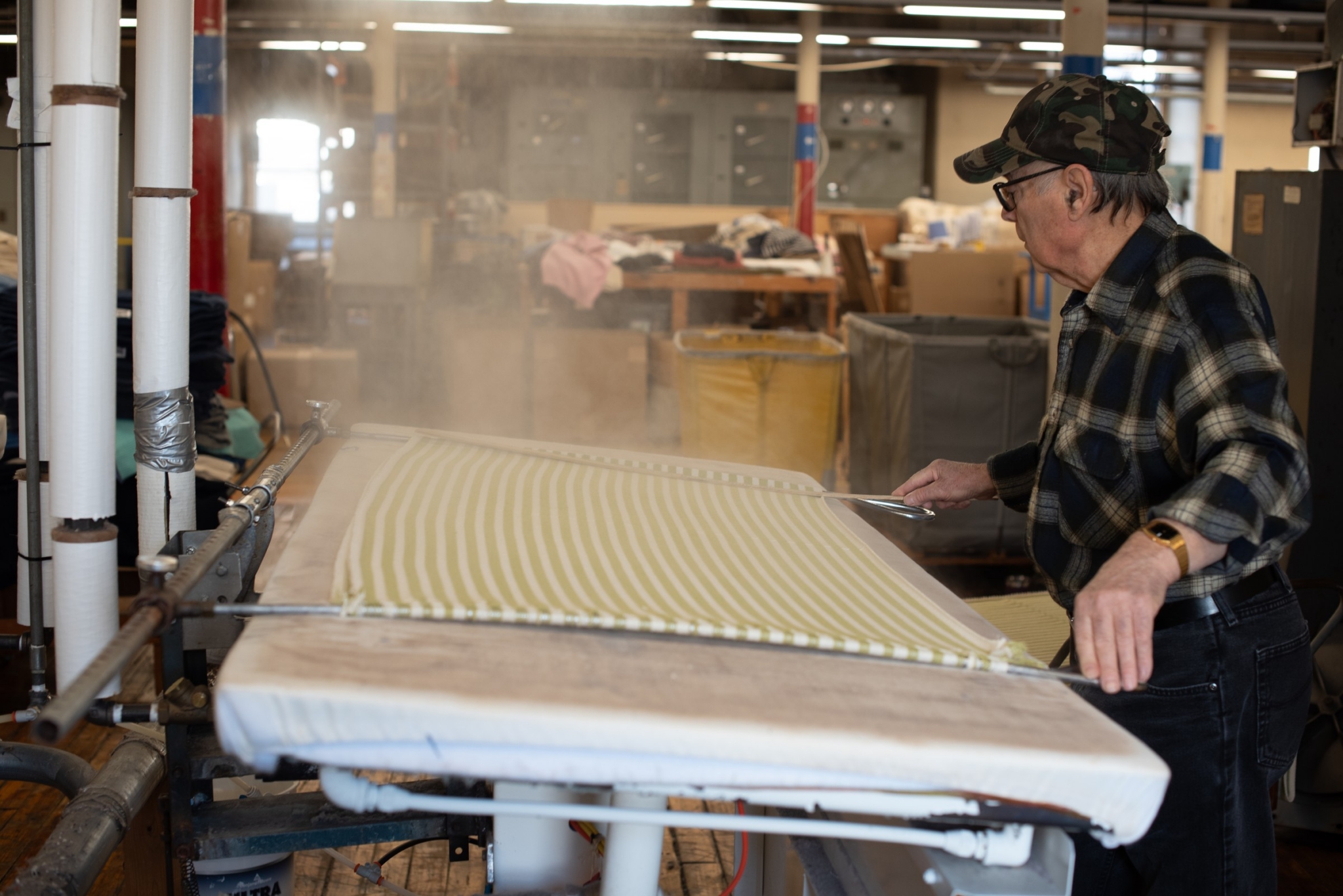
Manufacturing happens inside a sprawling campus in the heart of Fall River. Yarn arrives at the 300,000 square-foot facility and is transformed into finished sweaters, blankets and throws through a tightly controlled production process. Workers knit, cut, sew, inspect, package and ship every garment.
“We knit, we design, we sew and build and then we ship everything ourselves,” Merrow said. “It never leaves the campus.”
In today’s apparel industry, that kind of vertical integration is rare. More unusual is that many of the machines used to produce Whalerknits garments are built on site.
That capability reflects the unique history of the Merrow family business.
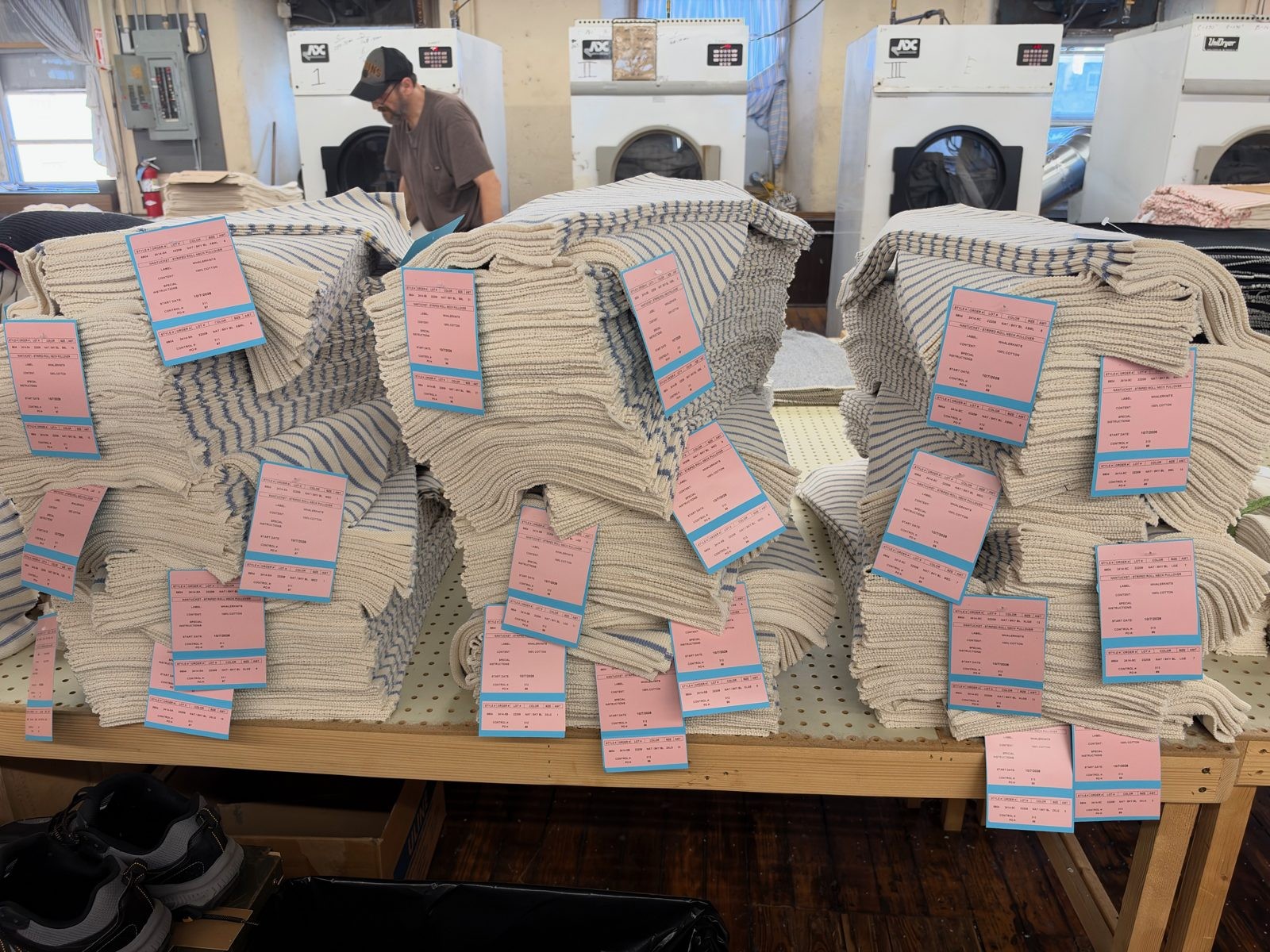
Founded in 1838, Merrow invented the overlock sewing machine, one of the most important innovations in textile manufacturing. The original sewing-machine company evolved into a diverse manufacturing enterprise that now encompasses industrial equipment, medical products, branded consumer goods and technical soft-goods production.
Merrow sees the company occupying a rare position in American manufacturing. It builds equipment, supplies manufacturers and produces its own products.
“We are the largest supplier of the stuff that makes American manufacturing work,” Merrow said. “We are a builder of equipment for American manufacturing and we are a manufacturer with brands and contracts for technical soft goods.
“Our perspective is a hopeful one. In order to build an American brand and a product in the United States, you have to be hopeful.”
Having watched customers and competitors struggle over the years, Merrow believes manufacturers benefit from diversification. Alongside private-label production and contract work, the company has invested heavily in building its own brands.
Owning production also allows Whalerknits to stand behind every product it sells.
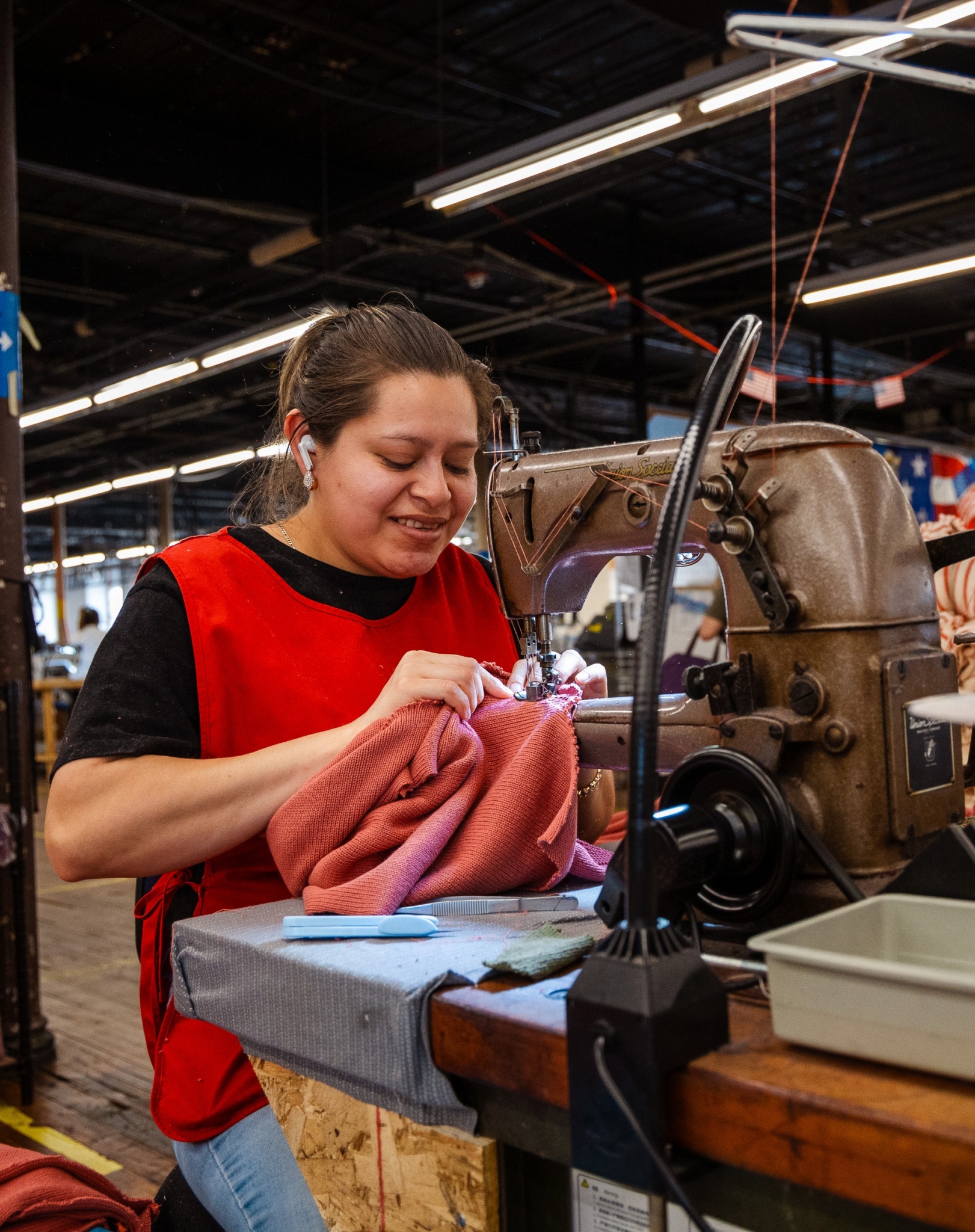
The company offers a lifetime guarantee on its sweaters and provides repair services even for secondhand purchases. In an era when many companies are reducing warranties and support programs, Merrow sees the guarantee as evidence of confidence in the manufacturing process.
“We guarantee the sweaters for life,” he said. “You can’t support a product unless you build your own product. Our sweaters are packaged up with a thank-you note. The shipping department cares about the people who are getting the sweaters.”
Merrow believes manufacturing is ultimately a human enterprise, one that connects workers directly to customers.
“Every time somebody buys a sweater or a blanket there is a person or group of people who appreciate it at the company,” he said. “There is a stitcher who now has another sweater to make. There will be somebody in shipping who will pack it and admire that it is going out to Tulsa or Fort Lauderdale or Milan. It matters.”
That human connection extends beyond the factory walls.
The Merrow Group employs more than 200 people across its operations and maintains a large manufacturing campus in the center of Fall River. Rather than relocating to an industrial park outside the city, the company remains embedded in the community.
“We are right in the center of a thriving city,” Merrow said. “I am proud of it. We wouldn’t do it any other way.”
The location also places Whalerknits at the center of what Merrow believes is one of America’s most important manufacturing ecosystems.
For decades, Fall River was synonymous with textile production. Today, the city remains home to a concentration of manufacturers producing everything from luxury linens and leather jackets to shirts and knitwear.
“When we talk about making things in the U.S., I think more about making things in New England and more specifically making things in Fall River,” Merrow said. “The quality of what we do and the capability of what we do where we are is unmatched.”
He points to companies such as Vanson, Matouk, New England Shirt Company, Clegg, Merrow and Whalerknits as evidence that a modern manufacturing cluster continues to grow in southeastern Massachusetts.
“It is the new manufacturing hub for technical soft goods,” he said.
Although Whalerknits enjoys a loyal following in New England, sales are spread surprisingly evenly throughout the United States.
“What is absolutely not predictable is where the rest of the sales are,” Merrow said. “It’s almost evenly distributed throughout the United States.”
That demand has fueled extraordinary growth. According to Merrow, the business has doubled in size every six months during the past two years. Yet despite the growth, one thing remains nonnegotiable.
“Manufacturing offshore will never happen for us,” he said.
For a company built on heritage patterns, family ownership, in-house manufacturing and lifetime guarantees, the decision was never really in doubt.
The Alliance for American Manufacturing does not receive a commission from purchases made through the above links, nor was the organization or author paid for favorable coverage.
Labeling Note: This story is intended to highlight companies that support American jobs and that make great products in the United States. We rely on the companies listed to provide accurate information regarding their domestic operations and their products. Each company featured is individually responsible for labeling and advertising their products according to applicable standards, such as the Federal Trade Commission’s “Made in USA” standard or California’s “Made in USA” labeling law. We do not review individual products for compliance or claim that because a company is listed in the guide that their products comply with specific labeling or advertising standards. Our focus is on supporting companies that create American jobs.
For more on the Federal Trade Commission’s standards for “Made in USA” claims and California’s “Made in USA” labeling law, please also read this guest post by Dustin Painter and Kristi Wolff of Kelly Drye & Warren, LLP.