The Connected Vehicle Crisis Idling Just Outside of America’s Borders
A recent panel discussion details the need for legislation that would ban Chinese-made automobiles for the U.S. market.
 machineryasia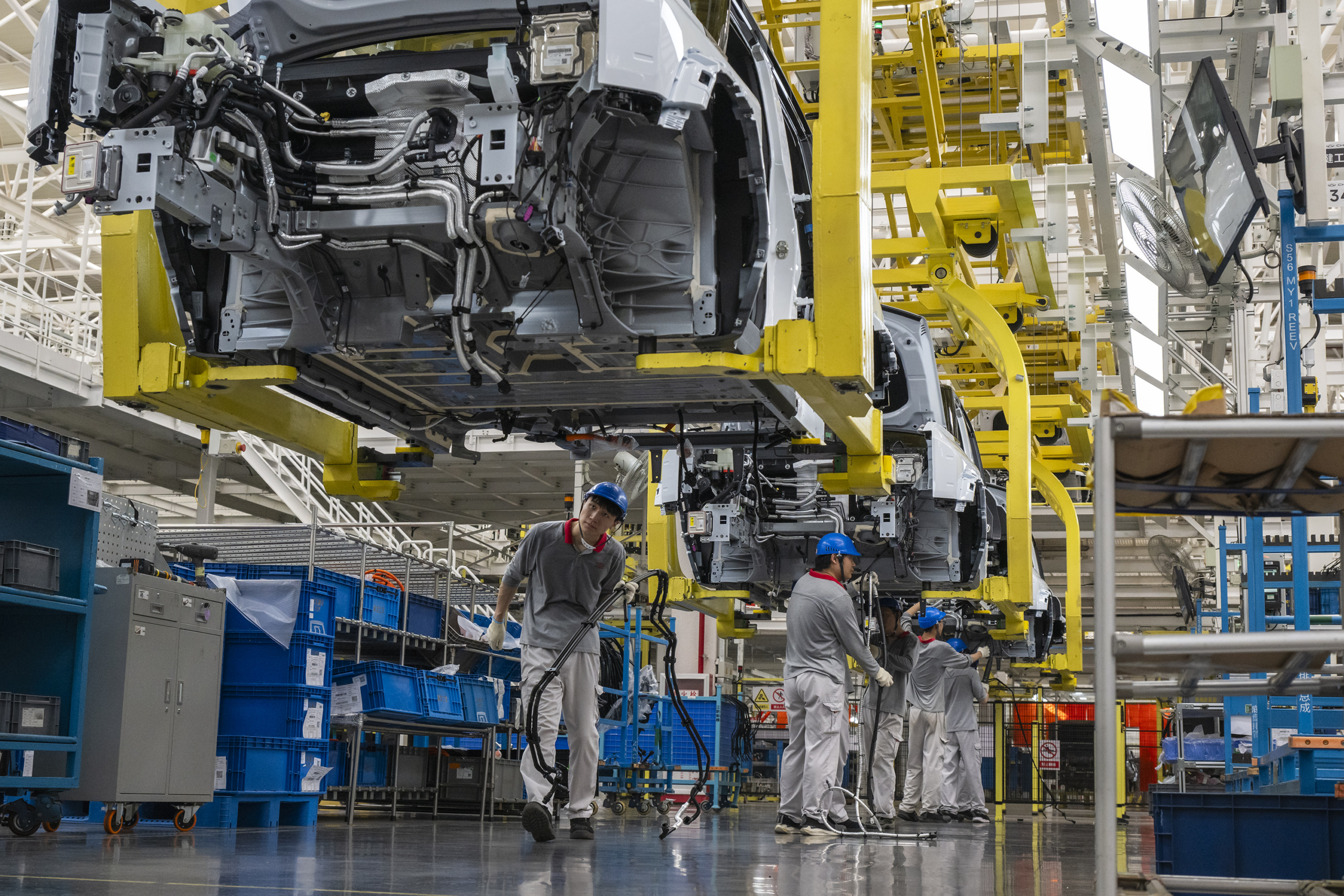
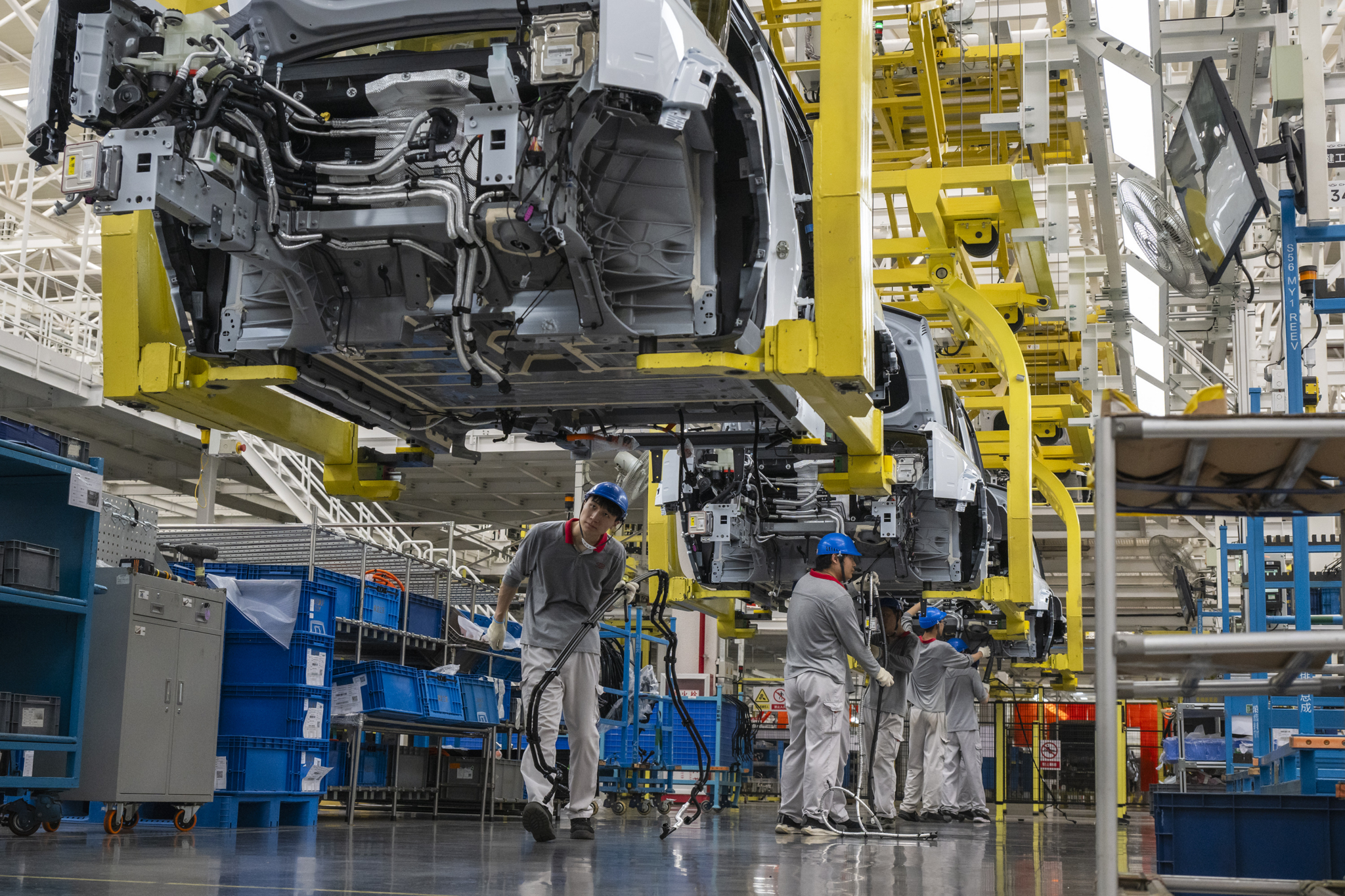
A recent panel discussion details the need for legislation that would ban Chinese-made automobiles for the U.S. market.
The very features that make Chinese automobiles so appealing – their price and the myriad luxuries that go into them – are the same ones that pose an intolerable national security threat. That was the message sent at a panel discussion hosted by the Information Technology and Innovation Foundation (ITIF) earlier this month, just before a U.S. Senate committee advanced a bill that would bar the sale of “connected” Chinese vehicles in the United States.
That would be the Connected Vehicle Security Act, legislation sponsored by Sens. Bernie Moreno (R-Ohio) and Elissa Slotkin (D-Mich.), that codifies the existing Connected Vehicles Rule and essentially bans Chinese-made vehicles from the country.
Gathering just a day before the markup, the ITIF panel discussed the state of the domestic auto industry and the Chinese auto industry’s aggressive expansion. Competitiveness is crucial to ensure the domestic auto industry’s longevity, but the gathered experts asserted that it will be policy, not wishful thinking, that guarantees the future of U.S. production.
“We can no longer just assume the U.S. automobile industry is our birthright,” said Stephen Ezell, ITIF’s vice president for global innovation policy and director of ITIF’s Center for Life Science Innovation. “This is exactly why we laid out this report, which I mentioned why ‘America Needs a [Industrial] Strategy for Motor Vehicles’ with 50 distinct policy recommendations.”
It’s clear that rising import competition has coincided with a loss in U.S. market share and declining employment from Ford, General Motors and Chrysler (which is now owned by Stellantis). The Big Three used to not only lead the nation’s auto market, but the world’s. That’s no longer the case: In 2007, they collectively produced 73% of all American cars. As of 2023, they only produced 40%.
Since the auto industry went global, auto imports have far outweighed exports, resulting in a stunning $3.3 trillion trade deficit in passenger vehicles alone, according to ITIF Policy Analyst Meghan Ostertag. That trade gap has only continued to grow since 1963.
Even with declining production numbers, ITIF calculates the domestic auto industry continues to contribute over $1.2 trillion to the national economy, or nearly 5% of gross domestic product (GDP). If this industry is handed over to China, our nation faces the loss of millions of good-paying U.S. jobs, a lowered standard of living for those who hold them, as well as decreased technological innovation and the inability to manufacture defense goods. Once automotive production is offshored, it will be nearly impossible to bring it back.
“It’s a protect and promote strategy, but we are not going to be able to promote if we let the walls down and let China in now; it’s game over for an industry that employs 11 million Americans and is 5% of this country’s GDP,” said Hilary Cain, senior vice president of policy at the Alliance for Automotive Innovation.
Indeed, China has gobbled up market share in Thailand, Chile, Ecuador and elsewhere around the world. If allowed into the U.S. market, domestic manufacturers will not be able to compete with Chinese rivals that benefit from a raft of export-oriented industrial policies. U.S. automakers won’t be going up against individual companies but an entire state-backed ecosystem.
It’s not a coincidence that while China’s automotive production skyrocketed 300% from 2003 to 2023, America’s production numbers went down 39%. Without federal regulations to keep Chinese automobiles and production out of the U.S., our national security and economic base will crumble.
While the low prices and “digital bling” of Chinese cars may be enticing for American consumers, the looming threat lies within the technology embedded in these vehicles, said Ron Van Kirk, a senior policy advisor to Sen. Moreno.
“Number one, it protects Americans from sensitive data from foreign adversaries,” said Van Kirk. “Two, it prevents remote manipulation of vehicles that [the Bureau of Industry and Security] has identified in certain sets of software or hardware. And three, it reduces our dependency on extremely critical technologies that are in our automotive supply chain currently.”
Austin Girelli, who advises Sen. Slotkin on policy, made a similar argument.
“There have been a few European security think tanks who have noted that at the very least, even if they haven’t seen it in real time, they have proof that the capability does exist for manipulation of the vehicle, either for data to be exfiltrated out of the vehicle or for something malicious to be sent to the vehicle,” he said.
These are the security concerns the Connected Vehicle Security Act is meant to allay. The bill would prohibit the “importation, integration, manufacture, sale, and resale of connected vehicles, software, and hardware linked to China or other foreign adversaries” (and it’s got the Alliance for American Manufacturing’s support).
The bill is just one piece of the puzzle to increase the domestic auto industry’s competitiveness. ITIF’s recommendations also included creating tax credits for robotics adoption in auto manufacturing, supporting regional automotive clusters, increasing Manufacturing Extension Partnership (MEP) funding by $125 million and tightening the rules of origin on USMCA (that last one is an AAM priority too).
That said: Passing the Connected Vehicle Security Act of 2026 is a necessary proactive measure to both protect and support the American automotive industry. Without it, we’ll invite plenty of unfair import competition for American autoworkers – not to mention the national security concerns if wired Chinese vehicles are allowed to roam our streets. The bill will soon get a vote on the Senate floor. We’ll be watching as it advances.
Watch the full panel discussion below: