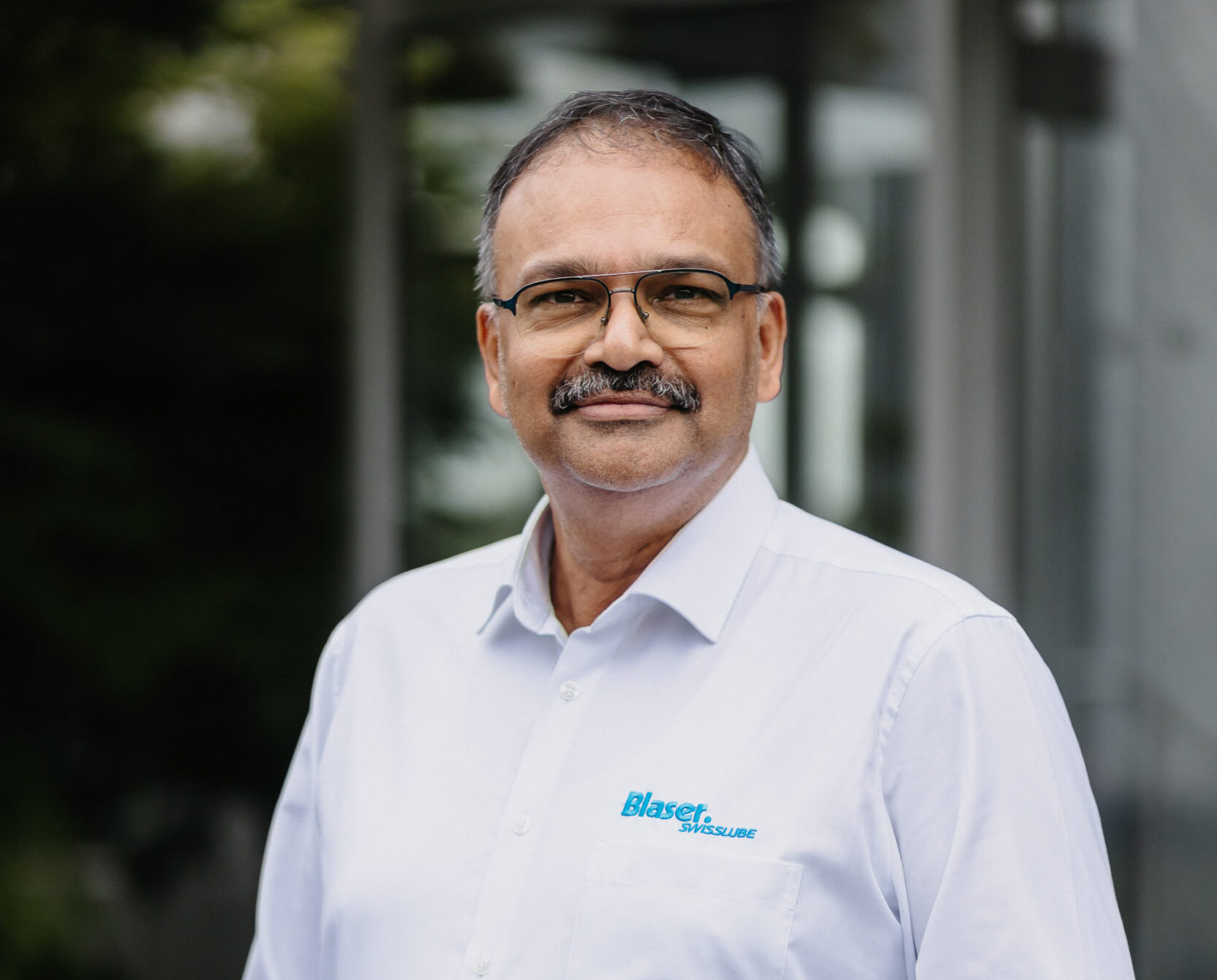
Rajesh Ghashi, Managing Director, CHIRON India Machine Tools Pvt. Ltd., on AI, automation, precision engineering and the future of machine tools.
Q1. India aspires to become a global manufacturing hub. What are the biggest opportunities and challenges for the Indian machine tool industry in achieving global competitiveness, and what changes are still required? India’s ambition to become a global manufacturing hub presents a significant opportunity for the machine tool industry because machine tools are the foundation … The post Rajesh Ghashi, Managing Director, CHIRON India Machine Tools Pvt. Ltd., on AI, automation, precision engineering and the future of machine tools. appeared first on Machine Insider.
 machineryasia
Q1. India aspires to become a global manufacturing hub. What are the biggest opportunities and challenges for the Indian machine tool industry in achieving global competitiveness, and what changes are still required?
India’s ambition to become a global manufacturing hub presents a significant opportunity for the machine tool industry because machine tools are the foundation of all manufacturing and are often referred to as the “mother machines.” IMTMA itself highlights the strategic role of machine tools in enabling industrial production across sectors.
Initiatives such as “Make in India,” Production Linked Incentive (PLI) schemes, semiconductor investments, defense indigenization, railways, aerospace, and electronics manufacturing are creating strong demand for advanced machine tools. Supply Chain Diversification by Global manufacturers creates new opportunities for new investments in manufacturing there by creating demand for CNC Machine Tools and Automation Solutions.
Emerging sectors like aerospace, EV’s, medical devices, and electronics offer manufacturers opportunities beyond conventional machines into technology intensive products. Digitial Manufacturing like adaption of AI, robotics, IoT, digital twins, smart factories open new opportunities to leapfrog traditional technologies and compete globally on innovation rather than only on cost.
Having said that, the biggest challenge is technology gap, India still imports significant share of high-end machine tools especially for aerospace, semiconductor, ultra precision applications. Closing this technology gap remains a major challenge. Low R&D Investments compared to global leaders. Storage of skilled workforce is a big problem. High dependence on critical components such as precision bearings, controllers, spindles, linear guides, ball screws, and advanced sensors is often imported, increasing costs and supply-chain risks.
What can be done to overcome the challenges is to increase the R&D spending in advanced technologies, build a strong industry-academia partnership, develop component ecosystems to reduce dependency, invest in skilling and automation.
To conclude, the opportunity for India’s machine tool industry is enormous because every expansion in manufacturing directly creates demand for machine tools. However, global competitiveness will depend less on low-cost production and more on technology, innovation, precision, quality, and export capability. If India can strengthen R&D, develop indigenous technologies, localize critical components, and build globally recognized machine tool brands, the industry can become a key enabler of India’s aspiration to emerge as a leading global manufacturing hub.

Q2. Which technological trends, such as AI, automation, digital manufacturing or precision engineering, do you believe will have the greatest impact over the next five years, and how is your organisation preparing for them?
Over the next five years, the greatest impact will come from the interaction of automation, connected production, artificial intelligence and precision engineering. These are not separate developments. Their value emerges when they work together within a stable manufacturing process.
Automation will become more flexible. Manufacturers need solutions that support changing batch sizes, product variants and staffing conditions without adding unnecessary complexity. Digital Solutions will make operating information more accessible and help teams understand production processes more clearly. Precision will remain fundamental, particularly as components become more complex and quality requirements increase.
AI adds another practical layer. At the CHIRON Group, we do not view AI as a replacement for engineering knowledge or employee responsibility. We see it as a tool that can support employees and processes. It can help structure information, reduce repetitive work and make knowledge easier to access. People must still assess the result, understand the technical context and make the final decision.
Our preparation therefore combines technology with enablement. The internal AI Broker programme creates points of contact across the organisation. Workshops, regular exchanges and practical use cases help employees understand where AI adds value and where critical judgement remains essential. The aim is to adopt AI in a controlled, purposeful way—guided by real business needs rather than by technology for its own sake.
Q3. Innovation today extends beyond products. How is your organisation driving innovation across manufacturing processes, customer experience, sustainability, workforce development or digital transformation?
Innovation begins with a customer requirement, but it does not end with the machine. A technically capable machining center delivers its full value only when the complete process, automation, application engineering, service and employee knowledge work together.
For the CHIRON Group, this means looking beyond individual product features. The recurring questions are practical: Where can we reduce complexity? How can we shorten processes? Where do responsibilities need to become clearer? How can departments collaborate more effectively around the customer?
Digital transformation follows the same logic. We focus on applications that support daily work rather than introducing tools without a defined purpose. Our AI initiative, for example, combines practical workshops with an internal network of AI Brokers. These employees help colleagues explore use cases, exchange experience and build structured knowledge. AI can assist, but employees remain responsible for evaluating it’s output.
Workforce development is therefore part of innovation. New technologies require technical expertise, curiosity and confidence to question results. The organisation must create space for learning while maintaining clear standards for quality, data protection and decision-making. The result is not simply a new digital tool. It is a more capable interaction between people, processes and technology.
Q4. Manufacturing success increasingly depends on collaboration across OEMs, suppliers, technology providers, academia and start-ups. How do you see partnerships shaping the future of manufacturing, and what role does your organisation play in this ecosystem?
No single company can master every discipline required for modern manufacturing. Machine technology, cutting tools, workholding, automation, controls, software, process knowledge and service must interact reliably. Partnerships will therefore become more important, particularly when manufacturers need to move from an initial application requirement to a stable production solution.
Effective collaboration requires more than combining components. Partners must agree on interfaces, technical responsibilities, data requirements and acceptance criteria. They must also remain involved when a concept moves from development into industrial operation. This is where open technical communication and clearly assigned ownership make a difference.
The role of the CHIRON Group is to connect the relevant disciplines around the machining process and the customer’s production requirement. Internally, this already requires close collaboration across sales, application, service, operations, research and quality. Externally, the same principle applies: each partner contributes specialist knowledge, while the overall solution must remain technically coherent and manageable for the customer.
Academia and start-ups can add new methods, specialised knowledge and fresh approaches. Established industrial companies contribute application experience, quality processes and an understanding of operational conditions. The strongest ecosystem is not the one with the most participants. It is the one in which the right participants solve a clearly defined manufacturing problem together and remain accountable for the result.
Q5. Looking ahead to 2030, what will define a successful machine tool company? Which capabilities, technologies or leadership qualities will differentiate the industry’s future leaders?
A successful machine tool company in 2030 will need to combine technological depth with organisational focus. Precision, process reliability and application knowledge will remain indispensable. At the same time, customers will expect greater flexibility, appropriate automation, connected services and support throughout the lifecycle of a manufacturing solution.
The differentiator will not be the number of features offered. It will be the ability to translate a production requirement into a manageable solution. This requires a focused portfolio, strong application engineering, clear interfaces and service capabilities that help customers maintain productive processes.
Digital competence will become part of every function. Data and AI can support faster access to information, better-structured workflows and more informed decisions. However, successful implementation will depend on data quality, technical context and responsible human evaluation. Technology alone does not create a competitive advantage.
Leadership will be equally important. Strategy 2030 emphasises clear responsibility, targeted prioritisation, reduced complexity and collaboration across departmental boundaries. These principles are relevant beyond our organisation. Machine tool companies must be able to make decisions, learn from implementation and adapt without losing technical discipline.
The future leaders of the industry will therefore combine engineering excellence with execution capability. They will focus on customer value, invest in people and use digital tools pragmatically. Most importantly, they will distinguish between interesting technology and a technology that solves a real production problem.
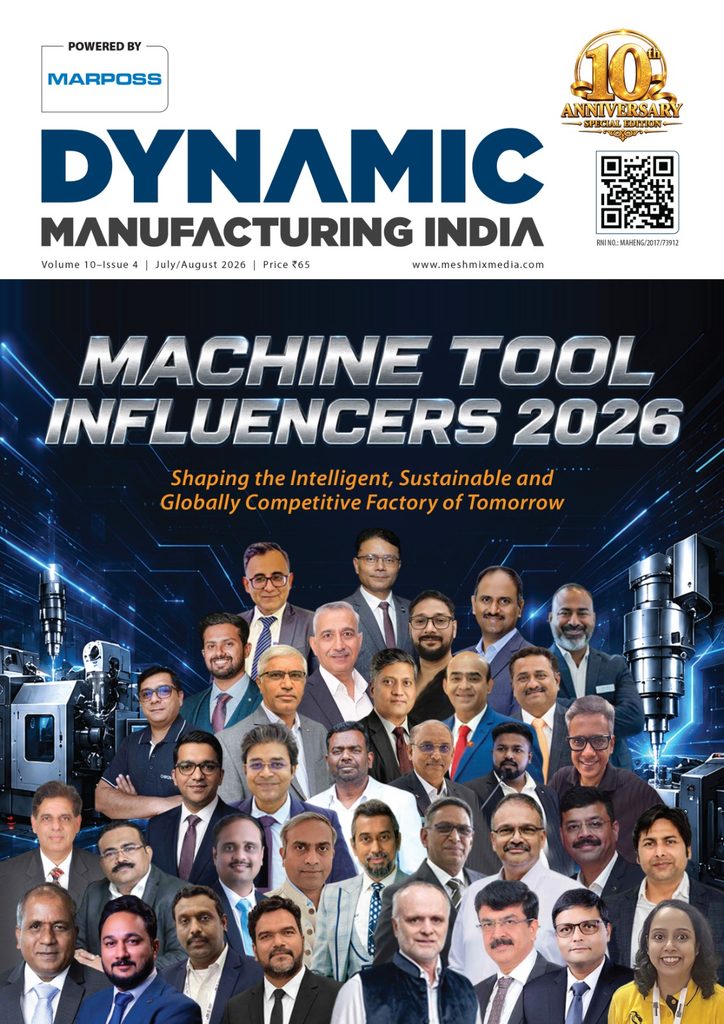
Q6. As one of the Machine Tool Influencers 2026, what message would you like to share with the next generation of manufacturing professionals and entrepreneurs who will shape the industrial future?
My message is simple: combine curiosity with technical responsibility.
Manufacturing offers an unusual opportunity to connect digital ideas with physical results. A machining process either works under the defined conditions, or it does not. A component meets its requirements, or it does not. This direct link between knowledge, decisions and results makes our industry demanding, but also highly rewarding.
The next generation should engage actively with automation, data and AI. Use these tools to structure information, explore alternatives and remove repetitive work. At the same time, understand the process behind the output. Ask where the data comes from, which assumptions were made and whether the result is technically plausible. AI can support good engineering, but it cannot replace responsibility.
I would also encourage young professionals to work across disciplines. The strongest solutions often emerge when manufacturing engineers, software specialists, service teams and customers examine a problem together. Learn to explain technical concepts clearly and listen carefully to the people who operate the process.
Finally, do not confuse complexity with innovation. A good solution is not impressive because it uses many technologies. It is valuable because it addresses a real requirement reliably and can be implemented by the people responsible for production. That combination of practical thinking, collaboration and continuous learning will shape industrial progress.
Do Visit – https://chiron-group.com/
The post Rajesh Ghashi, Managing Director, CHIRON India Machine Tools Pvt. Ltd., on AI, automation, precision engineering and the future of machine tools. appeared first on Machine Insider.