Modular Lift Truck Platform for Container Handling
Konecranes launched the Generation D modular lift truck platform with new diesel and electric reach stackers designed for connected and scalable port operations. www.konecranes.com Konecranes introduced its new Generation D lift truck platform during the TOC Europe exhibition held in Hamburg, Germany. The new modular architecture represents a transition toward standardized equipment platforms designed to simplify fleet management, support digital integration and meet future industrial regulatory requirements. The first products based on the platform are diesel and electric reach stackers for container handling operations. The equipment is intended for ports, intermodal terminals and industrial logistics facilities requiring scalable material handling systems with integrated digital connectivity. Modular architecture for industrial fleet management The Generation D platform uses a common modular architecture that allows lift trucks to be configured according to different operational requirements. Konecranes stated that the unified platform is designed to simplify maintenance procedures and standardize operational interfaces for drivers and service technicians. The platform has been developed to comply with upcoming European Union regulations covering machinery safety and industrial cybersecurity. The digital architecture is based on an open cyber-secure framework capable of integrating with terminal operating systems and third-party industrial applications. Generation D also includes over-the-air software update capabilities, allowing equipment software to be remotely updated and expanded with additional functionality during the operational lifetime of the machines. Remote monitoring and diagnostic functions are intended to support predictive maintenance and reduce unexpected downtime. According to Jeffrey Stokes, Director Product & Technology Management and Quality & Customer Satisfaction for Lift Trucks at Konecranes, the platform was developed to increase equipment uptime while reducing operational complexity across fleets. Diesel and electric reach stackers for intensive operations The new diesel reach stackers retain the performance characteristics of previous Konecranes models used in container handling operations. The company stated that the machines combine established durability with more predictable maintenance intervals to improve equipment availability in demanding operational environments. The electric reach stackers introduced on the Generation D platform operate with zero tailpipe emissions during use. Konecranes stated that acceleration performance can be up to 25% faster compared with equivalent diesel-powered models. The electric models use high-energy-density battery systems combined with fast-charging configurations intended to support both single-shift operations and continuous 24/7 terminal activities. The platform is designed to support different operational strategies as ports transition toward lower-emission material handling equipment. Both diesel and electric models maintain the ergonomic cab design and visibility characteristics of earlier Konecranes generations while adding a new digital operator interface that displays operational data in real time. Digital platform for long-term equipment investment Konecranes described Generation D as a future-oriented platform intended to support long-term customer investment planning. Andreas Falk, Senior Vice President, Lift Trucks at Konecranes, stated that the introduction of a common modular platform simplifies fleet management across different equipment categories while reducing lifecycle operating costs. The standardized control architecture and remote software update functionality are intended to provide greater flexibility for operators selecting different propulsion technologies according to operational requirements and decarbonization targets. Initially, Generation D reach stackers will be prioritized for the European and North American markets because of upcoming regulatory requirements in those regions. Konecranes also confirmed that the platform will later be expanded to include forklifts as well as empty and laden container handlers. The launch forms part of Konecranes’ Ecolifting roadmap, which focuses on reducing emissions in port and industrial material handling operations. The roadmap includes renewable diesel-compatible systems, hybrid equipment, fully electric fleets and emerging hydrogen-based technologies. Additional Context: Technical specifications and competitive benchmarking not included in the original product announcement The market for electric and digitally connected reach stackers is expanding as ports and logistics operators increase investments in decarbonization and industrial automation. Major manufacturers in this sector include Kalmar, Hyster-Yale and Sany, all of which are developing electric or hybrid container handling platforms. Competitive benchmarking in this segment is typically ba
 machineryasia
Konecranes launched the Generation D modular lift truck platform with new diesel and electric reach stackers designed for connected and scalable port operations.
www.konecranes.com
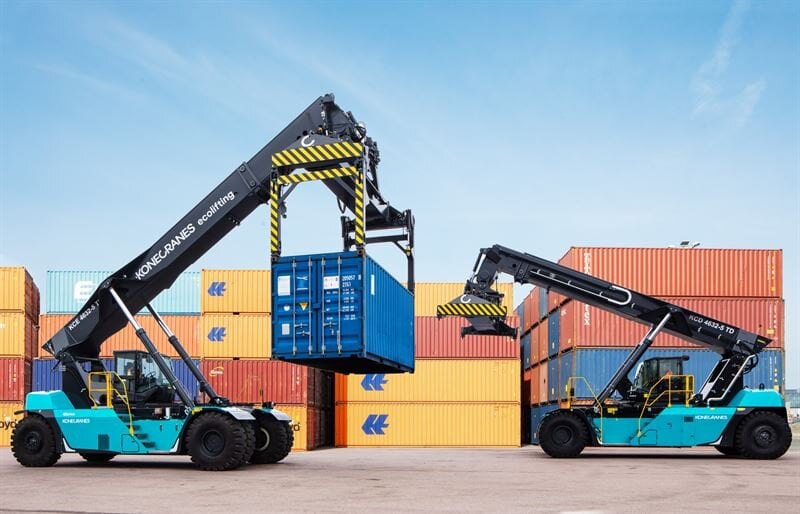
Konecranes introduced its new Generation D lift truck platform during the TOC Europe exhibition held in Hamburg, Germany. The new modular architecture represents a transition toward standardized equipment platforms designed to simplify fleet management, support digital integration and meet future industrial regulatory requirements.
The first products based on the platform are diesel and electric reach stackers for container handling operations. The equipment is intended for ports, intermodal terminals and industrial logistics facilities requiring scalable material handling systems with integrated digital connectivity.
Modular architecture for industrial fleet management
The Generation D platform uses a common modular architecture that allows lift trucks to be configured according to different operational requirements. Konecranes stated that the unified platform is designed to simplify maintenance procedures and standardize operational interfaces for drivers and service technicians.
The platform has been developed to comply with upcoming European Union regulations covering machinery safety and industrial cybersecurity. The digital architecture is based on an open cyber-secure framework capable of integrating with terminal operating systems and third-party industrial applications.
Generation D also includes over-the-air software update capabilities, allowing equipment software to be remotely updated and expanded with additional functionality during the operational lifetime of the machines. Remote monitoring and diagnostic functions are intended to support predictive maintenance and reduce unexpected downtime.
According to Jeffrey Stokes, Director Product & Technology Management and Quality & Customer Satisfaction for Lift Trucks at Konecranes, the platform was developed to increase equipment uptime while reducing operational complexity across fleets.
Diesel and electric reach stackers for intensive operations
The new diesel reach stackers retain the performance characteristics of previous Konecranes models used in container handling operations. The company stated that the machines combine established durability with more predictable maintenance intervals to improve equipment availability in demanding operational environments.
The electric reach stackers introduced on the Generation D platform operate with zero tailpipe emissions during use. Konecranes stated that acceleration performance can be up to 25% faster compared with equivalent diesel-powered models.
The electric models use high-energy-density battery systems combined with fast-charging configurations intended to support both single-shift operations and continuous 24/7 terminal activities. The platform is designed to support different operational strategies as ports transition toward lower-emission material handling equipment.
Both diesel and electric models maintain the ergonomic cab design and visibility characteristics of earlier Konecranes generations while adding a new digital operator interface that displays operational data in real time.
Digital platform for long-term equipment investment
Konecranes described Generation D as a future-oriented platform intended to support long-term customer investment planning. Andreas Falk, Senior Vice President, Lift Trucks at Konecranes, stated that the introduction of a common modular platform simplifies fleet management across different equipment categories while reducing lifecycle operating costs.
The standardized control architecture and remote software update functionality are intended to provide greater flexibility for operators selecting different propulsion technologies according to operational requirements and decarbonization targets.
Initially, Generation D reach stackers will be prioritized for the European and North American markets because of upcoming regulatory requirements in those regions. Konecranes also confirmed that the platform will later be expanded to include forklifts as well as empty and laden container handlers.
The launch forms part of Konecranes’ Ecolifting roadmap, which focuses on reducing emissions in port and industrial material handling operations. The roadmap includes renewable diesel-compatible systems, hybrid equipment, fully electric fleets and emerging hydrogen-based technologies.
Additional Context: Technical specifications and competitive benchmarking not included in the original product announcement
The market for electric and digitally connected reach stackers is expanding as ports and logistics operators increase investments in decarbonization and industrial automation. Major manufacturers in this sector include Kalmar, Hyster-Yale and Sany, all of which are developing electric or hybrid container handling platforms.
Competitive benchmarking in this segment is typically based on measurable operational criteria including lifting capacity, battery energy density, charging speed, equipment uptime and total cost of ownership over the equipment lifecycle.
Over-the-air software update capability and cybersecurity-compliant digital architectures are becoming increasingly important differentiators in industrial fleet management. These features enable operators to extend equipment functionality without major hardware modifications while supporting integration into broader digital supply chain and smart port infrastructure strategies.
Electric reach stackers are also evaluated according to operational shift coverage, charging infrastructure compatibility and the ability to maintain productivity under continuous heavy-load conditions in port logistics environments.
Edited by Sucithra Mani, Induportals editor – adapted by AI.
www.konecranes.com
Powered by
Induportals Media Publishing