Long-Range Camera Interfaces for Edge AI Vision
Innodisk introduces a GMSL2-based camera and adapter ecosystem to support robust, low-latency image transmission for edge AI systems across industrial and mobile applications. www.innodisk.com Innodisk has expanded its edge AI vision portfolio with a camera module and adapter board series based on the GMSL2 interface, targeting applications that require long-distance, low-latency image transmission in harsh operating environments. Addressing edge AI vision constraints Edge AI systems deployed in mobility, robotics, and industrial surveillance increasingly require high-resolution visual data delivered with minimal latency over extended distances. Conventional camera interfaces can struggle with signal degradation, synchronization, or electromagnetic interference when cable lengths increase or when systems operate in electrically noisy environments. The GMSL2-based camera module from Innodisk is designed to address these constraints by supporting image transmission over cable lengths of up to 15 meters using FAKRA cabling, enabling flexible sensor placement without compromising signal integrity. Imaging performance and sensor characteristics The camera module supports image resolutions up to 13 megapixels and is based on the Sony ISX031 sensor, which integrates an image signal processor. Features such as high dynamic range and LED flicker mitigation are intended to maintain image stability across a wide range of lighting conditions, including transitions between bright outdoor environments and low-light or enclosed spaces. LED flicker mitigation is particularly relevant in industrial and transportation environments where pulsed LED lighting can introduce artifacts that reduce the reliability of computer vision algorithms. Environmental robustness For deployment in demanding field conditions, the camera housing is rated IP67 and IP69K. These ratings indicate resistance to dust ingress, water immersion, and high-pressure wash-down, as well as tolerance to vibration. Such characteristics align with use cases in mining, ports, construction equipment, logistics facilities, and outdoor robotic platforms, where environmental exposure can limit the viability of conventional vision hardware. System integration and multi-camera support To simplify system development, Innodisk provides adapter boards designed for integration with NVIDIA Jetson Orin-based edge AI platforms. These boards are intended to reduce development effort for system integrators by providing a validated hardware interface between the camera modules and the processing platform. The architecture supports synchronized multi-camera streaming, enabling multi-view perception and sensor fusion. This capability is relevant for applications such as autonomous vehicles, mobile robots, and advanced driver assistance systems, where combining data from multiple cameras improves spatial awareness and decision-making accuracy. Partner ecosystem and deployment scope Innodisk is collaborating with industrial computing partners to deploy the GMSL2 camera modules across multiple edge AI platforms. In heavy-duty vehicle applications, the cameras are being integrated with rugged in-vehicle computing systems and combined with other sensors such as LiDAR and radar to support comprehensive environmental perception. Through its own platforms and those of partners including Advantech, ASUS, and ASRock Industrial, Innodisk is positioning the camera series for use across industrial automation, in-vehicle systems, robotic controllers, and AI acceleration platforms. Role in edge AI vision systems As edge AI applications expand beyond controlled indoor environments, camera interfaces that combine long transmission distances, deterministic latency, and environmental robustness are becoming a foundational component of vision system design. The GMSL2-based camera and adapter ecosystem reflects this shift, supporting scalable and reliable visual sensing within distributed edge AI architectures. www.innodisk.com Powered by Induportals Media Publishing
 machineryasia
Innodisk introduces a GMSL2-based camera and adapter ecosystem to support robust, low-latency image transmission for edge AI systems across industrial and mobile applications.
www.innodisk.com
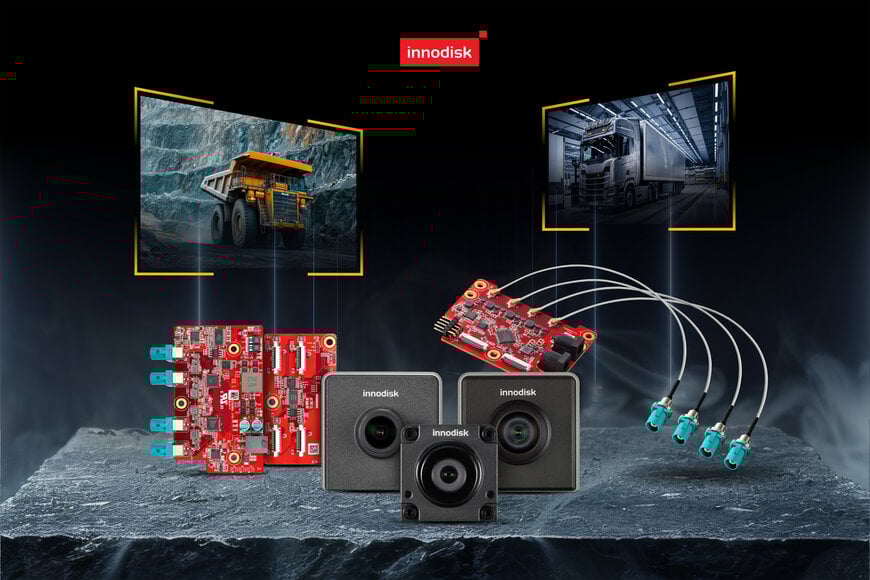
Innodisk has expanded its edge AI vision portfolio with a camera module and adapter board series based on the GMSL2 interface, targeting applications that require long-distance, low-latency image transmission in harsh operating environments.
Addressing edge AI vision constraints
Edge AI systems deployed in mobility, robotics, and industrial surveillance increasingly require high-resolution visual data delivered with minimal latency over extended distances. Conventional camera interfaces can struggle with signal degradation, synchronization, or electromagnetic interference when cable lengths increase or when systems operate in electrically noisy environments.
The GMSL2-based camera module from Innodisk is designed to address these constraints by supporting image transmission over cable lengths of up to 15 meters using FAKRA cabling, enabling flexible sensor placement without compromising signal integrity.
Imaging performance and sensor characteristics
The camera module supports image resolutions up to 13 megapixels and is based on the Sony ISX031 sensor, which integrates an image signal processor. Features such as high dynamic range and LED flicker mitigation are intended to maintain image stability across a wide range of lighting conditions, including transitions between bright outdoor environments and low-light or enclosed spaces.
LED flicker mitigation is particularly relevant in industrial and transportation environments where pulsed LED lighting can introduce artifacts that reduce the reliability of computer vision algorithms.
Environmental robustness
For deployment in demanding field conditions, the camera housing is rated IP67 and IP69K. These ratings indicate resistance to dust ingress, water immersion, and high-pressure wash-down, as well as tolerance to vibration. Such characteristics align with use cases in mining, ports, construction equipment, logistics facilities, and outdoor robotic platforms, where environmental exposure can limit the viability of conventional vision hardware.
System integration and multi-camera support
To simplify system development, Innodisk provides adapter boards designed for integration with NVIDIA Jetson Orin-based edge AI platforms. These boards are intended to reduce development effort for system integrators by providing a validated hardware interface between the camera modules and the processing platform.
The architecture supports synchronized multi-camera streaming, enabling multi-view perception and sensor fusion. This capability is relevant for applications such as autonomous vehicles, mobile robots, and advanced driver assistance systems, where combining data from multiple cameras improves spatial awareness and decision-making accuracy.
Partner ecosystem and deployment scope
Innodisk is collaborating with industrial computing partners to deploy the GMSL2 camera modules across multiple edge AI platforms. In heavy-duty vehicle applications, the cameras are being integrated with rugged in-vehicle computing systems and combined with other sensors such as LiDAR and radar to support comprehensive environmental perception.
Through its own platforms and those of partners including Advantech, ASUS, and ASRock Industrial, Innodisk is positioning the camera series for use across industrial automation, in-vehicle systems, robotic controllers, and AI acceleration platforms.
Role in edge AI vision systems
As edge AI applications expand beyond controlled indoor environments, camera interfaces that combine long transmission distances, deterministic latency, and environmental robustness are becoming a foundational component of vision system design. The GMSL2-based camera and adapter ecosystem reflects this shift, supporting scalable and reliable visual sensing within distributed edge AI architectures.
Powered by
Induportals Media Publishing